What's inside
As an Amazon Associate I earn from qualifying purchases. This post may contain affiliate links at no extra cost to you.
For cutting curves in cabinet parts, both jigsaw shapes can produce clean work. The difference is how easily you can control the blade while the cut is happening. A D-handle jigsaw is usually easier to find, cheaper, and more comfortable for general shop work. A barrel-grip jigsaw gives better control close to the workpiece, especially when cutting tight curves or following a layout line from above.
Neither grip automatically makes a rough cut clean. The blade, stock support, feed rate, and whether you cut on the waste side of the line matter just as much. The right choice depends on how often you cut curves, how thick the cabinet material is, and whether control or cost matters more.
As an Amazon Associate we earn from qualifying purchases at no extra cost to you.


Our Top Picks
How the two grips affect control
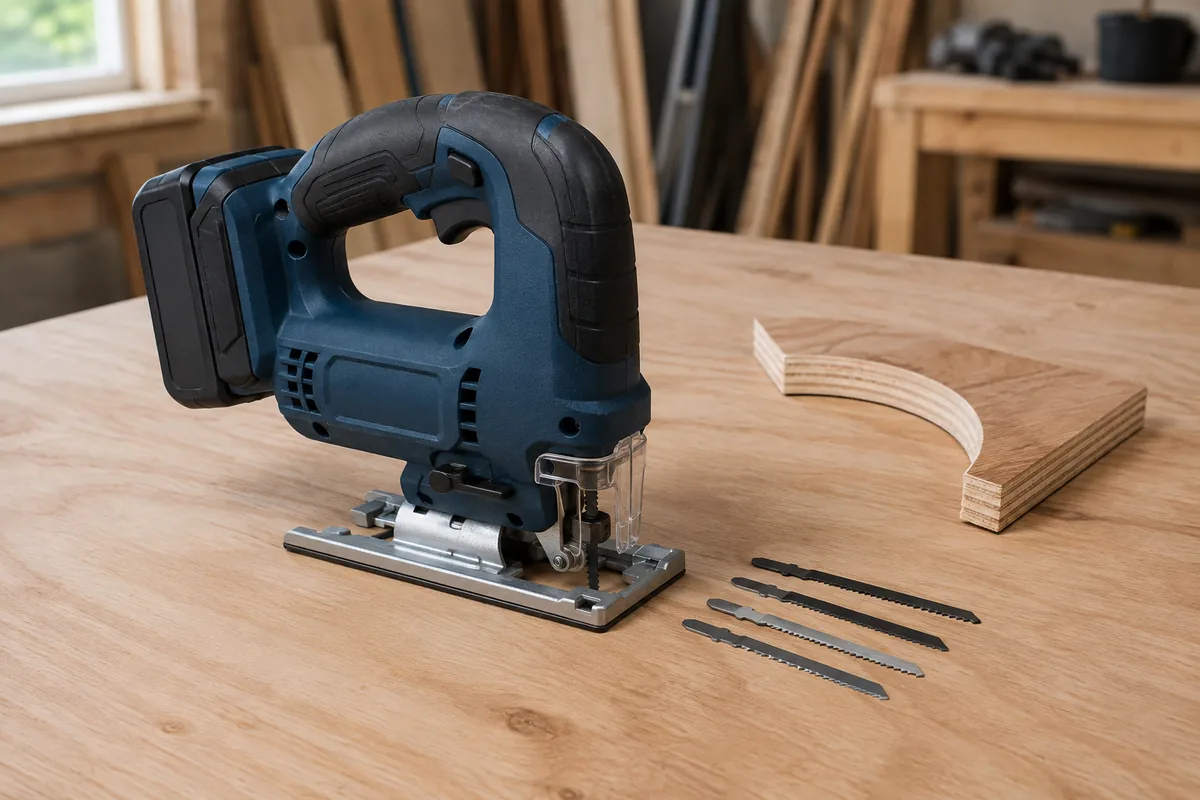
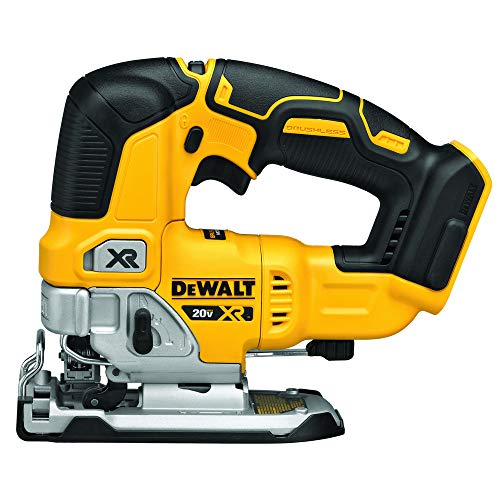
A D-handle jigsaw has a raised handle with a trigger or lock-on switch inside it. Your hand sits above the tool, much like holding a drill. This is comfortable for long straight cuts and gives plenty of leverage when cutting 3/4-inch plywood or hardwood. The downside is that your hand is farther from the base plate and blade. On a tight curve, small wrist movements can steer the blade off the line.
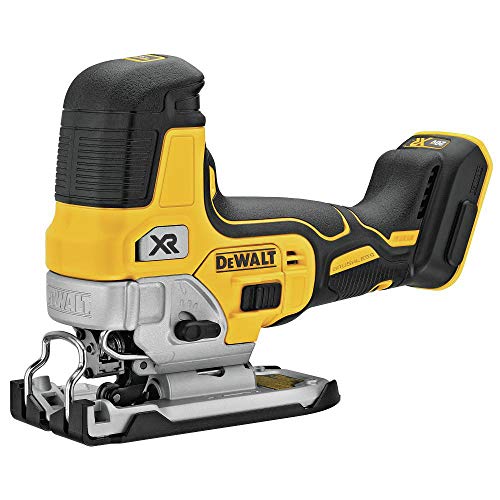
A barrel-grip jigsaw has a shorter, lower body. You wrap your hand around the motor housing and usually control the switch with your thumb. Your hand is closer to the shoe, so the tool feels less top-heavy. That lower center of gravity makes it easier to pivot around a tight radius without rocking the base.
The difference is most noticeable on visible cabinet parts such as curved end panels, toe-kick returns, valances, and decorative cutouts. If the cut will be hidden behind face frames or covered by trim, the advantage is smaller.
| Factor | Barrel-grip jigsaw | D-handle jigsaw |
|---|---|---|
| Tight curves | More controlled, with less top-heavy movement | Capable, but easier to oversteer |
| Long straight cuts | Stable, though less natural for some users | Comfortable and easy to guide |
| Line visibility | Usually excellent from above | Good, but the handle can block some sightlines |
| Learning curve | May feel unfamiliar at first | Familiar to most users |
| Typical price | Often higher | More budget-friendly choices |
| Best use | Frequent curves and detail work | General-purpose cutting and occasional curves |
Choosing for plywood, hardwood, and solid wood
Cabinet-grade plywood is generally easy for either grip style. A sharp, fine-tooth blade designed for plywood will leave a better edge than a coarse general-purpose blade. For 1/2-inch and 3/4-inch sheets, a blade with roughly 10 to 20 teeth per inch is a useful starting point. Use a down-cutting blade when the visible face must stay clean, but remember that it hides the cutting line and can increase the chance of cutting into the wrong side of the layout.
Hardwood places more demand on the tool and the operator. A tight curve in 3/4-inch maple or oak can make the blade deflect toward the waste or the finished side. Barrel grip helps you steer, but it cannot prevent deflection caused by forcing the tool. Let the blade cut at its own rate. If the motor pitch drops sharply, slow down rather than pushing harder.
For solid wood parts thicker than about 1 inch, a jigsaw is often the wrong primary tool for a precise curve. It can rough out the shape, leaving 1/16 to 1/8 inch for a router, spindle sander, or files. A jigsaw blade can wander significantly in a deep cut, particularly in dense wood or when the curve changes direction quickly.
Blade choice matters more than grip
Use a narrow blade for tight curves, but do not choose the narrowest blade automatically. Very narrow blades turn readily but can twist, wander, or break when pushed sideways. A wider blade tracks better on broad curves and gives a straighter edge. Match the blade length to the material; having at least 1/2 inch of blade protruding below the workpiece during the stroke is a practical minimum.
Orbital action speeds up rough cutting by moving the blade forward on the upstroke. It also makes a rougher edge and can tear the top veneer of plywood. Turn orbital action off, or use the lowest setting, for visible cabinet parts and tight curves. Higher speed is not always better. Excessive speed can burn hardwood, melt plastic laminate, or make a thin blade flex.
Keep several blades available rather than trying to make one blade do every job. A clean-cut blade for the finished edge, a fast coarse blade for waste removal, and a narrow curve blade cover most cabinet work. These jigsaw blades for plywood and hardwood are more useful than paying extra for a grip style while using a dull blade.
A reliable method for cutting curves
Support the panel on sacrificial foam or narrow strips so the offcut cannot pinch the blade. Clamp the workpiece firmly, but leave enough room for the shoe to remain flat. Mark the finished line, then mark a second waste-side line if the cut will be cleaned up with a router or sander.
Start the blade at full speed before entering the material. Keep both hands on the tool when practical: one controls the handle or barrel, while the other presses the shoe flat and guides the direction. Do not twist the tool to force the blade around a corner. Instead, make relief cuts into the waste area, stopping short of the layout line. These kerfs give the waste somewhere to move and reduce binding.
On a visible edge, leave approximately 1/32 to 1/16 inch for sanding. If the curve must match a template, leave 1/16 to 1/8 inch and use a flush-trim router bit or pattern sander afterward. Trying to make the jigsaw follow the final line perfectly often produces a wavy edge that takes longer to repair.
Which jigsaw should you buy?
Choose a barrel-grip jigsaw if you regularly cut tight curves, work from a layout line on top of the panel, or dislike the top-heavy feel of a D-handle. It is particularly useful for cabinetmakers who rough out many curved parts and then refine them with templates. Look for a rigid shoe, low vibration, a usable line-of-sight, and a switch that can be operated without changing your grip. This barrel-grip corded jigsaw category is worth considering when curve control is a regular requirement.
Choose a D-handle jigsaw if you make curves only occasionally, do more straight cutting than detail work, or need to keep the purchase price down. A good D-handle tool with a rigid shoe and low vibration can cut cabinet curves accurately enough, especially when you leave material for sanding or routing. The cheaper option is fine for a few cabinet projects; buying a barrel grip will not compensate for poor support or an unsuitable blade.
For either style, prioritize a tool that stays flat, starts without a violent jerk, and lets you see the blade clearly. Those traits have more effect on the final cabinet part than the shape of the handle alone.