What's inside
As an Amazon Associate I earn from qualifying purchases. This post may contain affiliate links at no extra cost to you.
Our Top Picks


The short answer
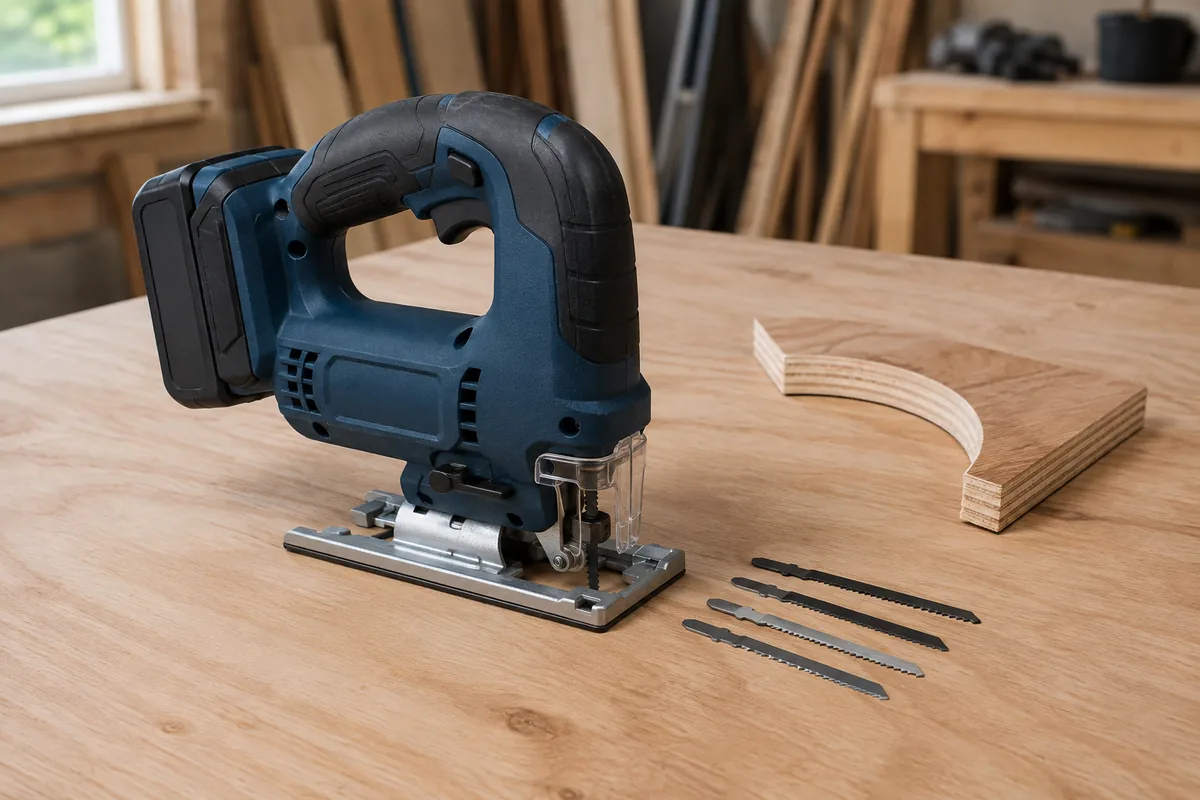
A barrel-grip jigsaw usually offers better control when you make slow, precise cuts, especially in thick material or along a line that asks you to steer the saw. Its low hand position makes it easier to guide the base without leaning on a tall handle. A D-handle jigsaw is often easier to hold for long, ordinary cuts, quick blade changes, and work where you need to keep your hand above the saw.
Neither handle style makes a jigsaw accurate by itself. A sharp blade, a stable workpiece, and a flat shoe matter more than the grip for most straight cuts. If you already own a decent saw and mainly cut plywood for shop projects, there may be little reason to replace it just for a different handle.
As an Amazon Associate we earn from qualifying purchases at no extra cost to you.


How the grips change control
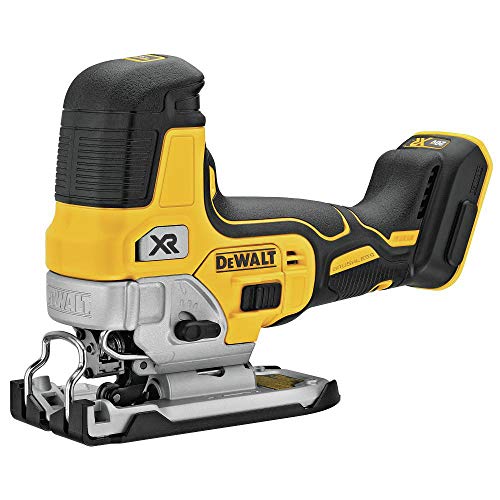
On a barrel-grip saw, your hand wraps around the motor housing, close to the work surface. That lower position puts your wrist nearer the blade and can make small steering corrections feel more direct. Many users also find it easier to press the shoe flat against the material while guiding the saw with the same hand.
A D-handle saw puts your hand above the motor and gives you a familiar, upright grip. The handle can be more comfortable if you are used to a drill or circular saw, and it leaves more room to reach the trigger with your index finger. Some D-handles include a lock-on button; that can help on a long cut but is less useful where you need frequent speed changes.
The trade-off is leverage. The taller D-handle can feel less steady when you push sideways to follow a curve. But a barrel grip is not automatically better for every hand: its thicker body may be tiring for people with small hands, and controls can be awkward to reach depending on the saw’s layout.
Side-by-side comparison
| Factor | Barrel grip | D-handle |
|---|---|---|
| Steering curves | Often easier to make small corrections | Can feel more top-heavy when pushed sideways |
| Long straight cuts | Good when you can guide the body comfortably | Comfortable for many users and familiar to hold |
| Hand position | Low, close to the work | Raised above the saw |
| Trigger access | May require a thumb or shifted grip | Usually easy to reach with the index finger |
| Overhead or awkward cuts | May feel secure in some positions, but depends on balance | Can be easier to grasp and reposition |
| Best reason to choose | Close-in steering and a low grip | Comfort, familiar handling, and easy trigger use |
Choose by the cuts you actually make
For sink cutouts, curved furniture parts, or other work where the line changes direction, try a barrel-grip saw if possible. The lower grip can help you keep the shoe planted while easing the blade around a curve. For tight turns, use a narrow scrolling blade and move slowly; forcing a wide blade sideways can bend it, leaving a bevel or a cut that wanders off the mark.
For straight cuts in sheet goods, either style can work well with a guide. Clamp a straightedge in place and check that the shoe stays against it. A jigsaw blade can deflect at depth, so a cut that looks square on top may lean underneath, particularly in thick stock. For a clean, square edge on a long panel, a circular saw with a guide is usually the better tool.
Consider blade length and material thickness before blaming the handle. A common jigsaw blade may be roughly 3 inches long, but usable cutting depth is less than blade length and varies by saw and blade. In 1-inch hardwood, a dull or unsuitable blade can wander even with a steady grip. Slow the feed, use a blade rated for the material, and let the teeth cut instead of pushing hard.
Comfort and safety count
Handle feel is personal. If possible, hold both styles with the shoe facing down, as it would sit on a board. Check whether your wrist stays neutral, whether you can reach the speed control without loosening your grip, and whether the tool’s weight feels balanced at the front. A barrel grip can improve steering for one person and cramp another’s hand after 20 minutes.
For a cut that starts inside a panel, make sure the saw supports the plunge method you plan to use; not every blade or material is suited to plunging. A drilled starter hole is often safer and gives better control. Secure the work, keep the cord clear of the cut, and wait for the blade to stop before setting the saw down. If the shoe tips or lifts, stop and reset rather than trying to correct a crooked cut with extra sideways pressure.
What to buy
If precision curves are a regular part of your work and the low grip fits your hand, compare barrel-grip jigsaws. Look for a shoe that locks firmly, tool-free blade changes if you swap blades often, and variable speed. A dust blower or dust-extraction port is useful when the cut line keeps disappearing.
If you make occasional cuts in plywood, trim, or shelving, a basic D-handle jigsaw is often the better-value choice. Spend the difference on a small set of blades suited to wood and metal, or on a clamp and straightedge. Those accessories can improve results more than changing grip style.
When comparing saws, check the actual features rather than assuming one grip type has them. Orbital action can speed rough wood cutting, but it tends to leave a rougher edge; switch it off for cleaner cuts or tighter curves. A variable-speed trigger or dial helps match blade speed to material, while a bright line light or dust blower can make it easier to stay on your mark.
A practical buying rule
Choose barrel grip if you value close-in steering and have tried the body shape in your hand. Choose D-handle if it feels more comfortable, you prefer its trigger access, or the price is better. For occasional DIY work, the cheaper saw is fine if its shoe is sturdy, its blade clamps securely, and it has variable speed. For either design, start with a sharp blade, support the offcut, and make a test cut in scrap before committing to the finished piece.