What's inside
As an Amazon Associate I earn from qualifying purchases. This post may contain affiliate links at no extra cost to you.
Our Top Picks


The best blade type for thin plywood
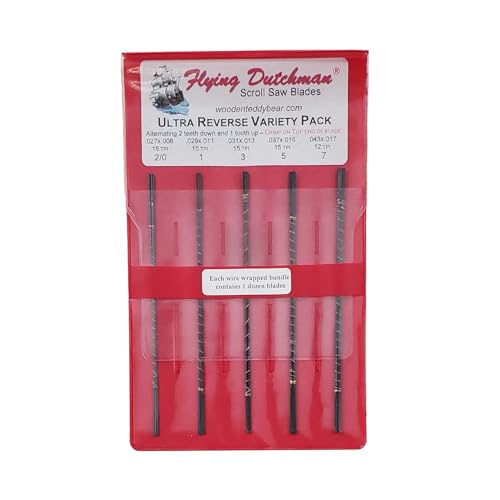
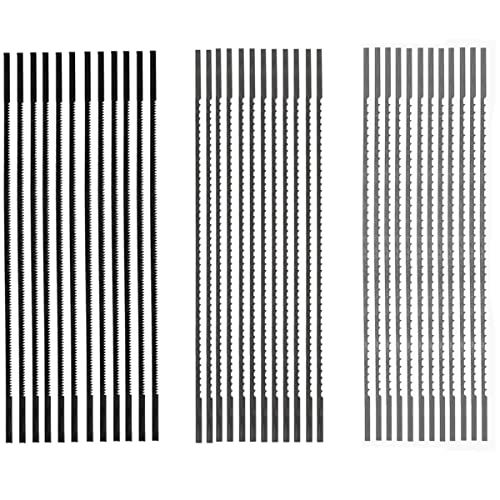
For intricate cuts in thin plywood, a fine-tooth skip-tooth blade is the best starting point. It removes sawdust efficiently, turns more easily than a standard blade, and leaves enough control for small inside corners. A reverse-tooth blade is useful when the top face must stay clean, but it cuts more slowly and can be harder to control in plywood that is already prone to splintering.
For most 1/8-inch to 1/4-inch plywood, buy a mixed pack of scroll saw skip-tooth blade assortments rather than a large quantity of one size. Plywood varies considerably: birch plywood cuts cleanly, while cheap craft plywood may have voids, loose veneers, and glue patches that quickly dull a blade.
As an Amazon Associate we earn from qualifying purchases at no extra cost to you.
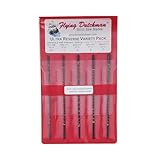


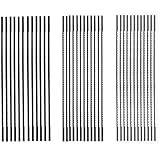
| Blade style | Best use | Advantages | Drawbacks |
|---|---|---|---|
| Skip-tooth | General intricate cuts | Good chip clearance, easy turning, widely available | May leave more fuzz on the underside |
| Reverse-tooth | Clean top and bottom faces | Reduces tear-out on both surfaces | Slower cutting and more heat if pushed |
| Double-tooth | Smooth, controlled cuts | Clean finish and steady cutting | Clogs more readily in resinous plywood |
| Spiral | Freehand cuts in any direction | No need to rotate the workpiece | Less precise, wider kerf, rougher edges |
Choose the blade size and tooth count
Blade numbering is not perfectly standardized between manufacturers, so tooth count is more useful than the number printed on the package. As a practical guide, use a fine #2 or #3 blade for 1/8-inch plywood and a #3 or #5 for 1/4-inch stock. A blade in roughly the 15 to 25 teeth-per-inch range usually balances detail, speed, and chip clearance.
Use a smaller blade when cutting tight inside corners, narrow slots, or fretwork with closely spaced openings. A larger blade is less likely to bend and is better for long outside curves. However, an extremely fine blade is not automatically better. A blade with 30 or more teeth per inch can clog with plywood dust, build heat, and wander when the operator feeds too slowly.
Every tooth should remain engaged with the work while cutting. If the plywood is so thin that only one or two teeth are contacting it, the blade can snag and tear the veneer. If the teeth are too coarse, they remove material aggressively and tend to chip the exit side.
Reverse-tooth versus skip-tooth blades
Standard skip-tooth blades generally cut fastest and are the easiest to learn with. Their alternating tooth pattern leaves a small gap that carries dust out of the kerf. They can leave fibers on the underside, but light sanding with 220-grit paper usually fixes that.
Reverse-tooth blades place some teeth pointing upward near the lower part of the blade. Those teeth score the underside as the blade exits, reducing splintering. The trade-off is important: reverse teeth also remove dust less efficiently. If you feed too quickly, they heat up and burn the plywood; if you force the blade around a tight corner, the lower teeth can catch the work.
For a visible project cut from good birch plywood, a reverse-tooth blade is often worth the slower pace. For painted decorations, templates, or cuts that will be sanded, a skip-tooth blade is usually the better value. You can also place painter’s tape over the cut line to reduce surface splintering, though tape can obscure a fine pattern.
When spiral blades make sense
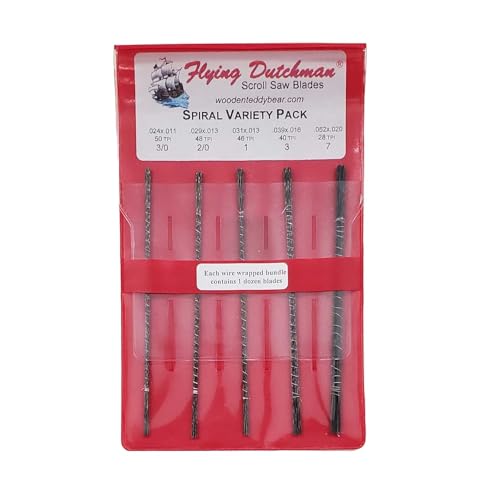
Scroll saw spiral blades have teeth around the entire blade, so they cut while moving in any direction. That is convenient for lettering, irregular shapes, and workpieces that cannot be rotated freely.
They are not the first choice for precise fretwork. The cutting width is commonly around 0.05 to 0.08 inch, depending on the blade, and the blade can feel vague because it cuts sideways as well as forward. Fine details are easier to distort, and the edge often needs more sanding. Buy spiral blades when maneuverability matters more than a crisp, predictable kerf.
How to cut thin plywood without breaking blades
Install the blade with the teeth pointing down toward the table. Set tension according to the saw manufacturer’s guidance; a properly tensioned blade should give a clear, high note when lightly plucked, not a dull twang. Excessive tension can break fine blades, while insufficient tension causes wandering and makes tight curves nearly impossible.
Run the saw at a moderate to high speed, but let the blade do the cutting. Feed the plywood slowly enough that the motor does not bog down. On a typical scroll saw, a practical starting point is around 800 to 1,200 strokes per minute for thin plywood, then adjust based on vibration, burning, and control. Do not twist the workpiece while pushing forward. Instead, make small directional changes and use relief cuts in waste areas when a pattern contains a very tight turn.
Support the plywood firmly against the table. Thin stock can lift with the blade and chatter, especially near a narrow point. A hold-down foot set just above the surface helps, but it should not press so hard that the workpiece cannot move. If the plywood has a loose top veneer, apply low-tack tape or cut with the cleaner face upward and plan to sand the opposite side.
What to buy for the best value
For a first purchase, choose a reverse-tooth and skip-tooth blade assortment containing sizes from roughly #2 through #5. This lets you compare edge quality and cutting speed on your actual plywood. A small pack from a reputable blade maker is preferable to a very large bargain pack if the teeth are inconsistent or the blades arrive bent.
If you cut only occasional craft projects, the cheaper option is fine. Blades are consumables, and a budget blade that lasts 10 to 20 minutes of difficult cutting may still be economical. For repeated production work, premium blades are easier to justify because consistent tooth spacing reduces wandering and broken blades. Keep several spares at the bench: a snapped blade in the middle of an intricate pattern is usually caused by over-tensioning, forcing a turn, or hitting a hidden void in the plywood.
For most users, the final choice is simple: start with a fine skip-tooth blade for speed and control, switch to reverse-tooth when both faces need to look clean, and reserve spiral blades for cuts where turning the workpiece is the main problem.