What's inside
As an Amazon Associate I earn from qualifying purchases. This post may contain affiliate links at no extra cost to you.
Our Top Picks


The short answer
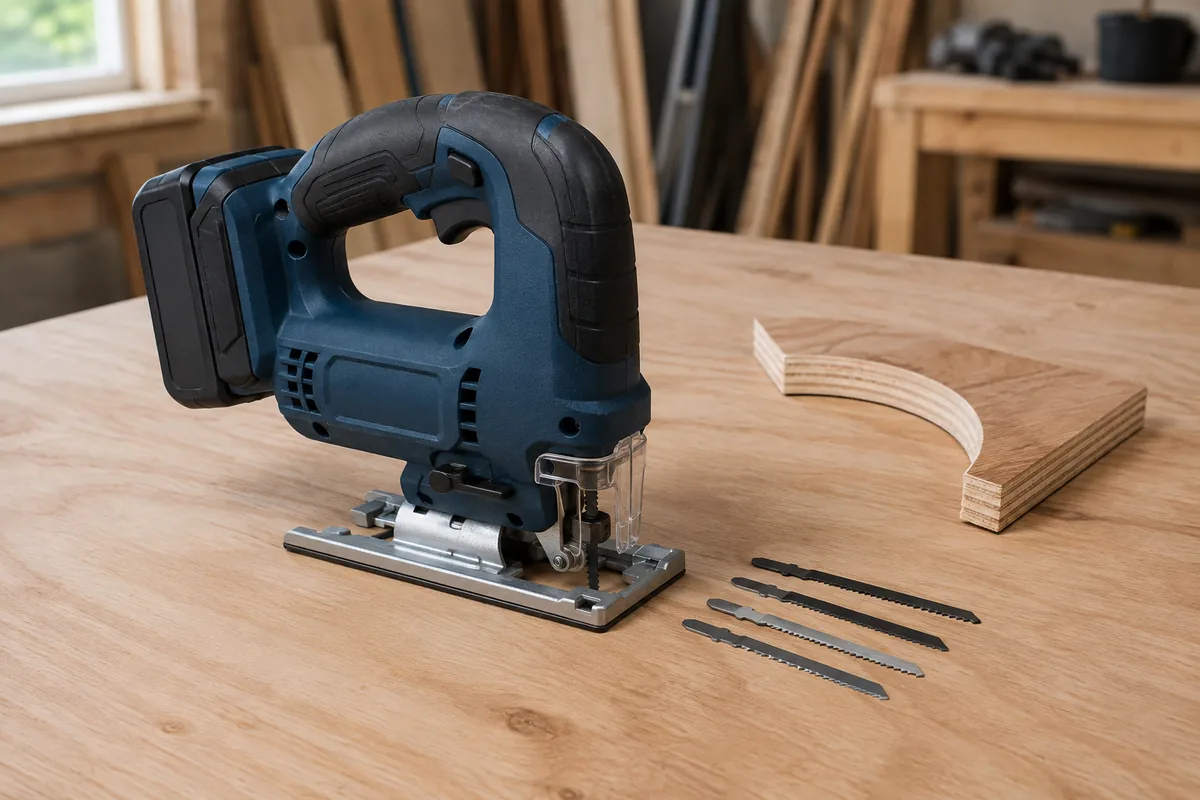
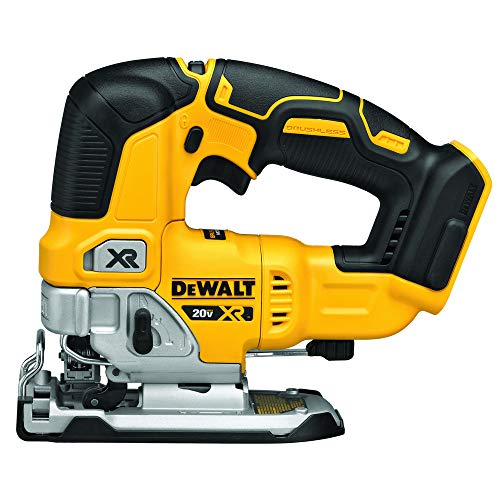
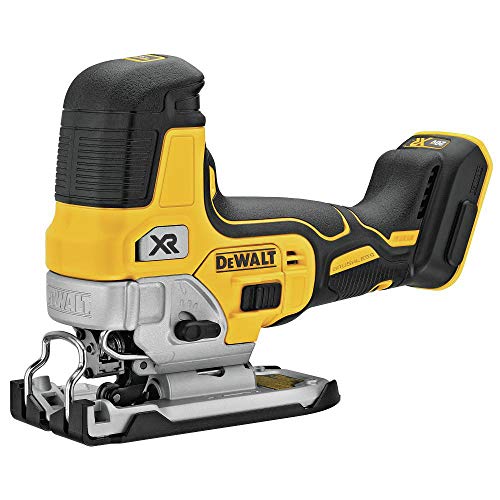
For cutting curves in thick plywood, buy a jigsaw. A track saw is a highly useful tool, but it is designed to make long, straight, controlled cuts against a guide rail. It cannot follow a curve.
That does not make the jigsaw the automatic winner for every plywood project. In 3/4-inch or thicker sheets, a jigsaw can wander, leave a rough edge, and cut noticeably slower than a circular saw or track saw. The practical choice depends on whether you need a curved final edge, a straight reference cut, or both.
As an Amazon Associate we earn from qualifying purchases at no extra cost to you.


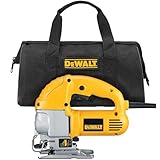
For most curved furniture parts, templates, and cutouts, a jigsaw with the right blade is the cheaper and more capable option. Use a track saw to break down the sheet and establish straight edges, then switch tools for the curve.
What each tool is built to do
A jigsaw uses a narrow blade that moves up and down. Because the blade is relatively short and flexible, it can turn through curves. The tighter the curve, the narrower the blade needs to be. This flexibility is also the main source of trouble: if you push too hard or use a dull blade, the cut can drift away from the layout line.
A track saw is essentially a plunge circular saw guided by a long anti-slip rail. Its wide, rigid blade is excellent for ripping plywood, trimming panels to exact length, and making clean, splinter-controlled crosscuts. The rail keeps the saw straight, but it also prevents the saw from turning. Attempting to steer a track saw around a curve is unsafe and will damage the cut, the rail, or both.
| Factor | Jigsaw | Track saw |
|---|---|---|
| Curved cuts | Excellent | Not suitable |
| Straight cuts in sheet goods | Acceptable to poor over long distances | Excellent |
| Typical plywood thickness | Works well through 1/2 to 3/4 inch; thicker stock requires care | Usually excellent within the blade’s cutting depth |
| Edge quality | Depends heavily on blade and technique | Usually clean and consistent |
| Cutouts and interior openings | Good, with a drilled starter hole | Limited; requires plunge cuts and careful setup |
| Cost and versatility | Lower cost and useful for many shapes | Higher cost, especially with rails, but better for sheet breakdown |
Cutting curves in thick plywood
For 3/4-inch plywood, use a jigsaw blade with a working length of roughly 3 to 4 inches. The blade should extend below the material throughout the stroke, but excessive length increases vibration. A coarse blade cuts faster and clears dust better; a fine-tooth blade leaves a cleaner edge but can heat up and clog in plywood glue.
For exposed edges, choose a down-cutting blade if the top face must stay clean, or place the finished face down when using a standard up-cutting blade. Down-cut blades reduce top-face splintering but can pack sawdust into the kerf and make the tool harder to control. Make a test cut in scrap from the same plywood before committing to the workpiece.
Mark the curve with a template or a thin strip rather than trying to draw a complicated shape freehand. Clamp the plywood securely on supports, leaving the waste side hanging clear. If the panel flexes, the blade can bind or angle out of square. Put supports no more than about 24 inches apart for a large sheet, and add support close to the cut without trapping the waste.
Let the blade do the cutting. Pushing a jigsaw faster than its teeth can remove material creates a bevel, especially in thick plywood. Keep the shoe flat and make gradual turns. For a tight radius, make relief cuts into the waste area so the blade does not have to turn and remove a large wedge of material at once.
Where the track saw still helps
A track saw is valuable before and after the curved cut. It can reduce a 4-by-8-foot panel into a manageable blank with a straight edge. That makes layout easier and prevents you from wrestling a full sheet around a jigsaw. It can also cut a straight tangent leading into the curve, reducing the amount of curved material the jigsaw has to remove.
After the jigsaw cut, the track saw may trim a straight section to its final dimension. It is also the better choice when the project only appears to involve a curve but actually consists of several straight segments. Polygonal shapes, angled cabinet parts, and long shallow tapers are faster and more accurate with a rail.
If your work is mostly sheet breakdown and cabinet construction, a track saw with guide rail is a sensible investment. It is not a replacement for a jigsaw; it fills a different role.
When a jigsaw is the better buy
Choose a jigsaw if you need curved shelves, arched panels, wheel-well shapes, sink openings, or irregular templates. It is also the practical choice for occasional DIY work because a basic tool and several specialized blades cost much less than a track saw system.
Look for variable speed, a low-vibration design, a rigid shoe, and an orbital-action setting that can be switched off. Use orbital action for faster rough cuts and turn it down or off for tighter curves and cleaner edges. A corded orbital jigsaw with wood blades is often a better value than a high-priced cordless kit if you are making long cuts in thick material.
Do not expect the jigsaw to produce a finished, perfectly square edge on every curve. Leave the layout line visible, then use a flush-trim router bit against a template, a spindle sander, or a sanding drum to bring the edge to its final shape. For a small number of parts, this two-step process is usually faster than trying to force perfect accuracy from the jigsaw.
Better options for repeated parts
If you need many identical curved plywood parts, neither tool is ideal by itself. Rough-cut the pieces with a jigsaw, stack them, and finish them against a template with a router. A bandsaw is also better for repeated curves and thick stock when you have one available, because its blade is continuously supported and generally wanders less.
For curves deeper than about 1-1/2 inches, very tight radii, or production quantities, consider a bandsaw or router-based template method instead of buying a more expensive jigsaw. The track saw remains useful for preparing the blanks, but it should not be used as the curve-cutting tool.
Buying decision
Buy the jigsaw when the final edge must curve. Buy the track saw when your priority is fast, accurate straight cuts in large plywood sheets. If your projects include both tasks, owning both eventually makes sense, but start with the jigsaw for curved work and add a track saw when sheet handling and long straight cuts become the bottleneck.
For occasional curves, a jigsaw blade set for thick plywood will improve results more than upgrading to a track saw. A sharp, appropriate blade, solid support, and a slow feed rate matter more than the tool’s advertised power.