What's inside
As an Amazon Associate I earn from qualifying purchases. This post may contain affiliate links at no extra cost to you.
Our Top Picks


Quick answer
For most floor tile adhesive removal, a wide flat chisel is the more efficient choice once the tile is off: it covers more surface and can leave a more even result. A scaling chisel is better for stubborn, thick patches that need concentrated impact, but its narrower working edge removes less material per pass and can gouge the substrate if used aggressively.
If you are buying one attachment for a typical room, choose a flat chisel sized for your demolition hammer or rotary hammer. If the adhesive is hard, raised, or bonded in isolated lumps, a scaling chisel can be a useful second attachment—not a guaranteed shortcut. The floor material and adhesive matter as much as the chisel shape.
As an Amazon Associate we earn from qualifying purchases at no extra cost to you.

What the names mean
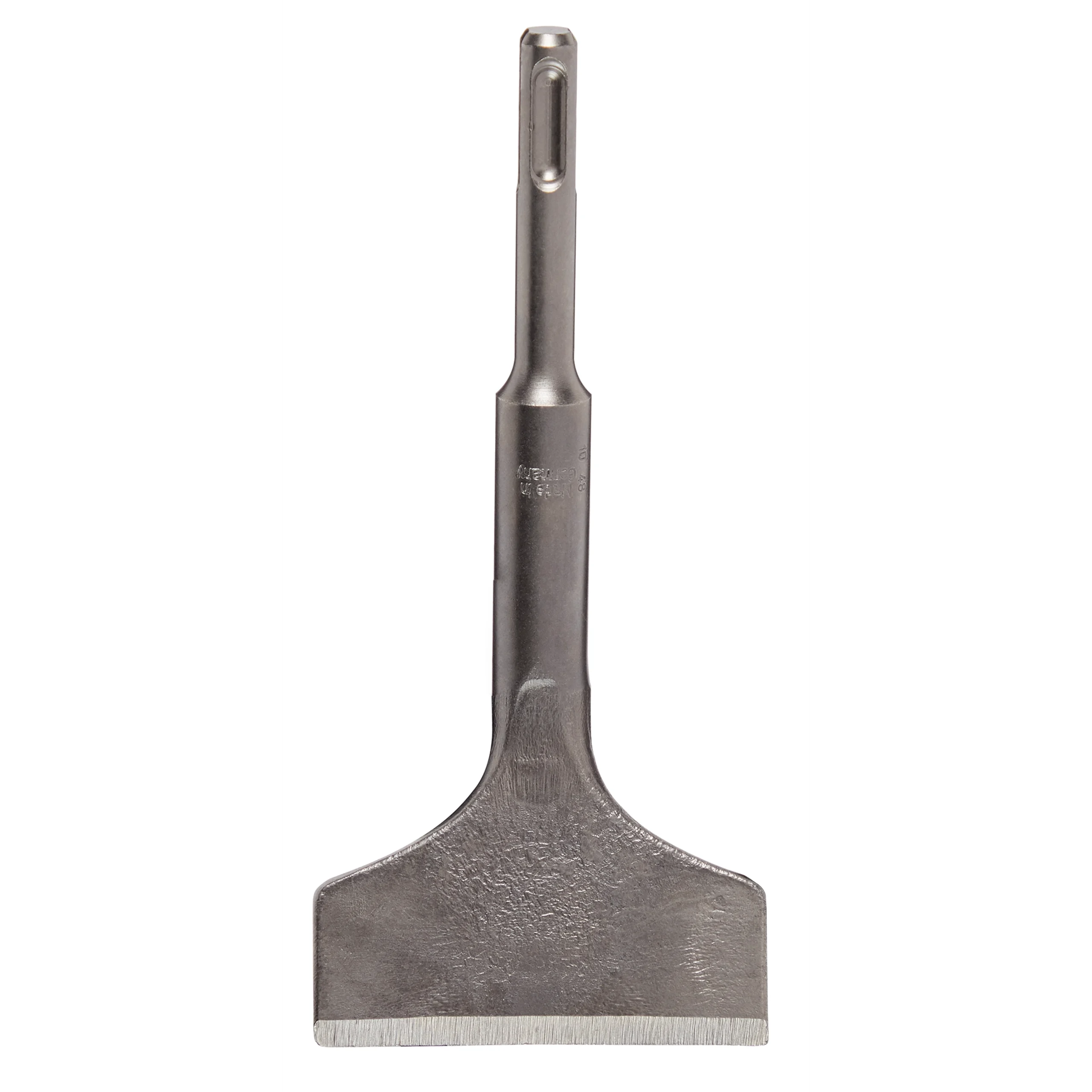
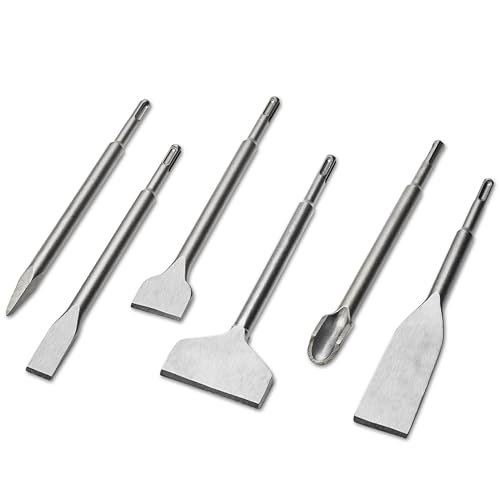
A flat chisel has a broad, flat cutting edge. Common widths are roughly 1 to 3 inches, though sizes vary by shank system and manufacturer. It works best when you can get the edge under a layer and keep it at a shallow angle. The broad edge spreads impact across a larger area, which helps with thin adhesive residue and broad, relatively level floors.
A scaling chisel has a narrower, often thicker or more robust working end. It is intended to break and chip hard material, including scale, mortar, and stubborn deposits. On tile adhesive, it concentrates the hammer’s force into a smaller area. That can help crack a tough ridge, but it is less suited to sweeping away a thin film across an entire room.
Check the attachment’s shank before buying. SDS-Plus, SDS-Max, and hex shanks are not interchangeable without the right tool or approved adapter. Also check the hammer’s instructions: not every rotary hammer is rated for extended chiseling, and a demolition hammer may accept a different attachment system.
Flat chisel vs. scaling chisel
| Factor | Flat chisel | Scaling chisel |
|---|---|---|
| Best use | Broad removal of thin adhesive and loose residue | Breaking raised, thick, or stubborn patches |
| Coverage per pass | Usually greater with a wider edge | Lower; the working edge is more concentrated |
| Control | Good on a flat floor when held at a shallow angle | Useful for targeted chipping, but easier to dig in |
| Main risk | Can skid or chatter if the edge cannot get beneath the adhesive | Can gouge concrete or damage a weaker underlayment |
| Good first choice? | Yes, for most broad floor cleanup | Usually as a specialist attachment |
Which is more efficient in practice?
On a large floor with a thin, reasonably brittle adhesive layer, the flat chisel normally removes more material with each pass. Keep the blade nearly parallel to the floor and advance steadily. A steep angle turns the edge into a digging tool: it may remove adhesive quickly, but it also raises the chance of leaving trenches in concrete or tearing up a softer subfloor.
On hard, thick adhesive, neither attachment makes the job effortless. A scaling chisel may break the deposit into chips more readily because its impact is focused. That is useful for high spots or stubborn patches, but repeated point impacts can pit concrete and create more repair work. Use it locally, then switch to a flat chisel for the broader cleanup if the surface allows.
There is no dependable square-feet-per-hour figure. Results change with adhesive type and thickness, hammer weight and impact rate, chisel width, and how firmly the residue is bonded. Test a small patch first. If a few passes produce dust but little separation, changing the angle or using a sharper, suitable edge may help; simply pressing harder can increase vibration and substrate damage without improving removal.
Choose by the floor underneath
Concrete is relatively forgiving, but it is not immune to gouging. Start with a flat chisel at a low angle; use a scaling chisel only on raised, resistant areas and stop if you start breaking the concrete surface instead of lifting the adhesive.
On plywood, cement board, or another underlayment, be more cautious. Mechanical chiseling can tear the surface, loosen fasteners, or remove material that needs to remain sound. Work at low aggression, test in an inconspicuous spot, and consider whether removing and replacing a damaged underlayment is safer than trying to scrape every last trace. A chisel is also not the right answer for every adhesive: suspected asbestos-containing flooring or mastic should not be disturbed until it has been assessed under local guidance.
Buying and using the right attachment
For a typical adhesive-removal job, look for a compatible SDS flat floor chisel with a width suited to the work and your tool’s limits. A narrower blade offers more control around edges and obstacles; a wider blade can cover open floor faster but may chatter or bind on uneven patches. Don’t assume the widest option is fastest.
If you have stubborn raised areas, a compatible scaling chisel attachment is worth considering. It is often cheaper to buy one only if the test patch shows that focused chipping helps. For a small area of soft, flaky residue, a hand scraper may be adequate and avoids the noise, dust, and risk of power-tool damage.
Wear eye protection, hearing protection, gloves, and a suitable dust mask or respirator based on the material and job conditions. Use dust extraction where practical, keep bystanders clear of flying chips, and take breaks: hammering creates substantial vibration. Do not force the attachment, and inspect the chisel for mushroomed or damaged ends. A dull, damaged edge can reduce control and should be replaced or serviced according to its manufacturer’s instructions.
What to buy for your job
Choose a flat chisel if the task is removing adhesive over a broad, mostly level floor and the residue is thin enough to lift or scrape. Choose a scaling chisel if the work is chiefly breaking up isolated, hard ridges—and only after confirming the substrate can take the impact. If you do not know how the adhesive will respond, start with a compatible flat chisel and test a small area before buying another attachment.