What's inside
As an Amazon Associate I earn from qualifying purchases. This post may contain affiliate links at no extra cost to you.
Chopping mortises in oak is one of the jobs where the wrong mallet makes a good chisel feel useless. Oak resists the cut, rebounds hard, and punishes a tool that is too light, too soft, or poorly balanced. For most hand-cut mortises, the best choice is a heavy wooden joiner’s mallet with a compact head and slightly tapered striking faces.
As an Amazon Associate we earn from qualifying purchases at no extra cost to you.


Our Top Picks


The best mallet type for oak mortises
A wooden joiner’s mallet in the 20- to 28-ounce range is the most useful choice for chopping oak. Its angled head delivers a firm blow without the harsh shock of a steel hammer, and its broad wooden faces are less likely to mushroom or damage the end of a chisel handle.
Look for a head made from dense, tough hardwood such as beech, hornbeam, or maple. The head should be roughly 5 to 7 inches long, with striking faces large enough to contact the chisel cleanly but not so large that the mallet feels clumsy. A handle that angles slightly downward from the head gives better control than a straight, round stick.
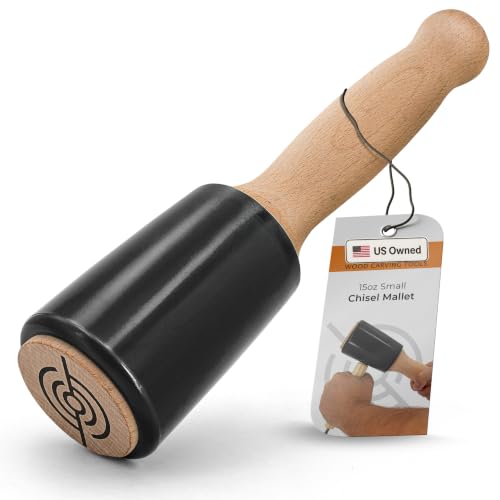
For a general-purpose option, compare current 20-ounce wooden joiner’s mallets. They are usually heavy enough for 1/4- to 3/8-inch mortise chisels while remaining manageable for paring and bench work.
How much weight do you need?
Weight is useful, but only up to the point where it reduces accuracy. A 24-ounce mallet has more momentum than a 16-ounce model at the same swing speed, so it can drive a mortise chisel deeper into oak with fewer blows. The cost is fatigue and a greater chance of overstriking the chisel or splitting the work around the mortise.
| Mallet weight | Best use | Advantages | Limitations |
|---|---|---|---|
| 12–16 oz | Small mortises, lighter chisels, general joinery | Fast and easy to control | Requires more blows in dense oak |
| 18–24 oz | Most furniture mortises | Good balance of power and accuracy | Can tire your wrist during long sessions |
| 26–32 oz | Large mortises and heavy framing chisels | Excellent driving force | Less precise; excessive for small work |
For a 3/8-inch mortise in a chair or table leg, an 18- to 24-ounce mallet is the sensible starting point. A 30-ounce mallet is justified for large framing mortises, but it is generally too much for delicate furniture joinery. If you are unsure, choose the lighter mallet. You can always strike more times; you cannot undo a deep overcut.
Wooden, plastic, and metal mallets compared
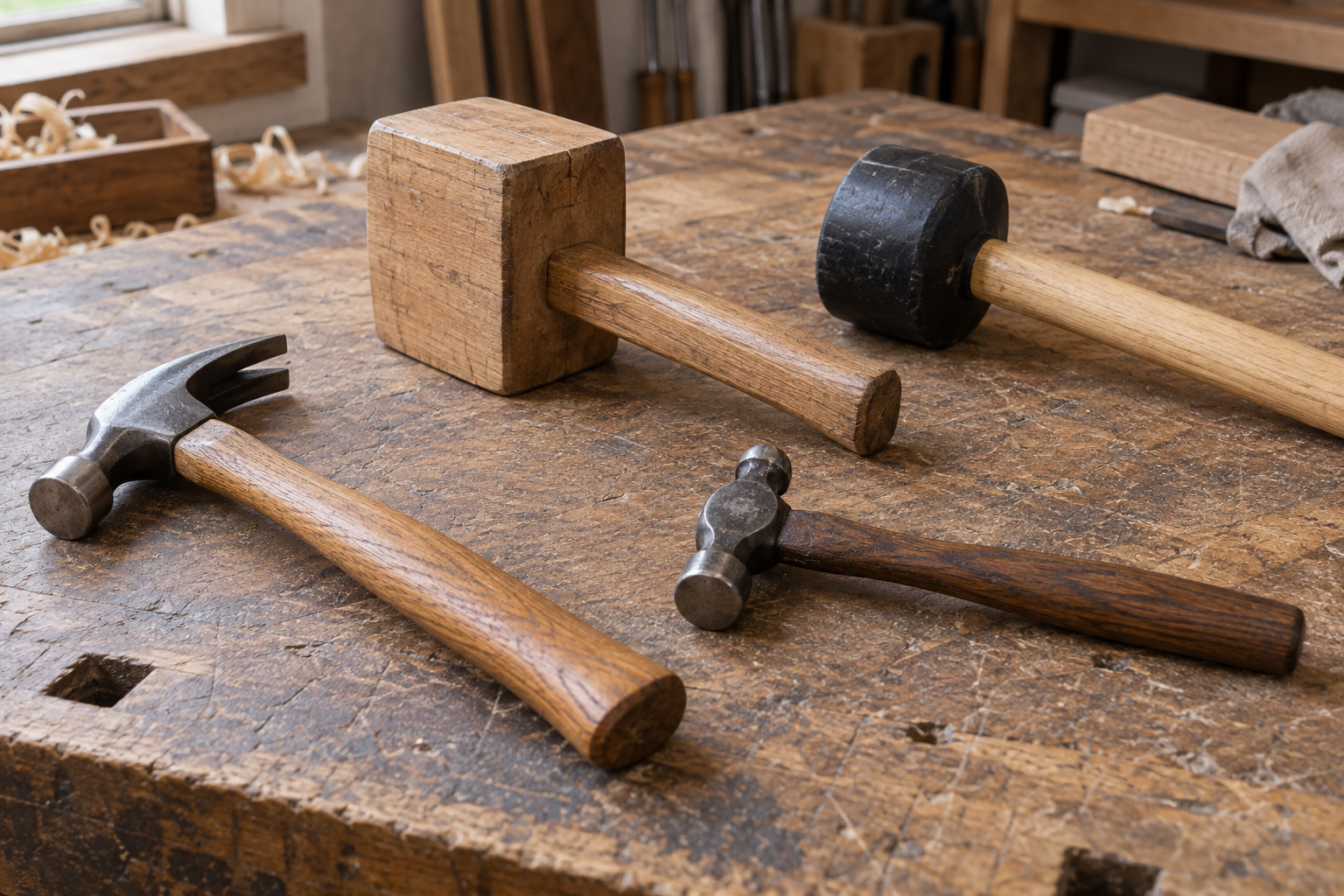
A traditional wooden mallet is the best match for a heavy mortise chisel because it transfers energy efficiently without excessively damaging the handle. The face will eventually develop dents, but that is normal and preferable to damaging the chisel.
A plastic or urethane-faced mallet is quieter and useful for assembling joints, tapping plane irons, or positioning parts. It is usually a poor primary choice for chopping oak mortises. The softer face absorbs more energy, and the head may bounce instead of driving the chisel. Some high-quality dead-blow mallets hit harder than expected, but they are still better suited to fitting and assembly than sustained mortising.
Do not use a steel claw hammer or framing hammer on a wooden-handled chisel. It can rapidly mushroom the handle, create sharp splits, and transmit an uncomfortable shock through the tool. A steel-faced hammer is appropriate only when the chisel is specifically designed for metal-hammer use, such as a heavy-duty framing chisel.
If you want one mallet for both chopping and assembly, a 24-ounce hardwood joiner’s mallet is a better compromise than a rubber or dead-blow model.
Details that matter in use
The striking faces should be slightly convex or gently crowned rather than perfectly flat and sharp-edged. A crowned face centers the blow and reduces the chance of catching the corner of the chisel handle. Avoid a mallet with deeply rounded faces; too much curvature makes accurate striking difficult.
Check the joint between head and handle before buying. The handle should pass completely through the head or be secured with a properly fitted wedge. A loose head is dangerous and wastes energy. Some inexpensive mallets rely on a simple friction fit that loosens after repeated hard blows.
Handle length affects leverage. A 10- to 12-inch handle gives enough swing for oak without forcing you to use your shoulder. A short 8-inch handle offers excellent control but less power. The grip should not be heavily padded; bare or lightly finished wood makes it easier to adjust your hold and feel when the mallet is rotating.
How to chop the mortise without damaging the work
Start by laying out the mortise clearly and removing waste in stages. Make the first cuts close to the center, not directly on the layout lines. Hold the chisel bevel toward the waste when establishing the ends, and keep the chisel nearly vertical for the main chopping cuts.
Strike with the wrist and forearm at first. Let the mallet’s weight do the work rather than swinging hard from the shoulder. In oak, a controlled sequence of moderate blows is safer than one full-power strike. After each few blows, lever out the chips and clear the mortise. Do not twist a thin chisel sideways at the bottom of a deep cut; that is a common way to snap the edge or split the mortise wall.
A sharp mortise chisel matters more than an extra four ounces of mallet. If the chisel bounces, leaves crushed fibers, or needs unusually hard blows, hone the bevel and check that the cutting edge is square. A dedicated oak mortise chisel set paired with the right mallet will outperform a heavy mallet paired with a blunt bench chisel.
What to buy
For most woodworkers, buy a 20- to 24-ounce hardwood joiner’s mallet with a wedged head, a 10- to 12-inch handle, and moderately crowned striking faces. That combination supplies enough momentum for oak while preserving control around the mortise layout.
A cheaper 16-ounce wooden mallet is fine if you cut small mortises, work mostly in softer woods, or value low fatigue over speed. Spend more only when the cheaper tool has a loose head, poorly shaped handle, or soft wood that deforms immediately. The mallet does not need to be decorative. It needs to stay secure, land squarely, and survive thousands of controlled blows.