What's inside
As an Amazon Associate I earn from qualifying purchases. This post may contain affiliate links at no extra cost to you.
Our Top Picks
How They Cut Differently
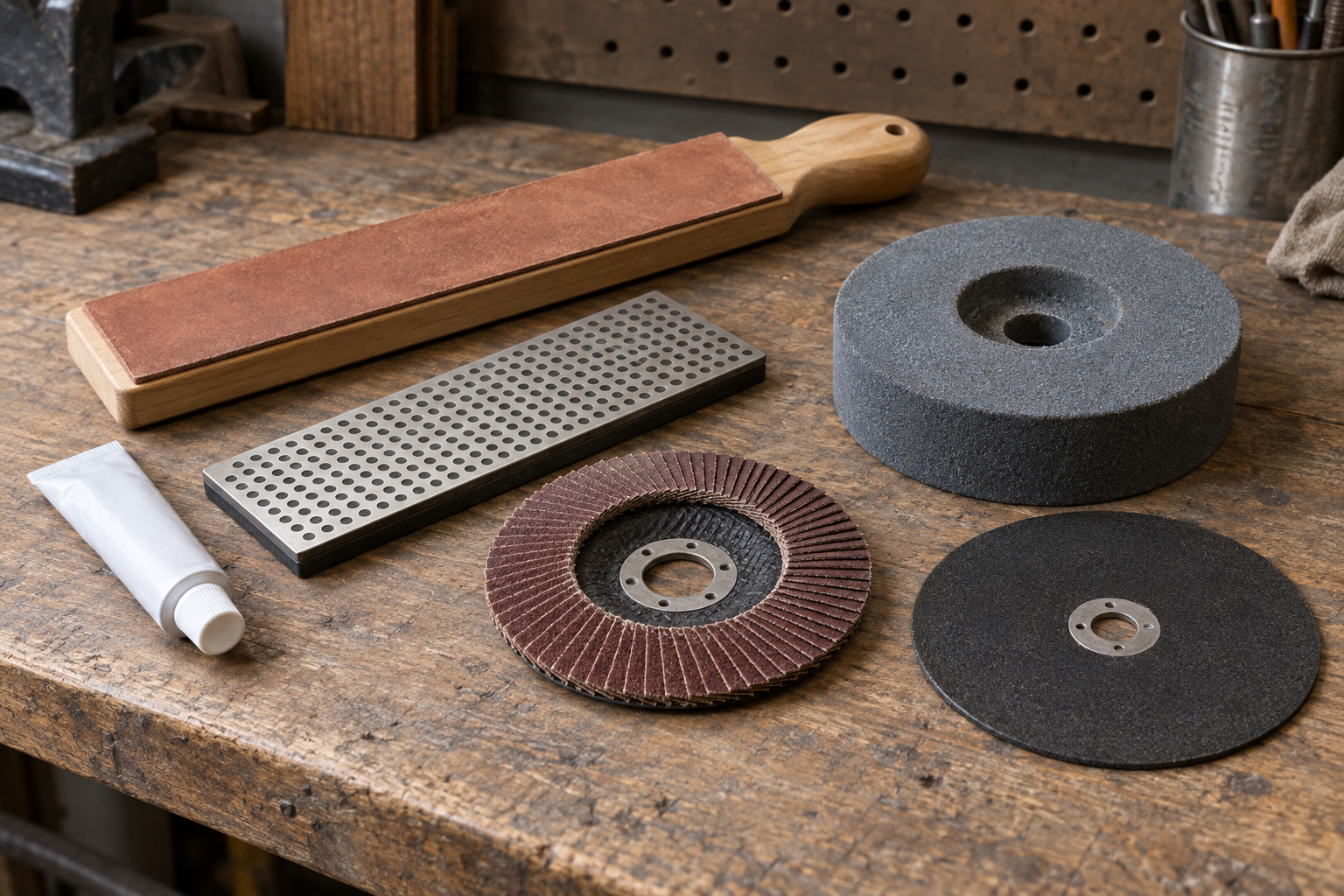
A grinding wheel and a flap disc both mount on a 4-1/2″ angle grinder, but they remove metal in completely different ways. A grinding wheel is a single, rigid bonded abrasive stone, typically 1/4″ thick. You grind with the edge and face to hog off material. It cuts aggressively and does not flex.
A flap disc is a backing plate covered with overlapping flaps of coated abrasive, like layered sandpaper. It is flat, semi-flexible, and cuts with the face. The flaps wear away to expose fresh grit as you work. Standard flap discs come in Type 27 (flat) and Type 29 (conical) — Type 29 has an angled shape that lets you grind at a lower angle and is better for weld removal.
As an Amazon Associate we earn from qualifying purchases at no extra cost to you.


That structural difference determines everything else: speed, finish, control, heat, and cost.
Removal Speed: Which Is Actually Faster?
If your only goal is to knock down a tall, heavy weld bead as fast as possible, a grinding wheel wins on pure stock removal. A fresh 4-1/2″ x 1/4″ aluminum oxide grinding wheel on a 11-amp grinder will remove mild steel at roughly 8-12 grams per minute at moderate pressure. You can flatten a 3-inch long MIG bead that stands 3-4mm proud in 30-45 seconds.
A 40-grit flap disc removes slower in that first pass — about 5-8 grams per minute. The same bead will take 60-90 seconds to level. The gap widens on hard welds like 6010 stick or stainless TIG, where the bonded wheel keeps biting while the flap disc loads up faster.
The efficiency picture flips when you count the total job time. A grinding wheel leaves deep scratches and a scalloped surface that you then have to clean up with a second step: usually a 40 or 60-grit 40-grit flap discs or a fibre disc to smooth it. A flap disc levels and blends in one step. For a weld you need to make flush or paint-ready, the flap disc is often faster overall by 20-30% because you eliminate a tool change and a second grinding pass.
Failure mode matters here too. Grinding wheels gouge easily if you tilt or dwell. One slip digs a 1-2mm crater that takes minutes to fix. Flap discs are far more forgiving — the flexible flaps ride over the surface and resist digging in, so beginners keep a flatter profile with less rework.
Finish Quality and Control
This is where flap discs clearly pull ahead. A grinding wheel, even with a light touch, leaves a rough, directional scratch pattern around 36-24 grit equivalent. It will not blend into the parent metal without leaving an obvious low spot. If you grind thin sheet (16-20 gauge), it is very easy to thin the base metal around the weld and create a weak spot.
A flap disc acts like a grinder and sander at the same time. A 40-grit flap disc levels a weld and leaves a finish around 60-80 grit. A 60-grit leaves a finish you can go straight to primer after a quick pass with 120-grit. A 80-120 grit flap disc can blend a weld on stainless or aluminum to a near-polished blend line.
For welds on flat plate or structural steel where appearance does not matter, finish is irrelevant — use the wheel. For any weld that will be visible, painted, powder coated, or on tubing, sheet metal, or stainless, the control of a flap disc saves you from over-grinding.
Noise and vibration also affect control. Grinding wheels are louder (often 95-100 dB) and transmit more vibration, which makes it harder to feel when you are flush. Flap discs run smoother and noticeably quieter, so you can hear and feel when the weld is level.
Heat, Longevity, and Cost
Heat is the hidden killer, especially on thin material. A grinding wheel generates intense, localized heat because all the friction is on a small contact patch with no give. It will blue thin sheet metal in seconds and can warp 14-gauge and thinner if you stay in one spot. Stainless is even more sensitive — excessive heat ruins corrosion resistance at the weld.
Flap discs run 20-30% cooler. The overlapping flaps create air flow, the abrasive cuts cooler, and the contact patch is larger. You can work longer on a single spot without discoloration. For auto body, handrails, or food-grade stainless, that matters.
On cost, grinding wheels are cheaper per unit. A decent 4-1/2″ grinding wheel costs $2-$4. A quality zirconia flap disc costs $5-$9. But longevity reverses the math. A grinding wheel wears down in diameter and has to be discarded at about 1/2 its original size, and it cuts slower as it shrinks. A single 40-grit zirconia flap disc will outlast 3-5 grinding wheels when blending welds because the flaps continuously expose new abrasive. Ceramic flap discs cost more ($8-$12) but last even longer on hard steel and stainless.
Safety and failure modes: Grinding wheels can crack if dropped, over-torqued, or pinched, and a cracked wheel can shatter at 11,000 RPM. Always check for cracks, use the guard, and do not exceed the rated RPM. Flap discs do not shatter, but they shed grit and flap fragments as they wear. Both require a face shield, not just safety glasses — weld grinding throws hot, sharp particles at high speed.
| Factor | Flap Disc (40-60 Grit Zirconia) | Grinding Wheel (1/4″ A/O) |
|---|---|---|
| Initial stock removal | Moderate, 5-8 g/min | High, 8-12 g/min |
| Total time to flush + blended finish | Faster (one step) | Slower (requires second abrasive) |
| Surface finish | 60-80 grit, paint-ready | Very coarse, needs re-finishing |
| Control / risk of gouging | High, forgiving | Low, easy to dig in |
| Heat on thin metal | Lower | High, warps easily |
| Cost per disc | $5-$9 | $2-$4 |
| Life per dollar on welds | Better | Worse (wears faster) |
| Best for | Visible welds, sheet metal, stainless | Heavy beads, beveling, structural steel |
Which Should You Buy for Weld Removal?
Buy both if you do a lot of fabrication, but if you have to choose one for general weld cleanup, get flap discs.
Choose a grinding wheel when you need to hog off a lot of metal fast and finish does not matter: heavy MIG beads on 1/4″ and thicker plate, removing tack welds, beveling edges for a second pass, or cleaning up stick weld slag on structural steel. Keep a 40-grit flap disc nearby to clean up the scratches afterward.
Choose a flap disc for 90% of weld removal work: grinding MIG welds flush on table frames, blending TIG welds on tubing, auto body panels, stainless handrails, or any thin material under 1/8″. For mild steel, a 40-grit zirconia Type 29 is the workhorse. For stainless or hard steel, step up to a ceramic grain disc — it cuts faster and stays sharp longer at high heat. Use light to moderate pressure and keep the disc at 10-15 degrees to the work; pushing hard just glazes the grit and generates heat without cutting faster.
A practical starter setup for a 4-1/2″ grinder is: a 5-pack of 1/4″ grinding wheels for rough work, a 10-pack of 40-grit Type 29 zirconia flap discs for most weld leveling, and a few 60 or 80-grit flap discs for blending. That covers everything from heavy removal to near-finishing without overspending. If you only do occasional weld cleanup on a budget, skip the bulk wheels and just keep zirconia flap discs in 40 and 60 grit — the cheaper grinding wheel is not worth the extra finishing time unless you are regularly grinding thick, ugly beads.