What's inside
As an Amazon Associate I earn from qualifying purchases. This post may contain affiliate links at no extra cost to you.
Our Top Picks
 Milwaukee 48-32-5033 Power Drill Bit Extensions Shockwave SocketPack of 10.65 x 2.87 x 3.87 inches0.1 poundsCheck on Amazon


The short answer
If you have an impact wrench with a 1/2-inch, 3/8-inch, or 1-inch square drive, use a socket that matches the drive size. A socket extension is the right accessory when you need extra reach. An impact-rated socket adapter is mainly for converting a hex-drive impact driver or drill to a socket—not for improving an impact wrench.
For an impact wrench, choose an impact socket extension set when access requires it. Choose an impact socket adapter set only when you genuinely need to change drive types.
As an Amazon Associate we earn from qualifying purchases at no extra cost to you.


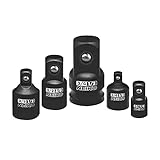

The cheap chrome extension may work for light hand-tool use, but it is a poor choice on an impact wrench. The risk is not just premature wear. A chrome extension can crack or shatter under repeated hammering, sending sharp fragments into the work area.
What each tool actually does
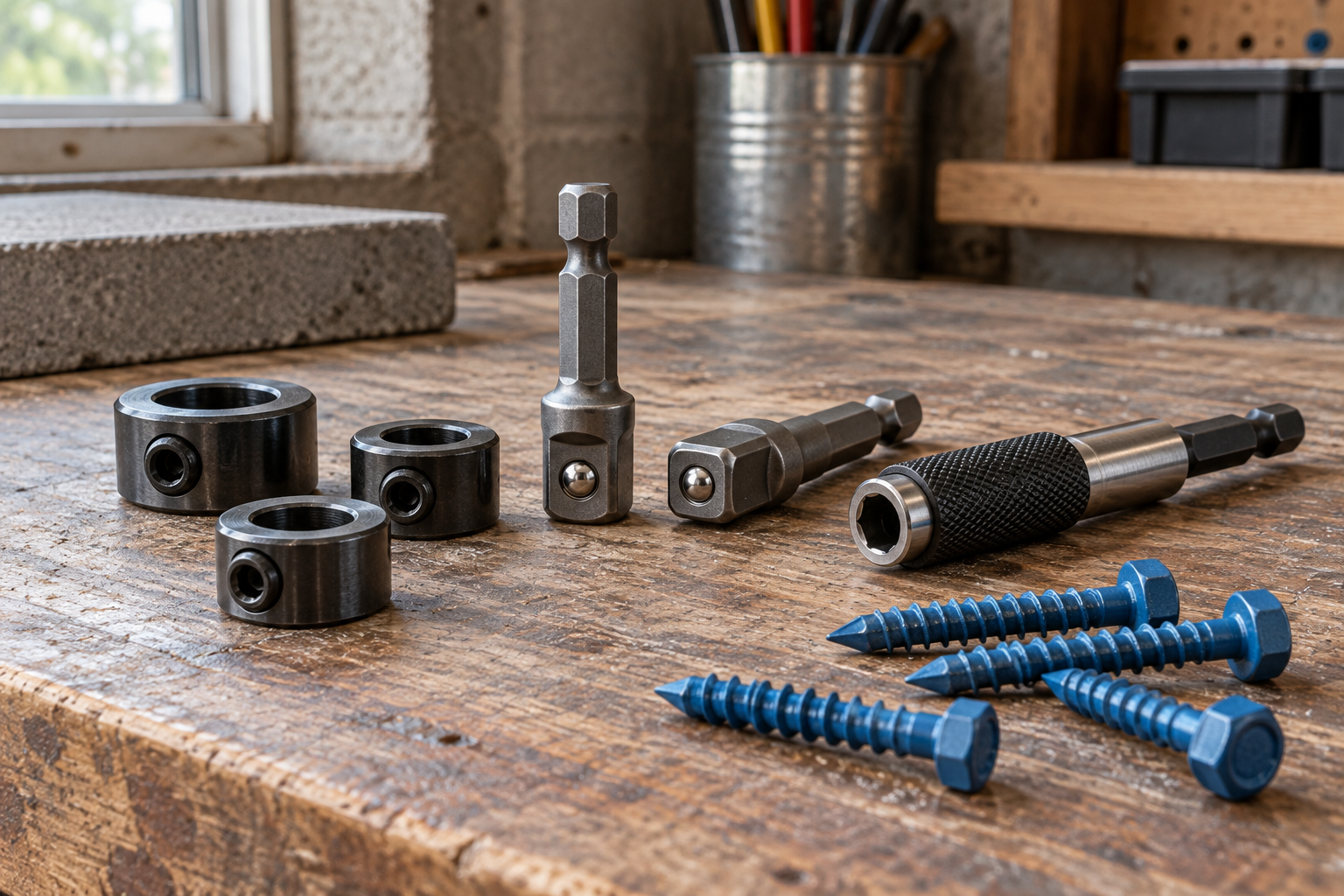
An impact-rated socket adapter usually has a hex shank on one end and a square drive on the other. A common example converts a 1/4-inch hex impact driver to a 3/8-inch or 1/2-inch socket. It lets a compact impact driver turn nuts and bolts, but it does not turn that driver into an impact wrench. The driver normally has less torque, a smaller anvil connection, and a different balance of speed and control.
A socket extension is a straight bar with a square drive on both ends. It moves the socket several inches away from the wrench so you can reach recessed fasteners, lug nuts behind wheels, or bolts inside a frame. Extensions are available in lengths such as 3, 6, 10, and 18 inches.
“Chrome extension” usually means a polished chrome-vanadium hand-tool extension. “Impact extension” is made from tougher steel and finished in a darker, non-chrome coating. The distinction matters more than the appearance.
Head-to-head comparison
| Feature | Impact-rated socket adapter | Chrome socket extension |
|---|---|---|
| Primary job | Changes a hex drive into a square socket drive | Adds reach between a wrench and socket |
| Best power tool | Impact driver or drill rated for the adapter | Impact wrench, when the extension is impact-rated |
| Typical weakness | Small hex shank or retention collar can fail under excessive torque | Chrome steel can fracture under impact loading |
| Effect on torque | Adds a drive-size bottleneck and another connection | Usually small loss, but more flex and twist as length increases |
| Good for hand ratchets | Yes, if the sizes match | Yes |
| Good for impact use | Only if marked impact-rated | Only if marked impact-rated; ordinary chrome is not suitable |
What belongs on an impact wrench?
For an impact wrench, use an impact socket directly on the square drive whenever possible. This is the strongest and shortest setup. Every added piece creates another place for looseness, torsional twist, or breakage.
When you need reach, use an impact-rated extension and an impact socket. Match the extension to the wrench: a 1/2-inch impact wrench needs a 1/2-inch extension, while a 3/8-inch wrench needs a 3/8-inch extension. Do not use a 1/2-to-3/8 adapter to run small sockets at full 1/2-inch wrench output unless the adapter is specifically rated for that service.
An impact-rated adapter can belong on an impact wrench in limited situations, such as changing from a 1/2-inch square drive to a 3/8-inch socket. It is still a compromise. The smaller drive and adapter may fail before the wrench reaches its advertised torque. That matters on seized suspension bolts, truck lug nuts, and other high-load work.
Why ordinary chrome extensions are risky
Chrome hand-tool extensions are designed for smooth torque from a ratchet or breaker bar. An impact wrench delivers rapid torque pulses, often hundreds or thousands of blows per minute. Those pulses create stress concentrations at the square drive, detent hole, and corners of the bar.
Some impact wrenches produce 300 to more than 1,000 foot-pounds of rated fastening torque. A chrome extension does not become safe because the fastener is small or the tool is set to a low power setting. It may survive several jobs and then fail when a rusted fastener finally breaks loose.
A longer extension also bends and twists more. A 6-inch bar is generally easier to control than a 12-inch bar, while an 18-inch extension can noticeably reduce impact energy at the socket and increase wobble. For deep access, use the shortest impact extension that reaches the fastener.
When the cheaper option is fine
A standard chrome extension is fine with a hand ratchet, torque wrench, or breaker bar when used within the tool’s limits. It is also fine for manually turning a socket after an impact wrench has loosened a fastener. That is where the lower-cost option makes sense.
It can also be acceptable for very light, low-speed work with a compact impact driver, but only if the manufacturer permits that use. In practice, the price difference between a basic impact extension and a chrome one is often small compared with the cost of a broken fastener, damaged socket, or eye injury.
For occasional work, buy one impact extension in the drive size you use most rather than a large kit. A 6-inch 3/8-inch or 1/2-inch impact extension covers many automotive jobs. For frequent repairs, an 6-inch 1/2-inch impact extension is a useful starting point.
What to check before buying
Look for “impact rated” or “for use with impact tools” on the extension or adapter. Black oxide, phosphate, or another dark finish is common, but finish alone is not proof of a rating. Check the drive size at both ends, the overall length, and whether the socket is retained by a detent ball or pin hole.
For adapters, inspect the hex shank and collar carefully. A 1/4-inch adapter is not a sensible choice for a high-torque 1/2-inch impact wrench. For extensions, avoid excessive length when a shorter bar will reach. Stop using any piece with mushroomed drive ends, cracks, deep gouges, or a loose retention ball.
Use impact sockets with impact accessories. Keep your hands and face away from the line of a suspected failure, wear eye protection, and use a torque wrench for final tightening where the fastener specification matters. An impact wrench is for speed; it is rarely a reliable substitute for measured final torque.