What's inside
As an Amazon Associate I earn from qualifying purchases. This post may contain affiliate links at no extra cost to you.
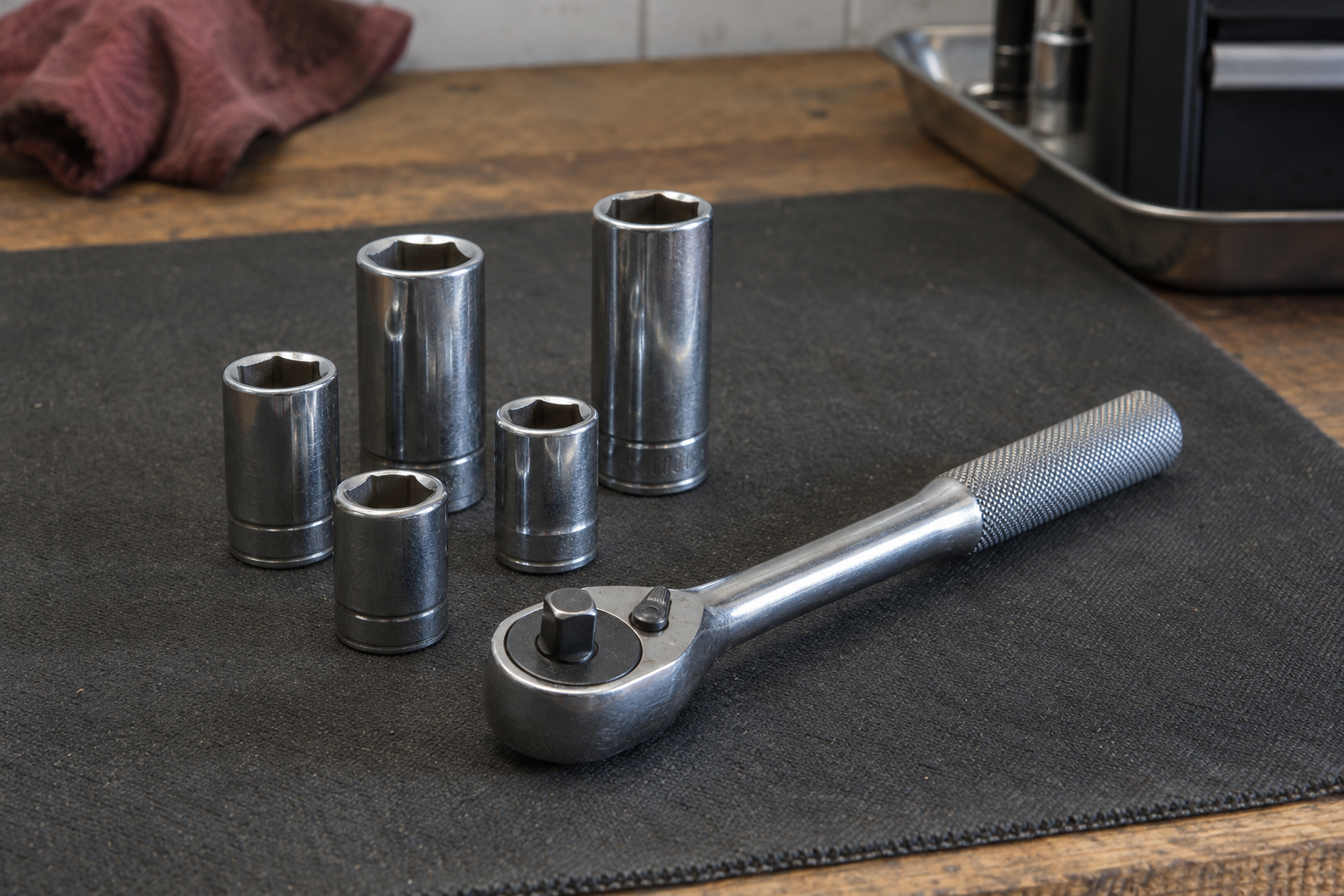
A six-point socket is usually the better choice for gripping rounded fasteners. Its six internal flats contact more of the bolt head, spreading force across the strongest areas instead of concentrating it near the corners. A twelve-point socket is more convenient in tight spaces, but its extra points leave less material supporting a worn fastener.
That does not make twelve-point sockets useless. They are often the right choice for clearance, speed, and general maintenance. The deciding factors are the condition of the fastener, the amount of torque required, and how much room you have to swing the ratchet.
As an Amazon Associate we earn from qualifying purchases at no extra cost to you.



Our Top Picks
 VEVOR 1/2" Drive Impact Socket Set 65 Piece1/2" 65 PCS21.06 x 16.85 x 2.68 inches31.99 PoundsCheck on Amazon


Six-Point vs. Twelve-Point at a Glance
| Feature | Six-point socket | Twelve-point socket |
|---|---|---|
| Engagement positions | Every 60 degrees | Every 30 degrees |
| Grip on undamaged fasteners | Excellent | Good |
| Resistance to rounding | Best choice | More dependent on fit and fastener condition |
| Access in cramped spaces | Requires more ratchet swing | Much easier to reposition |
| Best use | Rusty, tight, damaged, or high-torque fasteners | Routine work and restricted access |
| Typical impact-tool choice | Preferred | Usually avoided for difficult jobs |
Why Six-Point Sockets Grip Better
A six-point socket has six broad internal walls that match the six flats on a standard hex bolt or nut. When the socket fits correctly, the driving force is applied along those flats. That gives the socket a larger contact area and reduces stress at the corners.
That matters because fasteners usually round at the corners first. A socket that pushes hard on those corners can deform them, especially when the bolt is corroded, over-tightened, or made from softer metal. Once the head is damaged, every subsequent removal attempt becomes harder.
A good six-point socket is not a cure for every rounded bolt. If the head is already badly distorted, the socket may still slip. However, it gives you the best chance before moving to a dedicated extractor. For difficult work, a six-point impact socket set is a sensible addition to a home toolbox.
When a Twelve-Point Socket Is the Better Choice
The main advantage of a twelve-point socket is access. It can engage a fastener at twice as many positions, so you only need to move the ratchet 30 degrees to find the next position instead of 60 degrees. In a crowded engine bay or around suspension parts, that difference can save considerable time.
Twelve-point sockets are also useful on fasteners that are clean, correctly sized, and not exceptionally tight. They work well for routine assembly, interior repairs, light mechanical work, and locations where a six-point socket cannot be repositioned easily.
The trade-off is reduced margin for error. A worn twelve-point socket, a slightly incorrect size, or a fastener with rounded corners can let the tool ride up and slip. A twelve-point socket also has narrower contact areas, so heavy torque is more likely to damage a marginal fastener.
If most of your work involves clean hardware and restricted access, a twelve-point socket set can be the cheaper and more convenient option. You do not need six-point sockets for every simple bolt.
How Rounded Fasteners Fail
Rounding usually starts when the socket is not fully seated. Dirt, paint, rust, or a shallow socket can leave the tool resting on only part of the fastener. Tilting the ratchet adds side load, while a long breaker bar or impact wrench multiplies the force at the contact points.
Using the wrong measurement system is another common cause. A metric socket that is only slightly larger than an SAE fastener, or vice versa, may seem to fit but can slip under load. For example, a 13 mm socket is close to 1/2 inch, but “close” is not good enough on a tight bolt.
Before applying force, clean the head with a wire brush and push the socket fully down with a short tap from a hammer. Use the exact metric or SAE size. If the socket rocks on the fastener, stop and try another size rather than increasing leverage.
Chrome Sockets vs. Impact Sockets
Socket point count and socket construction are separate decisions. Chrome sockets are intended for hand tools such as ratchets and breaker bars. Impact sockets are thicker, typically black-finished, and designed to withstand the repeated shock from an impact wrench.
Do not use ordinary chrome sockets on an impact wrench. They can crack or shatter because they are harder and less able to absorb impact energy. Conversely, impact sockets are perfectly acceptable for hand use, although their thicker walls may not fit in places designed around a slim chrome socket.
For wheel nuts, suspension bolts, and other high-torque jobs, choose metric and SAE six-point impact sockets. For light household repairs, a standard six-point chrome socket set is usually enough.
What to Use on a Damaged Fastener
If the fastener is only slightly worn, start with a clean, high-quality six-point socket. Push it on squarely and use steady pressure rather than a rapid jerk. A breaker bar gives better control than an impact wrench when you are testing whether the socket will hold.
If the socket slips, stop immediately. Repeated slipping removes more metal and can turn a recoverable bolt into a drilling job. A six-point extractor socket with spiral or aggressive internal flutes can bite into the damaged head. These are different from normal six-point sockets and should be struck fully onto the fastener before turning.
Heat, penetrating oil, or tightening the fastener a fraction before loosening may help, depending on the application. Do not use heat near fuel, brake fluid, wiring, seals, or other heat-sensitive parts. If the head is nearly round, an extractor, locking pliers, or drilling may be more realistic than forcing a standard socket.
Which Socket Should You Buy?
Buy six-point sockets first if you are building one general-purpose set, working on vehicles, removing rusty hardware, or using a breaker bar. They provide the best protection against rounding and are the safer default for high torque.
Choose twelve-point sockets when fast access matters more than maximum grip and the fasteners are in good condition. A practical toolbox often contains both: six-point sockets for removal and high-load work, plus twelve-point sockets for cramped areas and quick routine jobs.
The important details are accurate sizing, full seating, and using the right socket type for the tool. A cheap six-point socket used correctly is better than an expensive twelve-point socket forced onto a dirty, damaged bolt.