What's inside
As an Amazon Associate I earn from qualifying purchases. This post may contain affiliate links at no extra cost to you.
Our Top Picks
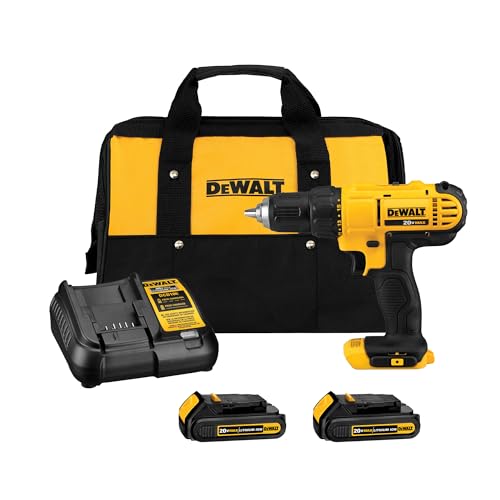
 Dewalt DCD794B 20V MAX ATOMIC COMPACT SERIES BrushlessOne Size6.61 x 3.32 x 8.39 Inches2.51 PoundsCheck on Amazon
 Greenworks 24V Cordless Brushless 400 in-lbs Drill/Driver+1950 in-lbs2PCS Combo Kits4.4 poundsCheck on Amazon


How Each Motor Actually Works
A brushed drill driver uses a DC motor with carbon brushes that physically press against a spinning commutator. The brushes deliver current to the windings and mechanically switch polarity as the armature rotates. It is simple, cheap to manufacture, and has powered drills for decades.
A brushless drill reverses that design. The windings are on the outside (stator) and permanent magnets are on the rotor. Instead of brushes, a small circuit board and sensors control electronic commutation — switching current to different coils at precisely the right time. No physical contact is needed to transfer power to the rotor.
As an Amazon Associate we earn from qualifying purchases at no extra cost to you.



That difference is not marketing. It changes efficiency, heat, size, and how the tool fails after a year or two of daily use.
Performance Where Remodeling Work Shows It
On paper, a brushed and brushless drill with the same voltage and chuck size will both drive a 3-inch deck screw or drill a 1-1/2-inch hole saw through pine. The difference shows up when you do it repeatedly, all day.
Brushless motors are 15-25% more efficient. In a typical 18V/20V MAX platform, expect about 57% longer runtime per amp-hour in lab tests, and 25-35% longer in real remodeling tasks where load varies. For example, a 2.0Ah battery that gives you 180-200 2-1/2-inch screws with a brushed motor will often do 240-270 with the same battery on a brushless model. That is one fewer battery swap before lunch.
Torque and control are also different. Brushless drivers paired with electronic controls hold speed better under load and offer more precise clutch and speed settings. Most modern brushless drill drivers have 60-70 Nm (530-620 in-lbs) of peak torque and two-speed gearboxes (0-550 RPM low, 0-2,000 RPM high) with 15+ clutch positions. Comparable brushed models are usually rated 40-55 Nm and top out around 1,500-1,700 RPM. You will feel it when driving ledger screws, mixing thinset with a paddle, or drilling 3/4-inch holes through doubled-up studs — the brushed motor bogs down and heats up sooner.
Brushless also wins on size and weight. Without brushes and a large commutator, manufacturers can make the motor shorter by 10-20mm and cut 150-300g. If you are driving overhead to hang drywall or working inside cabinets, that compact head length matters more than peak torque.
| Feature | Brushed Drill Driver | Brushless Drill Driver |
|---|---|---|
| Efficiency | 75-80% | 85-90% |
| Runtime per 2.0Ah battery | Baseline | +25-35% more screws/holes |
| Peak Torque (18V class) | 40-55 Nm | 60-75 Nm |
| Maintenance | Brushes wear, dust buildup | Sealed electronics, no brushes |
| Motor Life | 1,000-3,000 hours (brush limited) | 5,000-10,000+ hours (bearing limited) |
| Weight / Length | Heavier, longer nose | 150-300g lighter, ~15mm more compact |
| Price (bare tool, 18V) | $49-79 | $89-149 |
Battery, Heat, and Noise on the Job
Heat is the hidden cost of brushed motors. Brush friction and arcing create constant heat, even at no load. After 20-30 minutes of continuous driving — subfloor screws, decking, or hanging cement board — a brushed housing can hit 130-150°F. The tool then loses power as resistance rises and the thermal cutout may trip. You burn through batteries faster because that heat is wasted energy.
Brushless motors run cooler and quieter. Without brush friction, more energy goes to the chuck. They also idle more efficiently because the controller only draws what it needs. For daily remodeling, that translates to cooler tools at 3 PM, less battery fade, and noticeably less motor whine — important when you are working in an occupied home.
There is a second battery advantage: brushless electronics protect the pack better. Low-voltage cutoff, current limiting, and thermal monitoring are standard on brushless platforms. Brushed tools often have simpler electronics that let you deep-discharge or overheat a pack if you push through a stall. Over six months, that protection extends pack life.
Durability and How They Fail
Brushed motors fail predictably: brushes wear down to nubs, springs lose tension, and carbon dust coats the commutator. Symptoms are intermittent power, sparking visible through the vents, and a burning smell. Most brushes are not user-serviceable on modern compact drills, so when they go, you replace the whole tool. Expect that at 1-3 years of daily use for a primary drill.
Other brushed failure modes are dust-related. Remodeling dust — drywall, masonry, PT lumber — gets pulled through the open motor vents and abrades the commutator. If you drill concrete with a standard drill driver or use it for drywall without cleaning, life drops fast.
Brushless motors have no brushes to wear and are better sealed, but they can still fail. The weak points are the controller board and bearings. A hard drop onto concrete can crack the board, and water intrusion from rain or a wet crawlspace can short the electronics. When a brushless driver dies, it usually stops completely rather than fading — trigger press, no response. Repair cost is higher if out of warranty. In practice though, brushless survives remodeling dust and daily cycling far better, and most carry longer warranties (3-5 years vs. 1-2 years for budget brushed models).
The Cost Math for Daily Remodeling
For a homeowner who drives 20 screws on a weekend, a brushed drill is the rational buy. A brushed drill driver kit with two 1.5Ah batteries and a charger for $69-99 will do everything you need. You will not recoup the brushless premium on runtime alone.
For daily remodeling, the math flips. A brushless drill driver kit typically costs $40-70 more upfront. You make that back in one battery you do not have to buy ($50-80 for a 3.0-5.0Ah pack) and in downtime avoided. If you are running the drill 2-4 hours a day, five days a week, the brushless motor will last 2-3x longer before replacement. On a two-year timeline, the brushed tool is often the more expensive option.
Consider platform costs too. Most pros are not buying a single drill. If you are already invested in a battery system, compare bare tools. A brushless bare tool at $99-129 on sale is often only $30 more than its brushed equivalent. If you are starting from zero, look at a brushless drill driver combo kit that includes an impact driver — you will use the impact for 80% of fastening and save wear on the drill.
When a Brushed Drill Is Still Fine
Buy brushed if the drill is a secondary or backup tool, for a helper, for a job box that might walk off, or for a shop where it lives on a drill press stand for light-duty drilling. It is also fine if you need a cheap beater for dirty tasks like mixing paint, stirring thinset, or drilling through abrasive materials where any motor will get abused. For those roles, low purchase price beats long-term efficiency.
Do not expect a brushed model to keep up as your only drill for kitchens, baths, decks, and punch list work every day. It will feel hot, weak, and slow by afternoon, and you will be charging at midday.
When Brushless Pays Off Immediately
Brushless is the default for daily remodeling if the drill is your primary driver for pilot holes, cabinet installation, hardware, door hinges, and occasional hole saws up to 2-1/8 inches. The extra control at low speed means fewer stripped screws and less blowout on prefinished cabinets. The cooler running and longer runtime mean you can stay on a single 3.0Ah or 5.0Ah battery most of the day instead of rotating packs.
If you can only own one, get brushless. It drills straighter because it holds RPM under load, it lasts longer in dusty environments, and it keeps your battery investment healthier. Keep a cheap brushed unit as a loaner if you need to — but put the brushless in your tool belt.