What's inside
As an Amazon Associate I earn from qualifying purchases. This post may contain affiliate links at no extra cost to you.
Our Top Picks
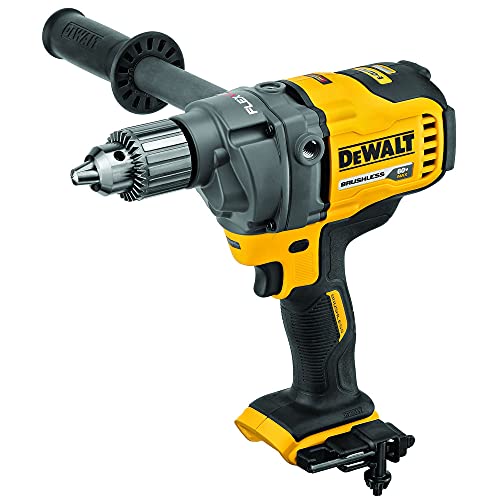 DEWALT FLEXVOLT 60V MAX* Cordless Drill For ConcreteOne Size13 x 4 x 13.19 inches8 poundsCheck on Amazon

Quick answer
For regular thinset or mortar mixing, choose a corded drill with a low-speed setting and enough torque for sustained work. It won’t run out of battery halfway through a batch, and it’s usually the better value for mixing several bags. A cordless drill can handle small, occasional batches, but only if it’s a high-torque model with a suitable battery—not a compact drill meant for driving screws.
Neither type is a substitute for a purpose-built paddle mixer when you’re mixing heavy material all day. The right choice depends on batch size, frequency, and whether working without a cord is worth the extra cost.
As an Amazon Associate we earn from qualifying purchases at no extra cost to you.


The main difference under load
Mixing puts a steady, twisting load on a drill. That differs from drilling a hole, where the tool often works in shorter bursts. Thinset can thicken quickly as the paddle turns, and mortar may resist even more. A drill that feels powerful when driving screws can bog down, overheat, or drain its battery fast in a bucket.
A corded drill can keep running as long as you have power, which is useful when mixing multiple batches. A cordless drill is easier to move around, but its runtime and output depend on the tool, battery capacity, material, and mixing technique. A larger battery helps, but it adds weight and doesn’t make an underpowered drill suitable for heavy mortar.
Corded vs. cordless at a glance
| Factor | Corded drill | Cordless drill |
|---|---|---|
| Best fit | Several batches or regular mixing | Small batches and occasional jobs |
| Runtime | Continuous, with a safe power supply | Limited by battery charge and load |
| Mobility | Limited by cord and outlet location | Easy to carry and use away from outlets |
| Common drawback | Cord can snag or get into the bucket | Can slow down, overheat, or drain quickly |
| What to prioritize | Low-speed control, torque, and a suitable chuck | High torque, low-speed control, and a capable battery |
What to look for in a drill
Prioritize low-speed control and torque over a high maximum RPM. Many mixing paddles are intended to run around 300–600 RPM; follow the paddle and mortar instructions, since the correct speed varies. Starting slowly also reduces splashing and keeps dry powder from billowing out of the bucket.
A side handle is important. The paddle can catch suddenly, especially as it reaches the bottom or hits a lump. Hold the drill with both hands, stand with a stable stance, and keep the bucket from spinning. A high-torque drill without a side handle can be harder to control than its specifications suggest.
Check the chuck and paddle shaft before buying. The paddle must fit securely, and the drill must be rated for the load. Don’t assume a small hex-shank paint mixer is appropriate for a large batch of stiff mortar. For a job that involves repeated full bags, a corded low-speed mixing drill is generally a better category to compare than a compact general-purpose drill.
When cordless makes sense
Cordless is a reasonable choice for a repair, a small tile area, or one modest batch mixed near the work. It avoids routing a cord through a wet, dusty workspace and is convenient when there’s no outlet nearby. If you already own a high-torque drill and batteries, trying it on a small batch may be cheaper than buying a dedicated mixer.
Use the largest compatible battery you have, keep it charged, and let the drill cool if it gets hot. Stop if the motor slows sharply, the drill smells hot, or the battery temperature warning appears. For a cordless purchase, look for a high-torque cordless drill with a side handle. A compact 12-volt drill or a lightweight driver is a poor bet for mixing thick material, even if its advertised top speed looks impressive.
Battery capacity is often listed in amp-hours (Ah), but Ah alone doesn’t tell you whether a drill can handle the load. Tool design, battery voltage, and the mix all matter. Don’t plan a full day of mixing around one battery; have a charged spare or a backup plan.
Mixing safely and avoiding failures
Read the mortar bag and paddle instructions for water quantity, mixing time, and any required rest period. Add materials in the specified order, use a sturdy bucket, and mix only as much as you can apply within the product’s working time. More water is not a fix for a drill that is struggling; it can weaken the finished mortar.
Keep the paddle submerged before pulling the trigger, start slowly, and move it through the bucket without whipping in air. Don’t run the drill at full speed to compensate for a weak tool. Excess speed can splash material, introduce air, and heat the mix. Unplug a corded drill or remove its battery before clearing material from the paddle or changing the attachment.
Common failure signs include a hot motor, a stalled paddle, a slipping chuck, and a battery that cuts out under load. Stop rather than repeatedly forcing a stalled drill. If the material is too stiff for the tool, use a more suitable mixer, reduce the batch only if the product instructions allow it, or get help mixing. A drill can be damaged by prolonged stalling, and a paddle can twist violently if it catches.
Which one should you buy?
For several bags or recurring tile and masonry work, a corded mixer-style drill is the straightforward choice: consistent power, no battery rotation, and less risk of stopping mid-batch. If the work is frequent or involves heavy mortar, compare a dedicated corded mortar mixer with a heavy-duty drill rather than assuming any corded drill will do.
For an occasional small batch, a suitable cordless drill you already own may be enough. That is the cheaper option when the tool has adequate torque, a side handle, and a battery that can take the load. If buying new, weigh the convenience against the added cost of a capable cordless tool and spare battery. For a single small repair, renting a mixer or borrowing one may cost less than either purchase.