What's inside
As an Amazon Associate I earn from qualifying purchases. This post may contain affiliate links at no extra cost to you.
Our Top Picks
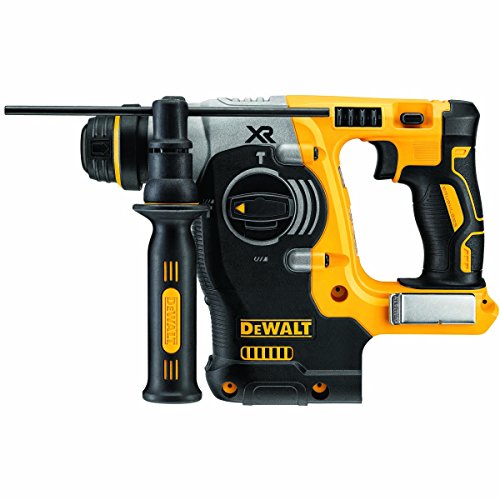
 DEWALT DCH293B 20V Max XR Brushless 1-1/8” L-ShapeOne Size15.3 x 4 x 10.6 inches8.7 poundsCheck on Amazon
 DEWALT DCH273P2 20V Max Brushless SDS Rotary HammerOne Size19.29 x 11.93 x 4.72 inches11.68 poundsCheck on Amazon

Short answer
For one bathroom, a cordless rotary hammer is usually the easier choice if you already own compatible batteries. It avoids dragging a cord through a wet, debris-filled room and is powerful enough for most tile-and-mortar removal. A corded model makes more sense for long sessions, thick or stubborn bedding, or when you need sustained power and don’t want to manage spare batteries.
Either tool can damage the wall or floor beneath the tile. The key is using a chisel bit, a suitable operating mode, and a low angle—not simply buying the hammer with the highest impact rating.
As an Amazon Associate we earn from qualifying purchases at no extra cost to you.


What the tools do—and don’t
A rotary hammer combines rotation with a hammering action. For tile removal, you generally want hammer-only mode, if the tool has it, with a wide tile or scaling chisel. A regular hammer drill is not the same tool: it is designed mainly to drill into masonry and is a poor substitute for sustained chiseling.
Rotary hammers are rated by chuck type and impact energy. SDS-Plus tools are the common, lighter-duty choice for bathroom work; SDS-Max models are larger and can be tiring to control in a small room. More impact energy can speed removal from concrete, but it also makes it easier to gouge a subfloor, crack a weak wall, or break tile into sharp fragments.
Cordless vs. corded at a glance
| Factor | Cordless rotary hammer | Corded rotary hammer |
|---|---|---|
| Best fit | One room, occasional use, awkward access | Long sessions, repeated work, heavy-duty removal |
| Runtime | Limited by battery; a second pack can keep work moving | Continuous while power is available |
| Handling | No cord to snag on rubble or cross a doorway | Cord needs routing and protection from damage |
| Power consistency | Can slow as the battery drains or overheat under load | Steady output; extension-cord choice matters |
| Upfront cost | Higher if you need batteries and a charger | Often cheaper if you already have a suitable outlet |
| Typical drawback | Charging interruptions; added battery cost | Restricted reach and a cord in a hazardous work area |
When cordless is the better buy
Choose cordless when the job is a single bathroom, the room is cramped, or you already own batteries from the same tool platform. With a charged 5.0 Ah pack, a compact SDS-Plus hammer can handle intermittent tile removal, but runtime varies widely with tile, mortar, pressure, and tool settings. Dense mortar over a large floor can drain a pack quickly. If the job will take several hours, budget for a second battery rather than assuming one pack will last all day.
Battery tools are also easier to move between the bathroom and a debris pile without hauling a cord over broken tile. That convenience does not make them safer by itself: remove the battery before changing bits, keep dust away from the tool’s vents, and don’t leave packs in a hot bathroom or direct sun. If you’re buying into a battery platform, compare the bare tool with a kit; a low bare-tool price may not be a bargain if batteries and a charger are still needed. For a one-off project, compare cordless SDS-Plus rotary hammer kits against local rental rates.
When corded is the better buy
A corded hammer is sensible if you’re removing tile from several rooms, working through thick mortar over a large area, or doing renovation work regularly. You can keep working without swapping packs, and corded SDS-Plus models often cost less than a comparable cordless kit. For a bathroom with a nearby outlet and a manageable floor plan, the cord may be a minor inconvenience rather than a deal-breaker.
Check the tool’s instructions for extension-cord requirements; an undersized or excessively long cord can cause voltage drop and poor performance. Keep the connection away from water and rubble, use a properly protected circuit, and route the cord where the chisel cannot reach it. If those precautions are impractical, the continuous power is not worth the snagging hazard. A corded SDS-Plus rotary hammer with chisel mode is generally the right size for a typical bathroom; a large SDS-Max tool is usually unnecessary for ceramic tile and can be harder to control.
Use the tool without wrecking the substrate
Before chiseling, shut off power to nearby circuits if there is any chance of striking concealed wiring, and locate pipes where possible. Wear eye protection, hearing protection, gloves, and a well-fitting respirator rated for the dust you may create. Tile and mortar can produce fine silica-containing dust, particularly when the work reaches a cement-based layer. Close off the room and use suitable dust extraction or other dust controls; don’t rely on a disposable household fan.
Start at a loose edge, grout joint, or an exposed tile edge. Fit a broad tile chisel, select hammer-only mode, and hold it at a shallow angle—roughly 15 to 30 degrees to the surface. Let the hammer do the work. If you press hard, use a narrow point, or attack straight down, you’re more likely to crater a concrete slab or split plywood and cement board. Keep the chisel moving and reduce force near walls, plumbing, and the edge of a tub.
Stop if the tool gets unusually hot, stalls repeatedly, or produces excessive vibration; a dull or unsuitable bit can make the job slower and rougher. Check for nails, metal lath, membranes, and adhesive layers as they become exposed. On a wall, especially over drywall, the tile may come off with the facing or board. In that case, continuing to hammer can turn a small repair into full wall replacement.
What to buy for this job
For a small bathroom and occasional DIY work, a modest SDS-Plus hammer is usually enough; spend first on a good wide chisel, dust control, and protective equipment. Cordless is worth paying extra for when you already own batteries or cord management would be awkward. Corded is the practical budget choice when there is safe power nearby and the job is long enough to make battery changes frustrating. If the tile is bonded to a thick concrete bed, the area is large, or you’re unsure what lies beneath it, renting a suitable tool—or hiring a tile contractor—may cost less than buying a heavy hammer and repairing the damage it causes.