What's inside
- Rolling Tool Cabinet Buying Guide for Beginners
- Start with the cabinet size
- Match the drawer layout to your tools
- Understand weight capacity correctly
- Choose slides that suit your frequency of use
- Compare caster types and mobility
- Decide how much security you need
- Check assembly and setup requirements
- Decision guide for common beginner situations
- Durability and ownership details beginners often miss
- Related Guides
As an Amazon Associate I earn from qualifying purchases. This post may contain affiliate links at no extra cost to you.
Our Top Picks
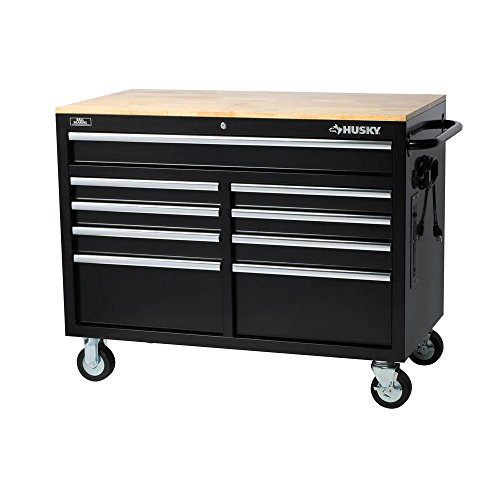
 Husky 72 in. 18-Drawer Mobile Workbench with Adjustable-Height24.1 x 75.3 x 39 inchesCheck on Amazon


Rolling Tool Cabinet Buying Guide for Beginners
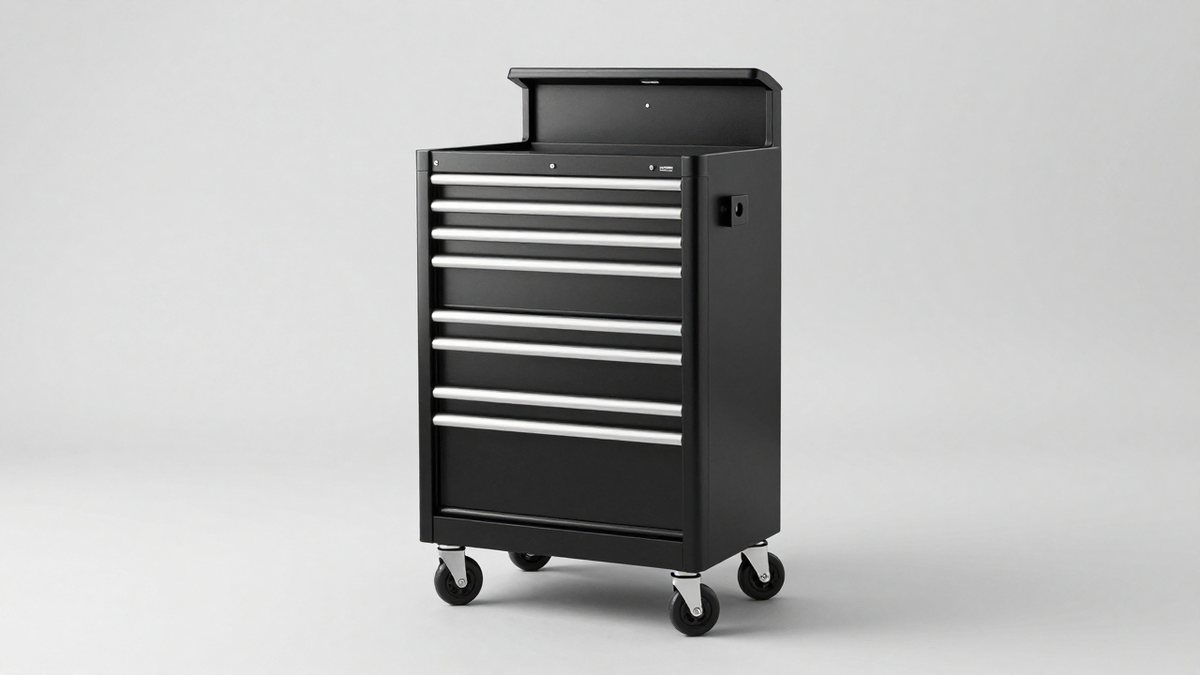
The best rolling tool cabinet for a beginner is usually a 26- to 36-inch-wide steel cabinet with four to six drawers, a total load rating of at least 500 pounds, full-extension slides, a keyed or tubular lock, and four casters rated for more weight than you expect to store.
Choose a smaller cabinet if you work in a cramped garage or own only hand tools. Choose a wider, deeper cabinet if you use socket sets, power tools, automotive equipment, or plan to expand your collection. The important decision is not the largest cabinet you can afford; it is the cabinet that fits your floor space, tools, and safe moving capacity.
As an Amazon Associate we earn from qualifying purchases at no extra cost to you.


Start with the cabinet size
Rolling cabinets are commonly described by their outside width, but width alone does not tell you how much usable storage you receive. Check the internal drawer dimensions, drawer depth, cabinet height, and clearance needed to open the drawers fully.
| Cabinet type | Typical outside size | Typical drawer count | Approximate total capacity | Best for |
|---|---|---|---|---|
| Compact | 20–24 in. wide, 16–20 in. deep | 3–5 | 300–500 lb | Apartment garages, basic household repairs, limited hand tools |
| Mid-size | 26–36 in. wide, 18–24 in. deep | 4–7 | 500–900 lb | Most beginners, DIY maintenance, woodworking hand tools |
| Large | 41–56 in. wide, 22–25 in. deep | 8–12 | 900–1,500 lb | Frequent mechanical work, large tool collections, shared workshops |
Measure the cabinet footprint, then add room for movement. A cabinet that is 24 inches deep may need 36 to 42 inches of clear space in front to let you stand comfortably and open a deep drawer. Also measure doorways, stair turns, elevator openings, and the narrowest part of your route before buying.
For most beginners, a mid-size cabinet offers the best balance. Compact models fill quickly and may force you to stack tools. Large models provide more storage but are expensive to move and easy to overload with tools you rarely use.
Match the drawer layout to your tools
Drawer layout affects usability more than the number printed on the product label. A cabinet with six poorly sized drawers can be less useful than one with four well-proportioned drawers.
- Shallow top drawers: Suitable for screwdrivers, pliers, hex keys, measuring tools, utility knives, and small accessories. A depth of about 2 to 3 inches helps prevent piles of loose tools.
- Medium drawers: A depth of about 3 to 5 inches works for ratchets, socket sets, clamps, hand planes, drill accessories, and small power tools.
- Deep drawers: A 5- to 8-inch drawer can hold a circular saw, impact wrench, mallet, router, or bulky protective equipment. Deep drawers become inefficient when filled with small items.
- Full-width drawers: Useful for levels, squares, long rulers, saws, and layout equipment. Check the internal width, because frame rails reduce the available space.
- Open bottom compartment: Convenient for bottles, shop vac accessories, or cases, but it leaves contents less protected from dust and makes the cabinet top-heavy if used for heavy items.
Before shopping, group your tools by use rather than by shape. For example, keep measuring and marking tools together, everyday hand tools in another drawer, and rarely used specialty tools in a deep drawer. This prevents buying a cabinet based only on drawer count.
Understand weight capacity correctly
Manufacturers may list a total cabinet capacity, a per-drawer capacity, or both. These figures are not interchangeable. A cabinet rated for 900 pounds might support 100 pounds per drawer, while its casters and frame support the remaining load. Look for the capacity with the cabinet fully loaded and the drawers closed, not just an unloaded static figure.
A practical beginner calculation is to estimate your load before buying:
- Hand tools: 100–180 pounds
- Socket sets and organizers: 40–100 pounds
- Small power tools and batteries: 30–80 pounds
- Lubricants, fasteners, and accessories: 20–60 pounds
- Future expansion allowance: at least 25 percent
For example, 150 pounds of hand tools, 60 pounds of socket equipment, 50 pounds of power tools, and 30 pounds of accessories totals 290 pounds. Adding a 25 percent expansion allowance brings the target to about 363 pounds. A cabinet rated at 500 pounds gives useful margin, while a 300-pound cabinet leaves little room for additions.
Do not place the heaviest tools in the top drawers. Heavy contents raise the center of gravity, increase the chance of tipping, and put more stress on drawer slides. Store bulky power tools and metal equipment in the lowest drawers.
Choose slides that suit your frequency of use
Ball-bearing slides are the normal beginner-friendly choice because they open smoothly and tolerate heavier loads than basic friction slides. Full-extension slides let you reach the back of a drawer, which is valuable when tools are arranged in trays or foam organizers.
- Light-duty slides: Adequate for small hardware, measuring tools, and occasional household use.
- Medium-duty slides: A sensible target for most DIY cabinets, particularly when drawers hold socket sets or power tools.
- Heavy-duty slides: Worth considering for daily mechanical work or drawers regularly carrying 100 pounds or more.
Check whether the published rating applies to each drawer and whether it assumes an even load. A drawer packed with dense steel sockets concentrates weight more severely than one filled with plastic organizers.
Compare caster types and mobility
Casters determine whether a loaded cabinet rolls predictably or becomes difficult to control. Four casters are common, with two fixed and two swivel casters, or four swivel casters with locking mechanisms. Four swivels turn more easily in a tight workshop, while fixed rear casters can track better when pushing in a straight line.
- Swivel casters: Improve maneuverability but can pivot unexpectedly if the floor is uneven.
- Fixed casters: Track in one direction and can feel more stable when moving long distances.
- Total-lock casters: Lock both wheel rotation and swivel movement, providing better stability while working.
- Polyurethane or rubber wheels: Quieter and less likely to damage finished concrete or sealed floors than hard steel or rigid plastic wheels.
- Larger wheels: Around 4 to 6 inches in diameter roll more easily over small cracks, thresholds, and extension cords.
Add the caster ratings together, then leave a safety margin. If the loaded cabinet is expected to weigh 700 pounds, four 250-pound casters provide a theoretical 1,000-pound rating, but they do not create a perfectly safe 1,000-pound working capacity. Uneven floors and off-center loads reduce real-world margin, so a larger rating is preferable.
Decide how much security you need
A cabinet lock is mainly useful for preventing casual access, keeping drawers closed during movement, and discouraging opportunistic theft. It is not a substitute for a properly secured workshop.
- Central keyed locks: Lock several or all drawers with one key and are simple to use.
- Tubular-key locks: Often offer more resistance to casual tampering than basic wafer locks.
- Internal locking bars: Secure multiple drawers at once, but inspect the mechanism for looseness and alignment.
- Individual drawer locks: Useful when different users need separate access, though they add complexity.
If children or other unauthorized users may access the workshop, prioritize a cabinet with a positive locking mechanism and keep the key or access method controlled. Also look for drawer latches that prevent drawers from opening while the cabinet is being rolled.
Check assembly and setup requirements
Many rolling cabinets arrive mostly assembled, but casters, handles, drawer pulls, liners, and side trays may still require installation. Confirm the package weight before ordering or transporting it; even a mid-size cabinet can weigh more than 100 pounds empty.
- Inspect the cabinet for shipping damage before removing protective packaging.
- Install casters with the cabinet supported securely, never balanced on loose blocks.
- Tighten fasteners gradually in a cross pattern so the caster plates sit flat.
- Verify that all wheels touch the floor and that swivel locks engage.
- Open one drawer at a time and check slide alignment before loading tools.
- Place the cabinet on a level surface, put heavy tools low, and test movement before fully loading it.
Do not remove several drawers at once unless the instructions explain how to do so. Removing drawers can shift the center of gravity and make a tall cabinet unstable. If a cabinet includes a detachable top chest, secure the chest to the lower unit before use rather than treating the two pieces as permanently joined by weight alone.
Decision guide for common beginner situations
| Your situation | Recommended choice | Reason |
|---|---|---|
| Under $300 and occasional household repairs | Compact steel cabinet, 3–5 drawers, 300–500 lb rating | Controls cost and avoids paying for unused storage |
| DIY work every week with mixed hand tools | 26–36 in. cabinet, 4–7 drawers, full-extension slides | Provides useful expansion room without excessive footprint |
| Automotive or heavy mechanical work | 36–56 in. cabinet, deep lower drawers, 900 lb or higher rating | Accommodates dense sockets, impacts, and larger equipment |
| Small workshop with frequent repositioning | Four swivel casters, total-lock brakes, 4–5 in. wheels | Improves turning and reduces movement when working |
| Mostly woodworking hand tools | Full-width shallow drawers plus one medium deep drawer | Fits squares, rules, chisels, layout tools, and small planes efficiently |
Durability and ownership details beginners often miss
Drawer slides, caster brakes, lock linkages, and thin drawer bottoms usually show wear before the painted cabinet shell does. Avoid slamming overloaded drawers, dragging the cabinet sideways, or rolling it over thresholds at an angle. Lubricate slides only if the manufacturer allows it; excess oil attracts abrasive dust.
Clean metal filings and sawdust with a vacuum or dry cloth before they enter the slides. Wipe spills promptly, especially water-based products and chemicals that can promote corrosion. Keep drawer liners flat and replace torn liners so tools do not slide into the drawer mechanism. Periodically check caster bolts, handle fasteners, and drawer alignment.
The most common beginner mistake is buying storage volume instead of usable organization. Select the smallest cabinet that accommodates your current tools plus approximately 25 percent growth, verify that it fits through your workspace access points, and prioritize strong slides, stable casters, and a sensible drawer layout over decorative features.