What's inside
- Milwaukee hand saws compared
- Best Milwaukee hand saw for drywall: 12-inch Drywall Saw
- Best for plunge cuts and tight spaces: 6-inch Jab Saw
- Folding Milwaukee saws: the portability choice
- Can a Milwaukee hand saw handle pruning?
- Decision matrix: which model fits your job?
- Durability and ownership: what wears first
- Final recommendation
- Related Guides
As an Amazon Associate I earn from qualifying purchases. This post may contain affiliate links at no extra cost to you.
The best Milwaukee hand saw depends on the material: choose the Milwaukee 6-inch Jab Saw for drywall and plunge cuts, the 12-inch Drywall Saw for faster sheet work, and a folding model when portability matters; for regular pruning, Milwaukee’s M12 FUEL HATCHET is usually a better fit than any manual Milwaukee saw.
Milwaukee’s hand-saw range is aimed primarily at construction and remodeling rather than traditional woodworking. The important distinction is not simply blade length: tooth geometry, blade rigidity, handle design, and whether the blade folds all change how quickly and cleanly a saw works. The models below cover the most useful choices for drywall, light woodworking, trim-related cutting, and occasional outdoor work.
As an Amazon Associate we earn from qualifying purchases at no extra cost to you.


Our Top Picks
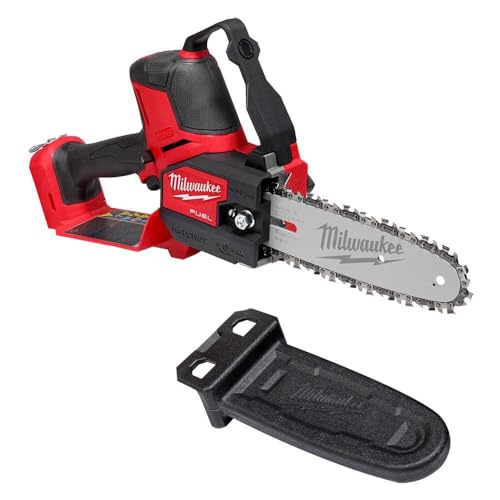
 Milwaukee 48-22-0012 Compact Hand Operated Hack Saw w/10 inches14.5 x 4.7 x 2.1 inches0.5 poundsCheck on Amazon


Milwaukee hand saws compared
| Model or type | Blade length | Best material or task | Portability | What sets it apart |
|---|---|---|---|---|
| Milwaukee 6-inch Jab Saw, 48-22-0215 | 6 in. | Drywall, insulation board, small openings | Very high | Compact rigid blade and pointed tip for plunge cuts |
| Milwaukee 12-inch Drywall Saw, 48-22-0212 | 12 in. | Large drywall cuts and repeated wall openings | Medium | Longer stroke and aggressive drywall-oriented teeth |
| Milwaukee folding jab-saw style | Approximately 6 in. | Service work, punch-list jobs, light panel cutting | Excellent | Blade folds into the handle for safer storage and transport |
| Dedicated manual pruning saw | 8–12 in. is typical | Branches and green wood | High | Curved, coarse teeth designed for fibrous wood |
| Milwaukee M12 FUEL HATCHET | 6 in. powered bar | Frequent pruning and small branch removal | High, but not a hand saw | Battery-powered cutting with substantially less manual effort |
Blade length is a useful guide, but it is not a direct speed rating. A 12-inch saw is faster on a long drywall cut because more teeth remain engaged and the stroke covers more material. A 6-inch jab saw is quicker to position in a tight opening and is easier to control when the cut starts in the middle of a panel.
Best Milwaukee hand saw for drywall: 12-inch Drywall Saw
The Milwaukee 12-inch Drywall Saw, model 48-22-0212, is the better choice when the job involves repeated cuts in gypsum board, long openings, or removal work. Its longer blade allows a more productive back-and-forth stroke than a compact jab saw. The relatively aggressive tooth pattern is intended to remove material quickly rather than leave a furniture-grade edge.
Choose it for electrical-box openings, access panels, remodeling cuts, and trimming installed drywall. It is also useful for cutting other soft sheet materials, but the teeth can be too aggressive for delicate plastics or finished wood.
Where the 12-inch design wins
- Faster progress on long, straight cuts.
- More efficient when cutting several sheets in one session.
- Greater reach when the blade must pass through a thick or awkward section.
- Less need to shorten the cutting stroke on open wall areas.
Its weakness is control in cramped spaces. The longer blade needs room to move and can flex or catch if the user twists it. For a single outlet opening or a cut close to a corner, the smaller jab saw is often more convenient.
Best for plunge cuts and tight spaces: 6-inch Jab Saw
The Milwaukee 6-inch Jab Saw, 48-22-0215, is the most versatile manual choice for drywall repair. The pointed blade tip can be pushed through gypsum board to begin an interior opening without drilling a starter hole. Once the blade is inside the panel, its short length provides better control around studs, wiring routes, pipes, and corners.
This is also the better Milwaukee option for occasional woodworking tasks such as cutting thin plywood, softwood sheet goods, or openings in a workbench top. It is not a replacement for a fine-tooth backsaw or flush-cut saw: the aggressive teeth favor speed, and the resulting edge may need sanding.
Choose the jab saw when:
- You make occasional cuts rather than processing full sheets all day.
- Your workspace is crowded or you work from a ladder.
- You need a plunge-starting point.
- You want one compact tool for drywall, insulation board, and light panel work.
A jab saw is especially useful for repair work because it is easy to carry in a tool pouch. The trade-off is slower progress on long cuts and a greater tendency to bind if you force the blade sideways.
Folding Milwaukee saws: the portability choice
A folding jab-saw style tool makes sense for service technicians, remodelers, and homeowners who carry tools between several locations. With the blade folded into the handle, it occupies less space and reduces the chance of the teeth damaging a tool bag. The folded design also protects the blade during transport.
Folding mechanisms add moving parts, so they should not be treated like a fixed-blade saw for heavy prying or twisting. Open the blade fully and confirm that the locking mechanism is engaged before cutting. If the hinge develops side-to-side movement, replace the tool rather than compensating by applying more force.
Can a Milwaukee hand saw handle pruning?
Not particularly well. Drywall-oriented Milwaukee hand saws can cut a small dry twig in an emergency, but their tooth shape and straight blade are not optimized for green branches. Sap can clog the teeth, a narrow blade can flex in a branch, and the wrong tooth pattern makes the cut slower than it needs to be.
For occasional pruning, select a dedicated manual pruning saw with an 8- to 12-inch curved blade and coarse, hardened teeth. For frequent removal of small branches, Milwaukee’s M12 FUEL HATCHET is a more appropriate Milwaukee product, although it is a powered pruning tool rather than a hand saw. Keep powered cutting equipment separate from the decision about which manual saw belongs in a drywall or woodworking kit.
Decision matrix: which model fits your job?
| Your situation | Recommended choice | Reason |
|---|---|---|
| Lowest purchase cost for occasional repairs | 6-inch Jab Saw | One compact tool covers common drywall openings without paying for a powered system. |
| Several sheets of drywall or long cuts | 12-inch Drywall Saw | Longer strokes and an aggressive blade reduce cutting time. |
| Small tool bag or ladder work | Folding jab-saw style | Blade protection and compact storage matter more than maximum speed. |
| Beginner making one or two openings | 6-inch Jab Saw | Shorter blade is easier to control and less likely to collide with hidden obstructions. |
| Fine woodworking or visible joinery | Neither as a first choice | Use a fine-tooth backsaw, panel saw, or Japanese-style saw designed for cleaner cuts. |
| Routine branch cutting | Dedicated pruning saw or M12 FUEL HATCHET | Pruning-specific teeth and geometry handle green wood more effectively. |
Durability and ownership: what wears first
On these saws, the teeth are the consumable cutting surface. They become noticeably slower after repeated contact with screws, nails, metal corner bead, or hidden fasteners. Do not use the blade as a pry bar: bending the blade can permanently reduce tracking accuracy even when the teeth still look sharp.
Drywall dust is abrasive and can work into a folding hinge or handle joint. After use, brush the blade and hinge with a dry nylon brush, then wipe the steel clean. Avoid leaving the saw wet, particularly when gypsum dust has collected on it. A light corrosion inhibitor on exposed steel can help during long storage, but keep lubricants away from the cutting edge so they do not contaminate the material.
For woodworking, mark the cut on the waste side and support thin sheet goods close to the cut line. Start with short, controlled strokes, then use the full blade once the kerf is established. For drywall, check both sides of the wall when possible and cut cautiously near suspected cables or plumbing. The pointed tip makes starting easy, but it does not make hidden utilities safe to cut through.
Final recommendation
For most people searching for a Milwaukee hand saw, the 6-inch Jab Saw is the best all-around purchase because it balances portability, plunge-cut ability, and control. Buy the 12-inch Drywall Saw if your priority is speed across large drywall sections. Select a folding version when safe transport and compact storage outweigh maximum cutting performance. For serious woodworking or pruning, choose a saw with a blade designed for that material rather than asking a drywall saw to do every job.