What's inside
As an Amazon Associate I earn from qualifying purchases. This post may contain affiliate links at no extra cost to you.
Overlapping Forstner holes chatter when the bit loses support as its rim crosses into a neighboring hole. The fix is usually not a more expensive bit: it is a stable setup, a sensible cutting order, and enough intact wood to guide the rim. For clean work, bore the holes before joining parts, clamp the stock firmly, and avoid feeding a large bit too fast.
Our Top Picks
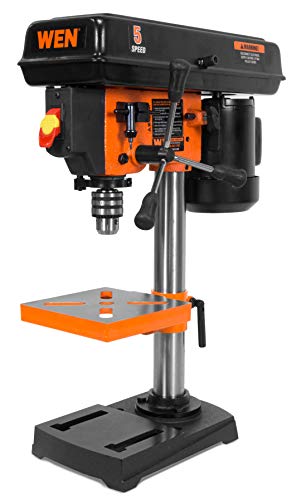 WEN 2.3-Amp 8-Inch 5-Speed Cast Iron Benchtop Drill16.88 x 8.63 x 22.88 inches32 poundsCheck on Amazon
 Milescraft DrillMate Portable Drill Guide Adjustable Precision DrillingEACH16.63 x 7.13 x 2 inches0 PoundsCheck on Amazon

Why overlapping holes chatter
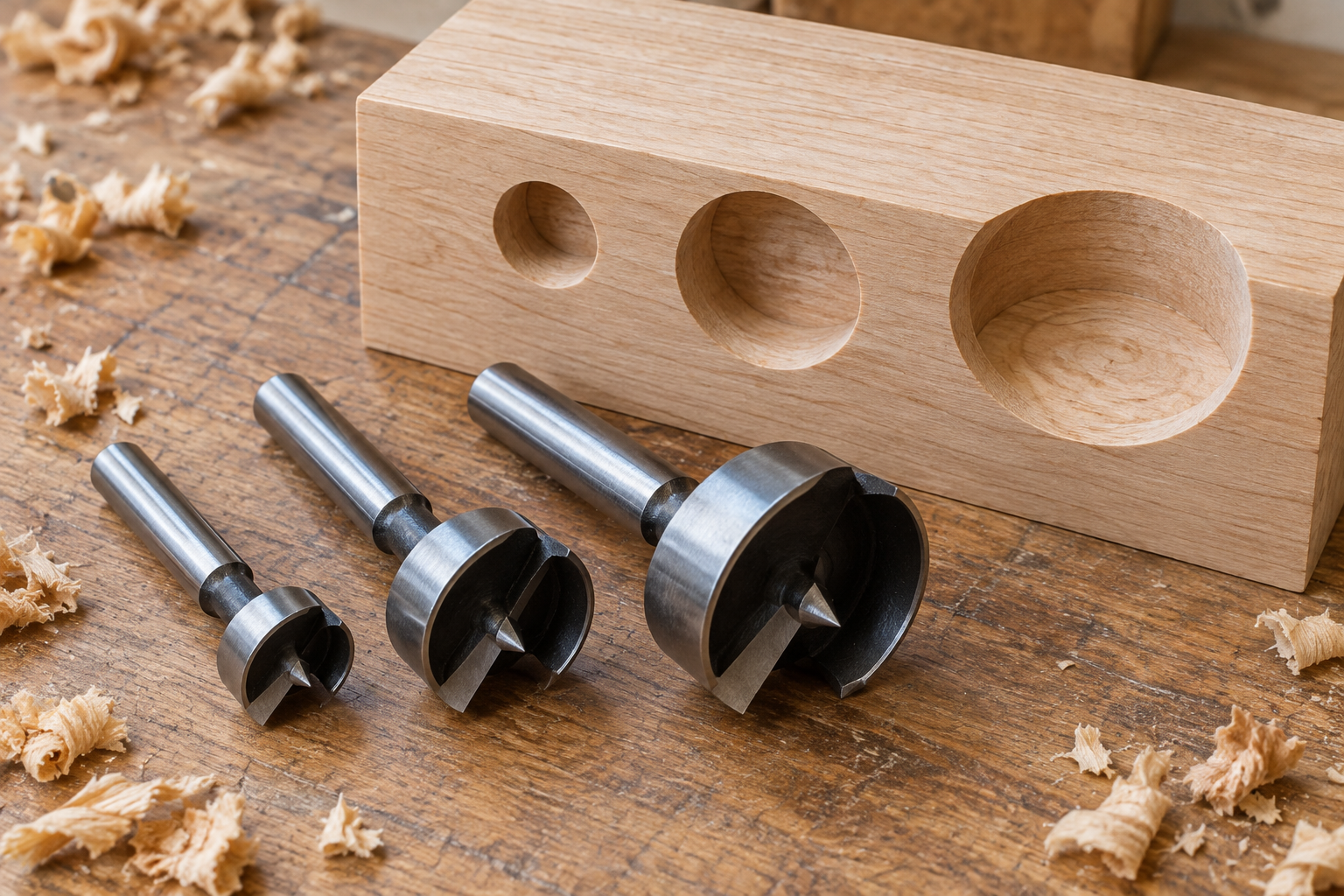
A Forstner bit cuts with a center spur, an outer rim, and internal cutters. The rim scores the perimeter while the cutters remove waste. In solid wood, the rim has continuous material to follow. When it crosses a previous hole, part of that support disappears. The bit can grab the remaining edge, bounce, or pull sideways; that movement shows up as chatter, torn fibers, or an irregular overlap.
The risk rises with larger diameters, deep cuts, hard or figured wood, and handheld drilling. A worn or dirty bit makes matters worse. If the bit chatters immediately, check that the work is clamped, the bit is sharp and seated, and the drill is square to the surface before changing technique.
Choose the right setup
A drill press is the steadier choice for repeatable spacing and perpendicular holes. A handheld drill can work for occasional shallow holes, but it is harder to hold square and control when the rim breaks into an adjacent opening. For a press, secure the work to the table with clamps; never hold a small piece by hand while drilling.
For bits up to about 1 inch, a capable corded drill or drill press is often enough. Larger bits and deep cuts need a tool with good low-speed control and adequate torque. Use the bit maker’s speed guidance where available; as a practical starting point, run a 1-inch bit around 500–700 rpm and a 2-inch bit around 250–400 rpm. Reduce speed in dense hardwood, and do not compensate for a slow cut by forcing the feed.
If you are buying for repeated work, compare a drill press with a handheld drill and guide based on hole size, depth, and portability. A bench drill press offers better alignment and steady pressure; a handheld setup costs less and is easier to move, but demands more care from the operator.
Cutting order and technique
Lay out the hole centers accurately. For a row of overlapping holes, drill the center holes first, then work outward. This leaves the outer holes with more surrounding stock and reduces the chance that the bit will wander at the edge of the work. For only two overlapping holes, bore the first hole fully, clear the chips, then bore the second at its marked center. Do not try to cut both centers at once.
Start each hole at low speed with the bit square to the surface. Let the rim score a complete circle before applying steady pressure. Once the cut is established, feed evenly and withdraw every 1/4 to 1/2 inch of depth to clear chips. Packed chips create heat and can make the bit grab. For a deep hole, bore in stages rather than pushing continuously to full depth.
When the second hole’s rim meets the first opening, ease the feed pressure. Keep the drill aligned and let the cutters remove material at their own pace. A sudden increase in pressure is a common cause of a lurch. If the bit begins to chatter, stop the motor, withdraw it, clear chips, and inspect the edge. Continuing to push usually enlarges the damage.
Which tool helps most?
| Setup | Best for | Main trade-off |
|---|---|---|
| Drill press | Repeated holes, larger diameters, and accurate alignment | Less portable; work must fit the table and be clamped securely |
| Handheld drill with side handle | Occasional holes in large or fixed workpieces | More difficult to keep square; torque can twist the drill at breakthrough |
| Handheld drill with drilling guide | Light-duty work where a press is unavailable | Guide quality and clamping matter; it does not match a rigid press |
A drill press is worth buying if you regularly bore large or closely spaced holes. For a small project, a sharp bit and a well-clamped handheld drill are often adequate. A drill guide for a handheld drill can improve alignment, though it cannot eliminate chatter if the bit is fed too hard or the work shifts.
Bit quality and alternatives
Sharpness matters more than a premium label. A dull rim rubs instead of slicing, which increases heat and vibration. Clean pitch from the bit after use, and replace or sharpen it when it scorches wood, needs excessive pressure, or leaves a ragged perimeter. Avoid bargain sets for frequent hardwood work, but a basic set is reasonable for softwood, shallow holes, or occasional use.
For larger bits, check the shank and drill chuck capacity before buying. Many common Forstner bits have 3/8-inch or 1/2-inch shanks; a bit that does not fit the tool securely can slip or wobble. A Forstner bit set is convenient if you need several diameters, but buying only the sizes your project requires is usually cheaper and avoids unused pieces.
If the overlap is wide or the work is prone to splitting, consider a hole saw or a router with a template instead. Hole saws are often faster for through-holes but leave a rougher edge and a core to remove. A router and template offer controlled, clean cuts but require more setup. For blind overlapping holes where the flat bottom matters, a Forstner bit remains the straightforward option.
Common mistakes to avoid
Do not use a high drill speed to make the cut finish faster; oversized bits can overheat, burn the wood, and increase grabbing. Do not hold the stock by hand, especially near the point where holes overlap. And do not expect tape or a sacrificial backing board to prevent chatter in the middle of a workpiece: backing helps reduce tear-out at an exit face, but it does not restore support to a rim crossing an existing hole.
For the cleanest result, clamp the stock, use a sharp bit, reduce speed as diameter increases, and feed lightly through the overlap. If the layout allows it, leave more material between centers or bore the holes before assembling the parts. Those small changes usually matter more than buying a more powerful drill.