What's inside
As an Amazon Associate I earn from qualifying purchases. This post may contain affiliate links at no extra cost to you.
Our Top Picks
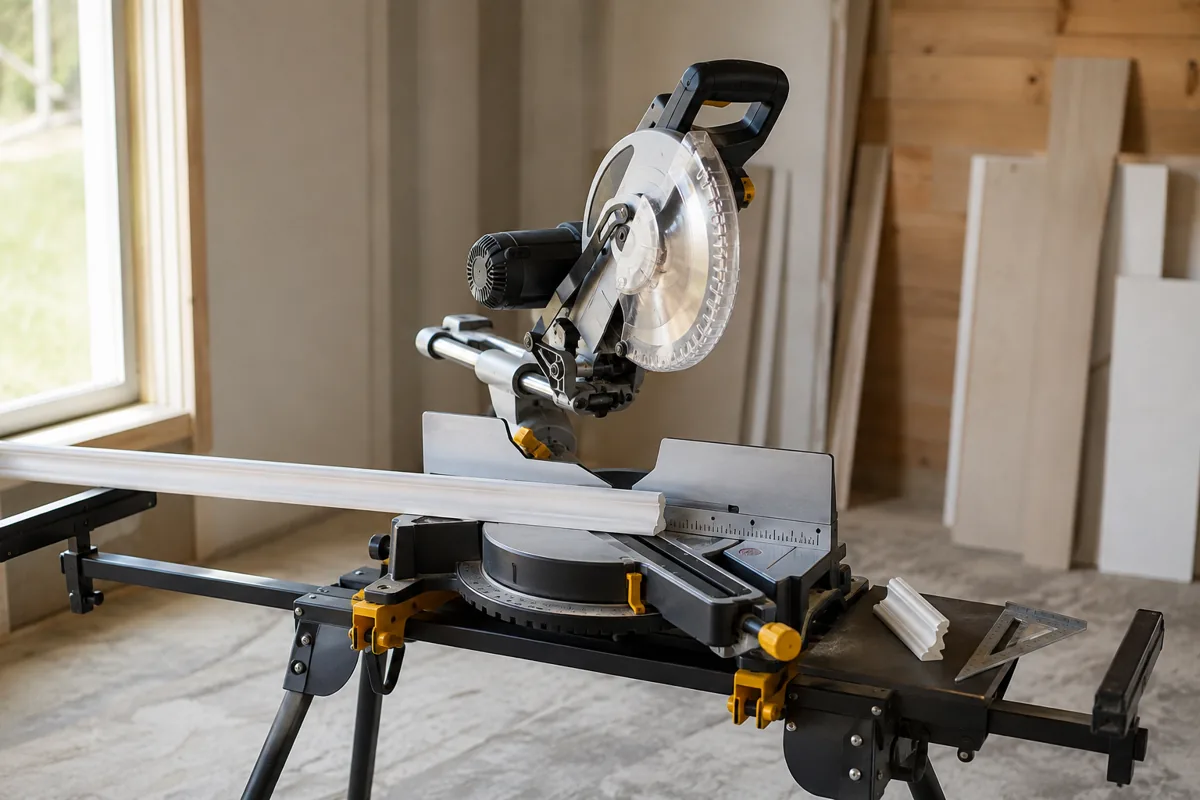
 SKIL 10" Dual Bevel Sliding Compound Miter Saw-MS6305-0010''35.43 x 22.44 x 14.17 inches39.4 poundsCheck on Amazon




The short answer
For most small trim shops, a 10-inch sliding miter saw is the better-balanced purchase. It handles common baseboard, casing, window trim, shelving parts, and small framing jobs while taking up less room and costing less to outfit with blades. A 12-inch saw earns its space when you regularly cut wide crown molding, tall baseboard standing upright, heavy hardwood, or large workpieces that a 10-inch saw cannot crosscut in one pass.
The blade diameter is not a simple measure of cutting power. A 12-inch saw usually has more capacity, but it is also heavier, deeper front to back, more expensive to move, and more costly to keep supplied with good blades. For a shop producing standard interior trim, the extra capacity may sit unused most of the week.
As an Amazon Associate we earn from qualifying purchases at no extra cost to you.


Cutting capacity and real trim work
Capacity varies by design, especially between fixed and sliding saws. As a rough guide, a 10-inch slider can often crosscut about 12 inches of material at 90 degrees, while a 12-inch slider may reach roughly 14 to 16 inches. Actual figures depend on the fence, rails, blade position, and the saw’s published specifications.
For baseboard, capacity in the vertical position matters more than the headline crosscut number. Many 10-inch saws handle roughly 4 to 6 inches of baseboard against the fence. A 12-inch model may handle around 6 to 8 inches. That difference can determine whether you cut tall baseboard upright or lay it flat and make a compound cut.
Crown molding is less predictable. The spring angle and the shape of the fence affect whether the molding fits securely. A large saw does not automatically eliminate compound setups. Before buying, measure the tallest baseboard and widest crown you actually install, then compare those numbers with the manufacturer’s vertical and nested crown capacities.
| Factor | 10-inch miter saw | 12-inch miter saw |
|---|---|---|
| Typical crosscut capacity | About 10–12 inches on a slider | About 14–16 inches on a slider |
| Vertical baseboard capacity | Often about 4–6 inches | Often about 6–8 inches |
| Weight and footprint | Lower; easier in a small shop | Higher; needs more bench and storage space |
| Blade cost | Usually lower | Usually higher |
| Best fit | Standard casing, baseboard, and light furniture parts | Wide trim, thick stock, and repeated large crosscuts |
Accuracy, finish, and blade choice
For trim, a clean and repeatable cut matters more than maximum motor size. A well-tuned 10-inch saw with a sharp 60- or 80-tooth finish blade can produce better casing joints than a poorly supported 12-inch saw. Check that the fence is square, the table is flat, and the miter detents hold their positions without play.
A 10-inch blade is often easier to control because it flexes less under normal trim loads and has a smaller kerf. A thin-kerf blade removes less wood and can reduce the load on the motor, though it may deflect if pushed aggressively through dense hardwood. A 12-inch blade gives a deeper cut but costs more to replace. It also exposes more teeth, so a damaged blade can be an expensive failure rather than a minor consumable expense.
For a shop cutting painted MDF or pine, start with a high-tooth-count trim blade and reserve a cheaper general-purpose blade for rough stock. If you cut hardwood, avoid assuming that more teeth always means better results; the correct hook angle and a stiff blade are just as important.
Shop space and portability
A 12-inch slider can weigh 50 to 70 pounds, and its rails may require substantial clearance behind or in front of the bench. Some compact rail designs save depth, but they do not make the saw small. A 10-inch slider commonly weighs closer to 35 to 50 pounds and is easier to lift onto a temporary stand or move aside when the bench is needed for assembly.
In a small trim shop, the saw needs long, level support on both sides. Without it, long casing can tip as the cut finishes, pulling the workpiece into the blade and leaving a ragged shoulder. Plan for at least 6 feet of usable support when cutting standard trim, more if you process long stock continuously. A compact miter saw stand with supports can be more useful than spending the same money on a larger saw.
Safety, dust, and common failure modes
Larger saws are not automatically safer. Their heavier blades and stronger motors can pull a poorly supported board harder when the cut closes. Keep hands outside the marked danger zone, clamp short or awkward pieces, and let the blade stop before lifting it from the cut.
Dust collection is a practical difference. Miter saws are poor dust collectors compared with table saws, and the larger blade can throw more chips. A shop vacuum with a good hose and a hood behind the saw helps, but it will not capture everything. MDF dust is especially unpleasant, so use local extraction and suitable respiratory protection rather than relying on the saw’s small dust bag.
Another common failure is buying a saw for an occasional oversized cut, then living with its extra bulk every day. If wide material is rare, have a second rough-cut station, use a circular saw with a guide, or pay for occasional processing. If wide crown and tall baseboard are daily work, the larger machine quickly justifies itself.
Which one should you buy?
Choose a 10-inch sliding miter saw if most of your work is 3- to 5-inch casing, ordinary baseboard, small furniture components, and crosscuts under about 12 inches. It is the sensible cheaper option for a shop that values storage, mobility, and lower blade costs.
Choose a 12-inch sliding miter saw if your measured work regularly exceeds the smaller saw’s vertical capacity, or if you cut thick hardwood and wide stock in volume. Before committing, price a quality 12-inch finish blade and confirm that your bench can support the saw without rail interference.
For an undecided small trim shop, buy the 10-inch slider, spend the difference on a rigid stand, accurate supports, and two good blades, and upgrade only when your actual work—not imagined future capacity—shows the need.