What's inside
As an Amazon Associate I earn from qualifying purchases. This post may contain affiliate links at no extra cost to you.
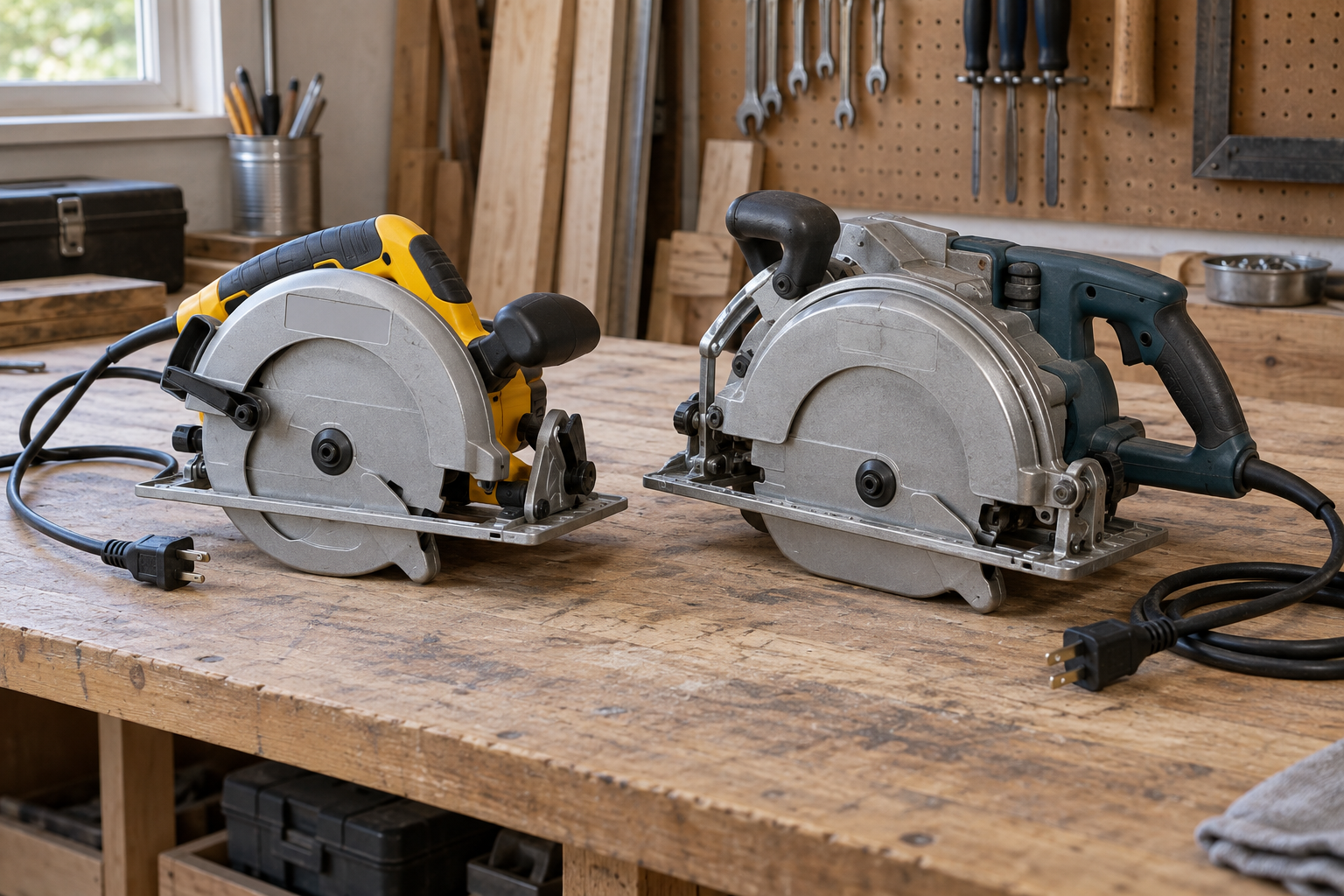
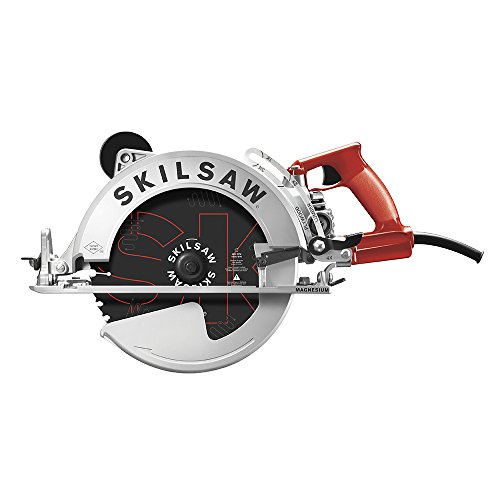
For roof framing, the Skilsaw SPT77WML and Milwaukee 6390-21 look like close competitors: both are corded 7-1/4-inch saws with 15-amp motors, aimed at demanding jobsite cutting. The important difference is that they are not the same type of saw. The SPT77WML is a true worm-drive saw. The Milwaukee 6390-21 is a conventional sidewinder.
That distinction affects weight, handling, blade speed, cut feel, and how comfortably each saw works in framing lumber. The Milwaukee can be the better value for occasional roof work, but the Skilsaw has advantages when the saw will spend long days cutting rafters, plates, sheathing, and blocking.
As an Amazon Associate we earn from qualifying purchases at no extra cost to you.


Our Top Picks
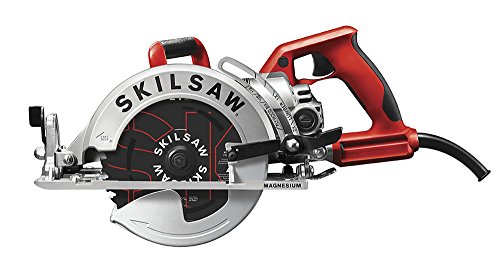 SKILSAW SPT77WML-01 15-Amp 7-1/4-Inch Lightweight Worm Drive CircularOne Size20.5 x 7.75 x 8.75 inches11.5 poundsCheck on Amazon

At a glance
| Specification | Skilsaw SPT77WML | Milwaukee 6390-21 |
|---|---|---|
| Saw type | Worm drive | Sidewinder |
| Blade size | 7-1/4 inches | 7-1/4 inches |
| Motor | 15 amps | 15 amps |
| Maximum bevel | 53 degrees | 50 degrees |
| Maximum cut at 90 degrees | About 2-9/16 inches | About 2-7/16 inches |
| Approximate weight | 11.6 pounds | About 10.4 pounds |
| Arbor orientation | Blade on the right | Blade on the left |
The real design difference
The SPT77WML uses worm gearing to turn the blade. Its motor runs in line with the blade arbor, giving the saw a long, narrow body and a strong, controlled feel under load. Worm drives traditionally trade some blade speed for torque and are popular with framers who routinely cut wet lumber, doubled headers, pressure-treated stock, and other material that can slow a saw.
The 6390-21 uses a direct-drive sidewinder layout. Its motor sits beside the blade, making the saw shorter and generally lighter. It spins the blade faster and feels more immediate in clean, dry lumber. It does not have the same worm-drive gear reduction, but that does not mean it lacks cutting power. A sharp framing blade and a healthy 15-amp circuit let it handle normal 2x material without drama.
For someone who only frames a roof occasionally, calling the Milwaukee a lesser saw would be inaccurate. Its main disadvantages appear when the work is continuous, the stock is difficult, or the operator values the slower, more planted feel of a worm drive.
Roof-framing performance
Both saws can cut common 2×4 and 2×6 rafters, ridge boards, and roof sheathing. At 90 degrees, each has enough depth for a single 2x and can cut through 2x material in one pass. The Skilsaw’s roughly 2-9/16-inch capacity leaves slightly more room for uneven lumber, while the Milwaukee’s roughly 2-7/16-inch capacity is still sufficient for standard framing work.
The Skilsaw is the stronger choice for repeated compound cuts and thick assemblies. Its 53-degree bevel range is useful for unusual roof pitches and compound work, although most common rafter cuts do not require the full range. Its higher weight also helps keep the saw steady when starting a long cut in a roof deck or ripping a board on sawhorses.
The Milwaukee’s lower weight matters when working from ladders, staging, or roof framing where every pound is held away from the body. It is easier to carry between cuts and less tiring for overhead or shoulder-height work. The left-side blade improves visibility for many right-handed users, but it also puts the blade closer to the user’s body than the right-blade Skilsaw layout. Neither arrangement is automatically safer; stance and hand position matter more.
Handling, durability, and failure points
The SPT77WML has a magnesium construction intended to reduce weight compared with older, heavier worm-drive saws. Even so, its 11.6-pound mass is noticeable after several hours. Its worm gearing also requires appropriate gear oil and periodic attention. Running a worm drive low on lubricant can accelerate gear wear, create heat, and eventually cause noisy or rough operation.
The Milwaukee is mechanically simpler. There is no worm-drive oil reservoir to maintain, and the sidewinder layout is compact. Its likely failure points are the same ones found on many high-use circular saws: worn brushes, a damaged cord, a loose or damaged lower guard, and a blade-arbor or gearbox problem after heavy abuse. A sidewinder can also bog more abruptly in a binding cut, so do not force it through twisted lumber.
On either saw, the lower guard is a critical safety component. Pitch, sawdust, or a bent guard can make it stick open. Clean the guard and hinge area, check that it snaps closed, and replace a damaged guard before cutting. A dull blade raises motor load, worsens tear-out, and encourages pushing harder—an easy way to create kickback.
Blades and jobsite use
Use a quality 24-tooth framing blade for fast cuts in dimensional lumber and sheathing. A dull or overly fine-tooth blade can make either saw appear underpowered. For cleaner plywood cuts, switch to a higher-tooth-count blade, but expect slower feed speed and more heat.
If the job involves a lot of roof sheathing, keep a suitable 7-1/4-inch framing blade available rather than trying to make one blade do everything. Use a dust mask when cutting treated lumber or dusty sheathing, and avoid using either corded saw on a circuit that repeatedly trips. Voltage drop from long, undersized extension cords reduces performance and increases heat.
Which one should you buy?
Choose the Skilsaw SPT77WML if roof framing is regular work, you often cut wet or dense lumber, or you prefer a worm drive’s controlled tracking and torque under load. It is also the better fit for a contractor who expects the saw to spend years on demanding framing jobs.
Choose the Milwaukee 6390-21 if you are framing one roof, doing occasional remodeling, or want a lighter saw that is easier to handle. The cheaper option is fine when the cuts are mostly standard 2x lumber and roof sheathing, the blade is kept sharp, and you are not forcing it through repeated heavy cuts.
Neither saw replaces proper layout and support. Mark rafter cuts clearly, support waste so it cannot pinch the blade, keep both hands on the saw, and let the blade reach full speed before entering the wood. For typical homeowner roof framing, the Milwaukee’s lower weight and usually lower cost are compelling. For sustained production framing, the Skilsaw’s worm-drive behavior and greater capacity justify its extra bulk.