What's inside
As an Amazon Associate I earn from qualifying purchases. This post may contain affiliate links at no extra cost to you.
If you already own an impact driver and you’re staring at a flat tire, it’s tempting to try it on your lug nuts. Both tools make the same rattling noise and both drive fasteners hard, but they are built for completely different jobs. Using the wrong one can leave you stranded, snap an adapter, or leave lug nuts dangerously loose.
As an Amazon Associate we earn from qualifying purchases at no extra cost to you.


Our Top Picks
 DEWALT ATOMIC 20V MAX* 1/2 in. Cordless ImpactOne Size9.2 x 1 x 3.3 Inches2.76 poundsCheck on Amazon


What Each Tool Actually Does
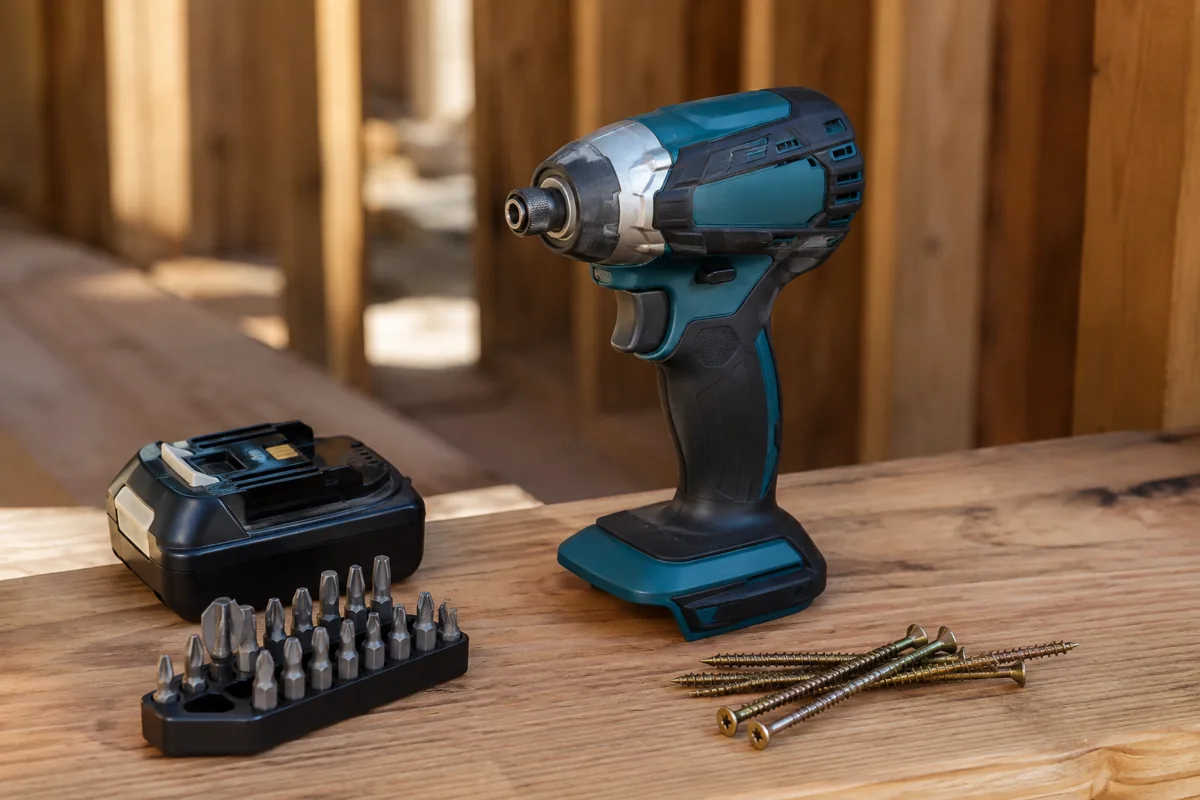
An impact driver uses a 1/4-inch hex collet. Inside, a hammer-and-anvil mechanism delivers rotational impacts along the axis of the driver. It is optimized for driving screws and lag bolts fast, with high RPM (2,500-3,600) and moderate torque, typically 1,300 to 2,000 in-lbs. That translates to roughly 108 to 167 ft-lbs at the bit, but that number is misleading for lug nuts.
An impact wrench uses a 1/2-inch (or 3/8-inch / 3/4-inch) square drive with a detent pin or hog ring to hold sockets. It is optimized for loosening and tightening large nuts and bolts. It runs at lower RPM but delivers far higher torque with heavier hammers. Even a compact 1/2-inch cordless impact wrench is rated for 250 to 400 ft-lbs of fastening torque and 400 to 600 ft-lbs of breakaway (nut-busting) torque. Mid-torque models hit 500-750 ft-lbs, and high-torque models exceed 1,000 ft-lbs.
The drive type matters as much as the power. Impact drivers need a hex-to-square adapter to hold a lug socket. That adapter becomes the weak link and absorbs a lot of the already limited torque.
How Much Torque Lug Nuts Actually Need
Lug nut specs are not suggestions. Under-torque and a wheel can loosen. Over-torque and you stretch studs or warp brake rotors.
Most passenger cars: 80 to 100 ft-lbs (108 to 135 Nm)
Small SUVs and light trucks: 90 to 120 ft-lbs (122 to 162 Nm)
Full-size trucks, vans, large SUVs: 120 to 150 ft-lbs (162 to 203 Nm)
HD trucks with 8 lugs: 140 to 165 ft-lbs and higher
Those are tightening specs. Breaking them loose takes more. A nut torqued to 100 ft-lbs last year, with a little rust or corrosion, can easily require 150 to 220 ft-lbs to crack free. If a shop hit it with an air wrench, it may need even more. That is why breakaway torque is more important than fastening torque for removal.
Can an Impact Driver Remove Lug Nuts?
Sometimes, but you should not count on it.
A good 18V impact driver rated at 1,800 in-lbs (150 ft-lbs) can crack loose a clean, properly torqued lug nut on a small car, especially with a fresh battery and a quality impact driver hex to square adapter. In the real world, it fails a lot. The hex adapter flexes and can snap under load, the 1/4-inch collet introduces wobble that rounds the socket, and the tool’s low breakaway torque means it will just rattle without breaking the nut free if there is any rust, over-torque, or thread corrosion.
Even when it does get the nut off, it is not a reliable way to put it back on. Impact drivers have almost no torque control for this range. You will either leave the nut under-torqued (unsafe) or hammer it inconsistently across the five lugs, which stresses the wheel and brakes. You must finish with a torque wrench regardless, but an impact driver makes it harder to get to a consistent, correct preload.
The cheaper option is fine only in one scenario: you already own the driver, you have a roadside emergency, and you have no other choice. Carry the right adapter and a breaker bar as backup. For planned tire rotations or seasonal swaps in your garage, it is the wrong tool.
Head-to-Head Comparison for Lug Nuts
| Feature | Impact Driver (1/4″ hex) | Impact Wrench (1/2″ square) |
|---|---|---|
| Typical fastening torque | 108 – 167 ft-lbs | 250 – 1,200+ ft-lbs |
| Typical breakaway torque | 150 – 180 ft-lbs (with adapter losses) | 400 – 1,400 ft-lbs |
| Drive / socket fit | Requires hex-to-square adapter; adds wobble, breakage risk | Direct 1/2″ square drive; solid engagement, hog ring or detent |
| Weight and size | Lighter, more compact | Heavier, bulkier – mid-torque is the sweet spot for tires |
| Control for lug torque | Poor; no accurate auto-stop for 80-150 ft-lbs | Good; many models have 2-4 modes including lug-nut / auto-stop modes |
| Best use case | Driving screws, lags, small fasteners | Removing/installing lug nuts, suspension and chassis bolts |
Risks and Failure Modes If You Get It Wrong
This is where people damage hardware. With an impact driver on lug nuts, the most common failures are:
1. Snapped adapter. Cheap chrome adapters shatter under impact loading. Even impact-rated adapters rob 10-20% of torque and can deform. A broken adapter can leave a piece stuck in the collet or socket.
2. Rounded nuts and sockets. Wobble from the adapter and collet means the socket is not square to the nut. Add a 12-point socket or a shallow engagement and you round the hex. Now you need extractors.
3. False tightness. An impact driver may hammer to a stop and feel tight, but a click-type torque wrench will show 50-70 ft-lbs when you need 100. That wheel will loosen after heat cycles.
4. Over-torque and stud damage. With an impact wrench, the opposite risk exists if you just hold the trigger on the highest mode without a torque stick or torque wrench. You can stretch studs, strip threads, or warp rotors. The fix is to use a lower mode to snug, then torque by hand to spec in a star pattern.
Bottom line: removal needs breakaway power, installation needs accuracy. Neither tool replaces a 1/2-inch torque wrench for lug nuts for the final pass.
Which Tool Should You Buy for Lug Nuts?
If your main job is tires, brakes, and suspension work, buy an impact wrench. For most home garages a mid torque 1/2-inch cordless impact wrench is the best compromise. Look for around 400-600 ft-lbs of fastening torque and 700-900 ft-lbs of breakaway, with at least two or three power modes. That will remove any properly torqued car or light-truck lug nut and still be compact enough to fit in a wheel well. A high-torque model is overkill unless you work on rusted HD trucks or farm equipment.
If you already own an impact driver for construction and decks, you do not need to replace it. You need to add the right companion. Keep the driver for screws and add a dedicated wrench plus a set of impact-rated, 6-point deep sockets (17mm, 19mm, 21mm, 22mm cover most vehicles) and a torque wrench. A set of torque sticks helps if you do frequent rotations, but always verify with a torque wrench.
Practical setup that works: use the impact wrench on its lowest or middle mode to snug lugs in the air, lower the vehicle until the tire just touches to prevent spinning, then torque in a star pattern to spec. Re-torque after 50-100 miles, especially with alloy wheels.
Do not buy an impact driver expecting it to be a budget lug nut tool. You will end up buying the impact wrench anyway after the first seized nut snaps your adapter. If you can only buy one tool and you do both woodworking and tire work, the impact wrench can handle tires and larger bolts but it is terrible at driving screws delicately. Ideally, own both and let each do what it was designed for.