What's inside
As an Amazon Associate I earn from qualifying purchases. This post may contain affiliate links at no extra cost to you.
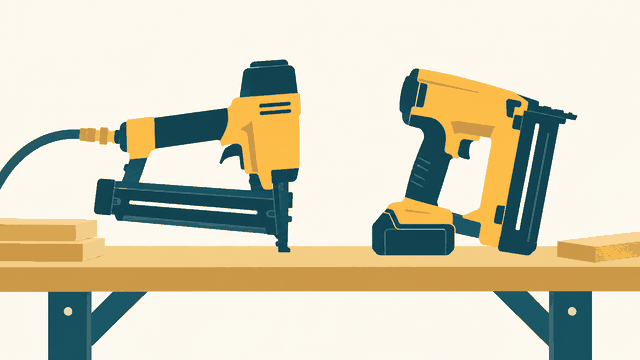
The core choice between the DeWalt DCN660 and Metabo HPT NT65M2S isn’t just about two nailers — it’s about two systems. One is a cordless 20V MAX brushless gun that lets you work without a hose. The other is a pneumatic workhorse that’s lighter, cheaper, and has been on trim crews for years. Both shoot 16-gauge finish nails from 1-1/4″ to 2-1/2″, but they feel and fail very differently on the job.
As an Amazon Associate we earn from qualifying purchases at no extra cost to you.



Our Top Picks
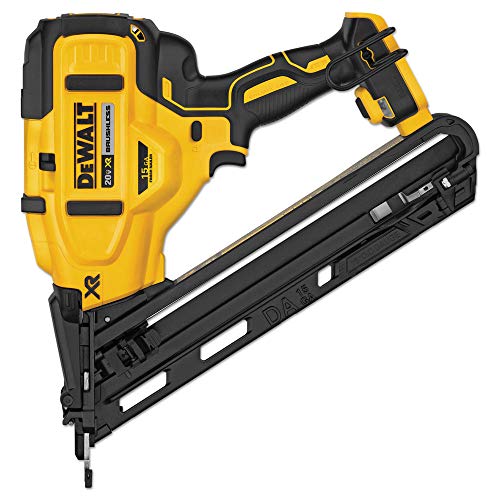 20V MAX XR Lithium-Ion Cordless 15-Gauge Angled Finish1 Count (Pack of 1)14.36 x 14.09 x 4.61 inches6.62 poundsCheck on Amazon


Specs At A Glance
| Feature | DeWalt DCN660 | Metabo HPT NT65M2S |
|---|---|---|
| Power Source | 20V MAX Battery (Brushless Motor) | Pneumatic (70-120 PSI) |
| Weight | 6.0 lbs bare / ~6.8 lbs with 2.0Ah battery | 4.2 lbs |
| Nail Range | 1-1/4″ to 2-1/2″ 16-Gauge Straight | 1″ to 2-1/2″ 16-Gauge Straight |
| Magazine Capacity | 110 nails | 100 nails |
| Firing Modes | Sequential and Bump (selector switch) | Sequential and Bump (trigger + switch) |
| Depth Adjustment | Tool-free dial | Tool-free dial |
| Jam Clearing | Tool-free nosepiece release | Tool-free nose door |
| Street Price | ~$279-$329 bare tool | ~$79-$119 |
| Warranty | 3-year limited + 1-year service | 5-year limited (tool) |
Power and Drive Quality
On softwoods like poplar, pine, and MDF, both nailers sink 2″ and 2-1/2″ nails flush without drama. The gap shows up in hardwoods and engineered materials.
The Metabo HPT NT65M2S is more consistent when you have steady air. At 90-100 PSI it will bury a 2-1/2″ nail in white oak or maple trim with the depth dial set mid-range, and the recoil is minimal. Because it’s pneumatic, power doesn’t fade as the day goes on — unless your compressor can’t keep up or you run 50+ feet of small-diameter hose in the cold. The main failure mode is under-driving from pressure drop, or leaving a proud nail if you lower pressure to avoid splitting thin stock. It will also blow right through delicate 1/4″ pieces if you don’t dial it back.
The DeWalt DCN660 uses a flywheel and brushless motor to drive nails. It has plenty of power for 90% of finish work — crown, baseboard, casing, and cabinet install in paint-grade wood. Where it struggles is the last 10%: dense hardwood with 2-1/2″ nails, or when the battery is low and cold. You’ll get an occasional 1/16″ proud nail that needs a second hit or a nail set. DeWalt’s stall/jam recovery is decent, but a hard jam on a clipped nail or a nail hitting a knot can lock the driver and require you to remove the battery, clear the nose, and reset. It’s not common, but it takes longer than flipping open the Metabo’s nose door.
If you shoot a lot of 2-1/2″ nails into oak or hickory, the pneumatic Metabo is the more reliable sink. For everything else, the DeWalt is close enough that you won’t notice.
Cordless Convenience vs. Pneumatic Practicality
This is the real decision.
The DCN660 wins on mobility. No compressor to haul upstairs, no hose to snag on door jambs or stair railings, no waiting for the tank to refill at 6 AM. For punch-list work, small rooms, closets, or installing a few doors on a remodel, that freedom saves real time. You can grab the gun and a DeWalt 20V battery kit and move. Runtime is good — a 2.0Ah battery will drive roughly 800-1,000 2″ nails in softwood before it needs a swap. The downsides are weight and bulk. At nearly 7 lbs with a battery and 12-1/8″ long, it fatigues your wrist overhead and doesn’t fit tight between cabinets as easily. There’s also a 0.5-second spin-up delay in sequential mode. If you pull the trigger too fast, it fires blank.
The NT65M2S wins on weight, size, and cost. At 4.2 lbs and about 1.5″ narrower in the nose, you can run it all day for baseboard or crown without forearm burn, and you can see your line better. No battery to charge, no electronics to fail. Maintenance is simple: 2-3 drops of pneumatic tool oil daily, keep the air clean and dry, and it will run for years. The trade-off is the system. You need a compressor that can deliver at least 2.0 SCFM at 90 PSI, a hose, and fittings. For a pro trimming a whole house, that’s already in the truck. For a homeowner who owns one nailer, it’s an extra $150-$250 and a lot more noise.
Brass tacks: If you already own a compressor, the Metabo costs a third of the DeWalt and does the core job better. If you value not dragging a compressor into a finished home or up three flights of stairs, the DeWalt pays for itself in hassle saved.
Ergonomics, Controls and Daily Use
Both have tool-free depth adjustment and tool-free jam clearing, but the execution differs.
DeWalt’s depth wheel is behind the nosepiece and clicks positively. You can adjust with gloves on. The sequential/bump selector is on the side next to the trigger — easy to bump accidentally to bump-fire if you grip high. It has an LED work light, trigger lock, and low-nail lockout that stops firing when you’re down to ~7 nails. Dry-fire lockout saves your workpiece from driver marks.
Metabo’s depth dial is also near the nose and is slightly more sensitive — a quarter-turn makes a bigger difference, so you dial it in more carefully. Its selective actuation switch is on the trigger itself. The NT65M2S has a no-mar tip that actually stays on, a 360-degree adjustable exhaust that keeps oil mist off your finish, and an elastomer grip that doesn’t get slippery with dust. No lockout — it will dry-fire if you run empty, which will dent soft trim if you’re not counting.
For nose visibility, the Metabo is better. The DeWalt’s bulky flywheel housing blocks part of your sightline when toe-nailing or working in corners. For trigger feel, the Metabo is shorter and lighter. For convenience features, the DeWalt’s LED and battery gauge help in dim closets.
Durability and Failure Modes
Neither is a throwaway tool, but they fail differently.
The Metabo HPT NT65M2S is proven. Common issues after heavy use are air leaks at the trigger valve O-rings and wear on the driver blade. Both are cheap fixes — a $12 O-ring kit and 20 minutes. If you don’t oil it, it will start to misfire and the driver will stick. If you over-oil, it spits on your trim for the first few shots. Keep pressure at 90 PSI for most work; running constantly at 120 PSI to compensate for a weak compressor accelerates wear.
The DeWalt DCN660 has more to go wrong. The motor, flywheel, and return springs are under stress on every shot. Early DCN660s had reports of spring and driver failures after a few thousand nails, though current production seems more robust. The nail follower spring can weaken if you leave the magazine loaded for months. Cold weather below about 30°F noticeably reduces drive power and battery capacity. When it does jam, the fix is tool-free but you must pull the battery first for safety, which slows you down more than the Metabo’s flip-door.
For a crew that shoots cases of nails every month, the pneumatic is easier and cheaper to keep alive indefinitely. For intermittent use, the cordless holds up fine if you don’t let batteries sit dead for months.
Which One Should You Buy?
Choose the Metabo HPT finish nailer 16 gauge if you already own a compressor, want the lightest gun for all-day trim, or need the most consistent sink on hardwood for the least money. It’s the better value for shop use, new construction, and anyone who does volume base and case work. Pair it with a small quiet compressor and a 25-foot flex hose and you have a complete finish system for less than the cost of the DeWalt bare tool.
Choose the DeWalt DCN660 if you work in occupied or finished homes, do punch-outs, cabinet installs, or small remodels where setup time matters. If you’re already on the DeWalt 20V MAX platform, the bare tool makes sense — no new batteries or charger to buy. It’s the right call for installers, handymen, and DIYers who want to avoid the noise, maintenance, and footprint of a compressor and will happily trade a little weight and occasional hard-nail performance for grab-and-go convenience.
If you shoot both, many pros now keep both: the Metabo in the shop or on big jobs, and the DeWalt in the truck for service calls. If you can only buy one, match it to your air situation. No air and no desire to own a compressor — get the DeWalt. Have air or plan to also run a brad nailer and pin nailer — the Metabo saves you money and weight every day you use it.