
What's inside
As an Amazon Associate I earn from qualifying purchases. This post may contain affiliate links at no extra cost to you.
A three-cutter or four-cutter SDS-plus bit can get through rebar, but neither is a steel-cutting bit. Both have carbide cutting edges intended for masonry. If the bit hits reinforcing steel, the important difference is how well its head tolerates the impact and keeps cutting—not whether it can safely drill through steel indefinitely.
For occasional holes where you may clip a thin bar, a quality three-cutter bit is often enough. For repeated drilling in reinforced concrete, a four-cutter head is usually the more reliable choice. The right method matters more than the extra cutter: stop hammering as soon as you hit steel, then use a method suited to metal.
As an Amazon Associate we earn from qualifying purchases at no extra cost to you.



Our Top Picks


What the cutters do—and what they don’t
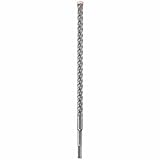
The carbide head on an SDS bit breaks and grinds concrete as the drill rotates and hammers. A three-cutter head has three carbide edges; a four-cutter head has four, often arranged symmetrically. More edges can help the bit stay centered and spread uneven loading if the head encounters a hard inclusion or a reinforcing bar.
But these edges are not equivalent to the teeth on a metal-cutting drill bit. Rebar is hard steel. Repeated hammering against it can chip carbide, damage the head, or overheat the bit. A four-cutter head may survive an accidental encounter better, but it does not turn an SDS bit into a dependable rebar cutter.
Three-cutter vs. four-cutter at a glance
| Factor | Three-cutter SDS bit | Four-cutter SDS bit |
|---|---|---|
| Typical use | Everyday holes in concrete and masonry | Frequent or demanding concrete drilling |
| Rebar encounter | Can catch or chip; less forgiving of uneven contact | Generally better centered and more tolerant of incidental contact |
| Speed in ordinary concrete | Often fast; depends heavily on bit and concrete | Can be similarly fast; extra edge does not guarantee faster drilling |
| Price | Usually cheaper | Usually costs more |
| Best reason to buy | Lower cost for occasional work | More durability and consistency in reinforced concrete |
Which drills more reliably through rebar?
If “through rebar” means continuing to hammer the SDS bit through the steel, neither design is the right choice. Reliability means getting the hole finished without ruining a masonry bit or risking a jam. In that sense, a four-cutter bit is more forgiving when its head briefly contacts steel, but it is not a guarantee against damage.
Rebar size, bit diameter, steel hardness, drill power, and how squarely the head strikes the bar all matter. A small bit may glance off the steel; a larger bit that catches it can bind abruptly. That can twist the drill or your wrist, especially if you’re using a high-torque rotary hammer without a functioning clutch. Don’t force the bit, and keep a firm two-handed grip.
For routine concrete holes, a good three-cutter bit is a sensible buy. Choose a four-cutter bit when you expect frequent encounters with reinforcement, need consistent holes for anchors, or want a tougher general-purpose head and accept the higher cost. Compare three-cutter SDS-plus masonry bits and four-cutter SDS-plus masonry bits by the diameter and length you actually need, not just cutter count. Shank type matters too: SDS-plus and SDS-max are not interchangeable.
What to do when the bit hits rebar
A sudden stop, metallic scrape, or change from gritty drilling to a hard, regular impact can indicate steel. Release the trigger, withdraw the bit, and check whether the hole is where you need it. Continuing in hammer mode can round or chip carbide, overheat the bit, and make the steel harder to deal with.
If the hole location can move, shifting it slightly may be the simplest option—but first check the reinforcement layout and keep required clearances from edges and other holes. If the hole must cross the bar, stop hammer action and use a suitable metal-cutting method. Depending on access and the tool setup, that may mean switching to a rotary-only drilling method with an appropriate metal bit, or using a dedicated method recommended for the job. Secure the work, wear eye protection, and avoid cutting structural reinforcement without approval: severing rebar can compromise the concrete member.
Do not try to solve a steel encounter by pressing harder. More feed force won’t make carbide cut steel cleanly; it increases the chance of binding. Let the bit work in concrete, clear dust from deep holes by withdrawing it periodically, and use the drill’s side handle and clutch where fitted.
Buying and using the right bit
Match the bit to the anchor or fixing. A hole that is too wide can leave an anchor loose; one that is too narrow can prevent it from seating. Check the anchor maker’s specified diameter and drilling depth, and choose a bit with enough usable length to reach that depth without burying the chuck or shank in the hole.
For a few holes in ordinary block or concrete, a budget three-cutter bit is often fine. Replace it when drilling slows noticeably, it wanders, or the carbide head is visibly damaged. For regular site work or reinforced concrete, a reputable four-cutter bit is a worthwhile upgrade, especially where accurate holes matter. Neither cutter count can compensate for a worn edge, dust-packed flutes, a loose chuck, or a drill being used outside its capacity.
In short, choose three cutters for value and occasional masonry drilling; choose four for more demanding concrete work and better tolerance of incidental rebar contact. If you genuinely need to pass through reinforcing steel, plan a steel-cutting step rather than asking either SDS bit to do a job it was not designed for.