What's inside
As an Amazon Associate I earn from qualifying purchases. This post may contain affiliate links at no extra cost to you.
Our Top Picks
 BOSCH GTS15-10 10 Inch Portable Jobsite Table Saw10 in28.1 x 27.8 x 13.53 inches102.95 poundsCheck on Amazon

The short answer
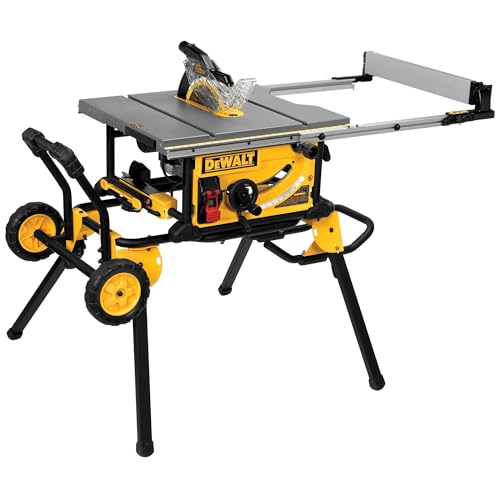
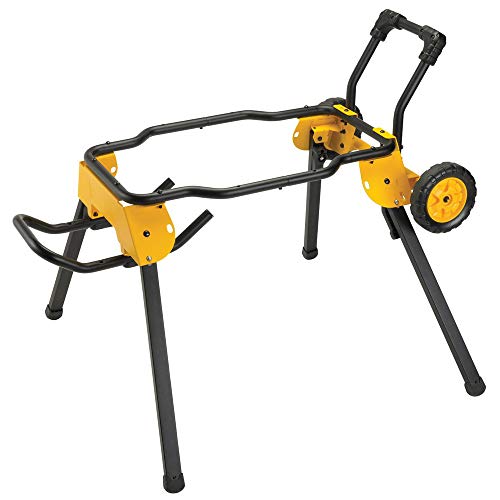
The DeWalt DWE7491RS has the more practical stand for most jobsite users. Its rolling stand is faster to move, easier to set up on uneven ground, and better suited to one-person handling. The large wheels and folding frame make a real difference when the saw has to travel from a truck to the work area.
The Makita 2705X1 is not a poor choice. Its folding stand is sturdy, compact when collapsed, and often makes sense when the saw will be carried short distances or stored in a workshop. It can also be the better value when sold at a substantially lower price. But for repeated setup, breakdown, and movement, the DeWalt’s stand is more convenient.
As an Amazon Associate we earn from qualifying purchases at no extra cost to you.


Stand design and mobility
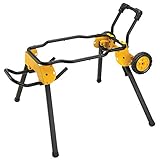
The DWE7491RS uses a folding rolling stand with two large wheels and a pair of support legs. You fold the saw and stand together, tip the unit onto its wheels, and pull it like a hand truck. That is the important practical advantage: you do not have to carry the saw and stand separately or lift the saw to move it across a driveway.
The Makita 2705X1 includes a folding stand with wheels, but its design is less like a dedicated cart. It is stable once open, yet moving the folded saw generally involves more lifting and more attention to balance. The saw is also a substantial package, so a long walk over gravel, grass, or a rough slab is tiring with either model. The DeWalt simply puts less strain on the operator.
For a garage shop, both stands work. For remodeling work where the saw moves several times a day, the DeWalt stand is the more useful feature rather than a minor convenience.
| Stand consideration | DeWalt DWE7491RS | Makita 2705X1 |
|---|---|---|
| Basic design | Rolling folding stand | Folding wheeled stand |
| Best movement method | Tip and pull like a cart | Lift, fold, and roll or carry |
| Typical rip capacity | Up to 32-1/2 inches to the right | About 25 inches to the right |
| Practical strength | Fast setup and jobsite mobility | Stable footprint and compact storage |
| Main drawback | Large folded package | Less convenient for repeated relocation |
Setup and folding in real use
The DeWalt stand is designed for quick deployment. The release points are accessible, and the saw remains attached to the stand during folding. That matters when you are working alone. The stand does not turn setup into a second job, although you still need to verify that all locking points are fully engaged before cutting.
Its main failure mode is not a weak frame; it is an incompletely locked stand. If one leg or release mechanism is not seated, the saw can rock or shift as a board enters the blade. Always push down on the tabletop and check that the frame is rigid before making a cut.
The Makita stand has a conventional folding layout that stores neatly and provides a solid working platform when opened. It is a good fit for someone who sets the saw up in one location and leaves it there for a project. The trade-off appears during breakdown: the folded saw is awkward to control without a second person, especially if you are lifting it into a vehicle.
Before buying either saw, consider the cost of a table saw loading ramp if the tool must be loaded into a pickup or van regularly. A good ramp prevents the stand from being dragged over its wheels or dropped onto its frame.
Stability, support, and uneven ground
Both stands need reasonably firm ground. Neither should be trusted on a steep slope, loose fill, or a pile of offcuts. A portable table saw can tip when a long board catches an edge or when the operator pushes sideways during a cut.
The DeWalt’s wheeled arrangement is stable on concrete and compacted soil, but the stand has a relatively tall, mobile profile. Lock or brace the saw before ripping heavy sheet goods. For 4-by-8-foot plywood, use separate outfeed and side support rather than relying on the stand alone. A collapsing sawhorse or roller stand placed too far from the saw can pull the workpiece down and make the saw feel unstable.
The Makita’s stand feels planted once opened, and its compact footprint can be useful in a crowded garage. That does not eliminate the need for support. A 10-foot board exerts considerable leverage, and the saw can twist if the board is allowed to hang unsupported. For repeat work, a portable outfeed roller stand is a better investment than choosing a saw based only on stand width.
Storage and transport trade-offs
The DeWalt’s stand is excellent for rolling but not especially compact. The wheels, handles, and folded legs create a large package. Measure your vehicle and storage space before buying. It may fit upright in a van but consume more room than a saw with a simpler detachable stand.
The Makita’s folding stand is easier to position against a wall or store beside other tools. If you carry the saw only from a workshop to a driveway, that compactness may matter more than cart-like mobility. The cheaper option is perfectly reasonable when the saw will remain assembled in one place and another person can help move it.
Which one should you buy?
Choose the DeWalt DWE7491RS if you work alone, move the saw frequently, cut large panels, or regularly travel between job locations. Its stand reduces setup time and makes the saw less punishing to transport. The generous rip capacity is another practical advantage, although it does not replace proper material support.
Choose the Makita 2705X1 if the price is clearly lower, storage space is tight, or the saw will mostly be used in one garage or on one building site. Its stand is adequate for normal framing, trim, and cabinet work when the surface is level and the operator has a sensible way to move it.
If the stand is your deciding factor, the DeWalt wins. If the saw will rarely move and the Makita costs significantly less, buy the Makita and put the savings toward a portable table saw outfeed support. That accessory will improve real cutting performance more than a small difference in folding hardware.