What's inside
As an Amazon Associate I earn from qualifying purchases. This post may contain affiliate links at no extra cost to you.
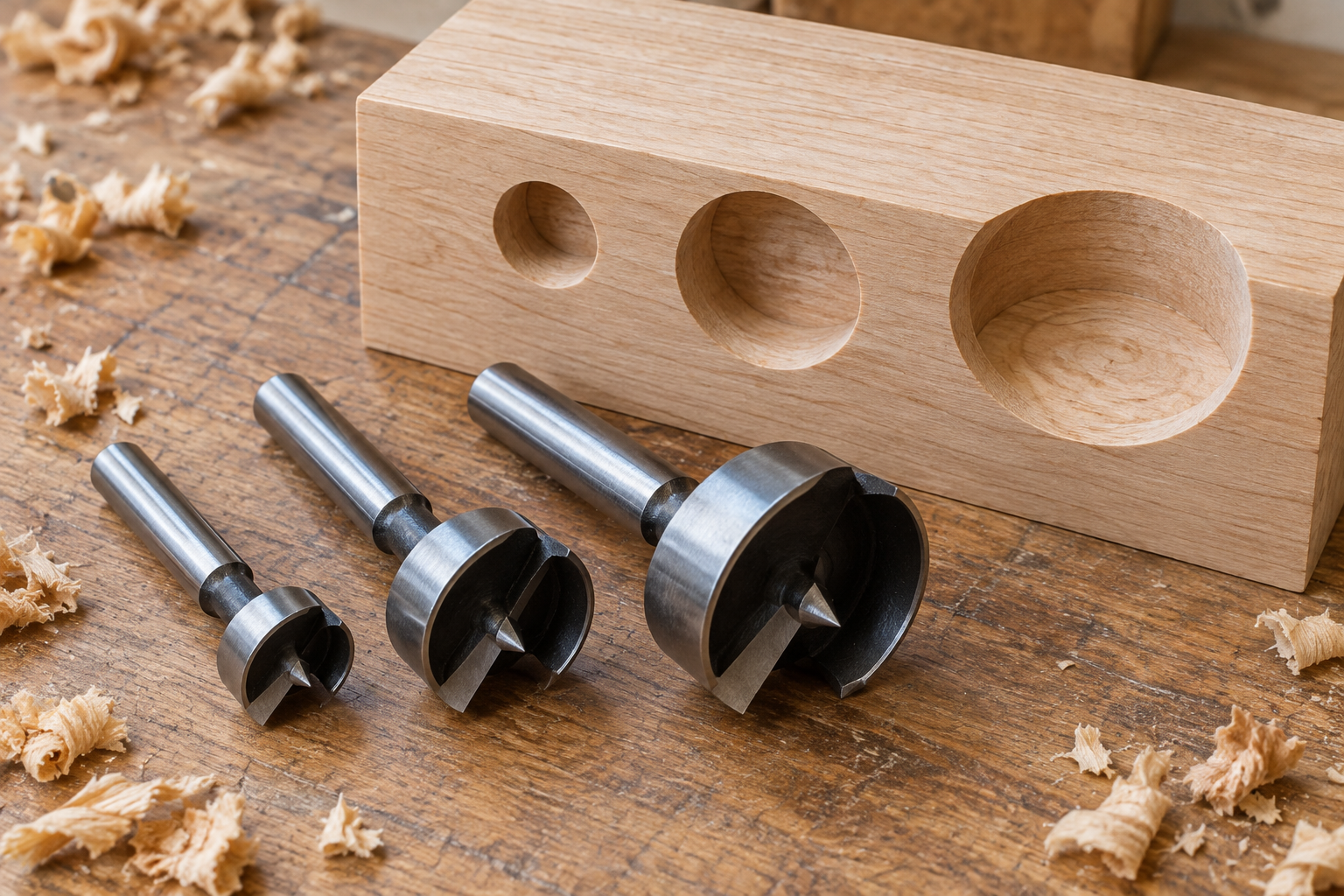
A plug cutter and a Forstner bit can both help hide a screw, but they make different holes and solve different parts of the job. A plug cutter cuts a short wooden cylinder from scrap; a Forstner bit bores a flat-bottomed recess in the workpiece. For a clean, nearly invisible repair, you often use both: the Forstner bit makes room for the screw and plug, and the plug cutter supplies a matching piece of wood.
As an Amazon Associate we earn from qualifying purchases at no extra cost to you.


Our Top Picks

What each tool does
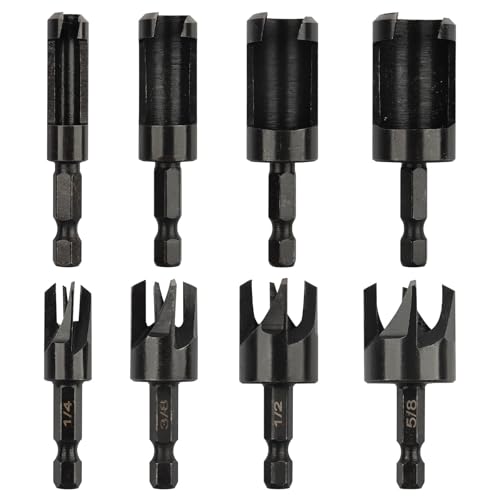
A wood plug cutter cuts a round plug with the grain running along its length. The plug is usually tapered slightly, which helps it fit tightly in a drilled recess. It does not make the recess in your project; you cut plugs from scrap or an inconspicuous area of matching wood, then trim them after gluing.
A Forstner bit cuts a flat-bottomed, clean-sided hole. That hole can receive a screw head and a wooden plug. For a typical cabinet or furniture screw, a recess around 3/8 to 1/2 inch in diameter is common, but size the hole to the screw head and plug rather than relying on a standard measurement.
Quick comparison
| Factor | Plug cutter | Forstner bit |
|---|---|---|
| Main job | Makes wooden plugs from scrap | Makes flat-bottomed recesses in the workpiece |
| Used in | Drill press preferred; some work in a handheld drill | Drill press or a well-controlled handheld drill |
| Fit and appearance | Can match grain and species closely | Determines recess diameter and depth, not plug appearance |
| Best for | Visible holes where a wood plug is wanted | Counterboring screws or making precise flat-bottomed holes |
| Common failure | Split or burned plugs; plugs cut too short | Drifting, tear-out, or an oversized/deep recess |
Which one should you buy?
If the screw head is already in place and you want to cover it with wood, the Forstner bit is the tool that makes the pocket. Buy a plug cutter too only if you need plugs that match the project. For one-off work, store-bought plugs can be simpler; check their diameter and wood species against the hole and the surrounding grain.
If you only need to sink a screw head below the surface, a Forstner bit may be unnecessary. A countersink bit creates a conical seat for a countersunk screw, while a standard counterbore or a larger twist bit can make a simple recess. A plug cutter alone will not bury the screw: it produces the cover, not the pocket.
For occasional shop or repair work, a single cutter in the right size can be more sensible than a large set. A drill press gives better control when making plugs, especially narrow ones. With a handheld drill, clamp the scrap firmly, keep the cutter square, and stop if it begins to chatter.
How to make a plugged screw hole
First, choose the screw and determine how much depth it needs. Drill a pilot hole for the screw, then make a flat-bottomed recess deep enough to hide the head and leave room for the plug—often about 1/4 inch, but the screw head and plug length decide the actual depth. Use a depth stop or tape as a visual guide. A recess that is too shallow leaves the plug proud; one that is too deep wastes material and weakens the area around the screw.
Cut plugs from scrap of the same species and, where appearance matters, similar grain and color. Cut them longer than the recess is deep so you have material to trim. Keep the cutter sharp and use moderate feed pressure; forcing it can burn the wood or split a plug as the cut breaks through. If using a drill press, clamp the stock rather than holding it by hand.
Drive the screw, add a small amount of glue to the recess walls or plug, and tap the plug in with its grain aligned to the surrounding wood. Avoid filling the entire pocket with glue, which can prevent the plug from seating. Once dry, trim it close with a flush-cut saw or chisel, then sand carefully. A plug with the grain running in a different direction can remain conspicuous even when its color matches.
Common mistakes and trade-offs
Forstner bits can leave a rough rim or tear the surface, particularly in plywood, veneer, and brittle woods. Backing the work or scoring the rim helps, but a plug will not hide a chip that extends beyond the recess. Start slowly, keep the bit sharp, and clear chips as you work; packed chips increase heat and can spoil the cut.
Plug cutters remove material and can bind if the plug is cut too deeply in one pass. They also leave a small center mark in some designs. If the plug will be visible, cut several from offcuts and choose the best match rather than assuming the first one will disappear. For a painted project, a filler or purchased plug may be quicker than matching grain.
Choose for the job
For a convincing wood cover over a screw, use a Forstner bit for the recess and a plug cutter for a custom-matched plug. If the goal is only to seat a screw below the surface, skip the plug cutter and consider a countersink or counterbore instead. The cheaper, simpler option is fine when the hole will be painted, hidden, or covered by a cap; matching plugs earn their extra setup when the finished wood will remain visible.