What's inside
As an Amazon Associate I earn from qualifying purchases. This post may contain affiliate links at no extra cost to you.
The SawStop Compact Table Saw and DeWalt DWE7491RS solve different problems. SawStop puts its safety brake at the center of the design; DeWalt prioritizes a larger cutting capacity and a wheeled stand that’s quick to move around a jobsite. Neither is the obvious choice for every buyer. The right one depends on whether your bigger concern is avoiding a severe blade injury, handling sheet goods, or transporting the saw.
As an Amazon Associate we earn from qualifying purchases at no extra cost to you.


Our Top Picks
 SAWSTOP 1.75HP Contractor Saw with 30” Premium Fence61.75 x 40.5 x 34.75 Inches256 PoundsCheck on Amazon


At a glance
| Feature | SawStop Compact Table Saw | DeWalt DWE7491RS |
|---|---|---|
| Blade | 10-inch, with flesh-detection brake | 10-inch, conventional blade guard |
| Rip capacity | About 24½ inches to the right | 32½ inches to the right |
| Stand | Compact, folding stand configuration | Rolling stand with large wheels |
| Key advantage | Brake designed to stop a blade on contact with skin | More room for wide rips and jobsite transport |
| Main compromise | Brake adds cost and requires compatible blades and cartridges | No flesh-detection brake; larger footprint when set up |
Specifications and included accessories can vary by package or model year, so check the listing and manual before buying. The rip-capacity figures describe the fence’s reach, not a guarantee that a saw can safely support a full sheet of plywood without additional support.
Safety: active braking versus conventional guarding
The SawStop Compact uses an electrical sensing system to detect contact between a person and the blade. If the system detects skin contact, a brake cartridge drives an aluminum brake into the blade and drops the blade below the table. The saw is meant to limit the injury, not make contact safe: the event can still cause a cut, and the cartridge and blade will need replacement before the saw can be used again.
The brake has practical limits. Wet or conductive material can trigger it, and conductive materials such as aluminum can’t be cut with the system active unless the saw is put into bypass mode as described in the manual. Bypass removes the flesh-detection protection. The user also has to keep compatible brake cartridges on hand and follow the setup and blade-change instructions. A trigger can mean repair costs and downtime, not just a quick reset.
The DeWalt relies on the usual safeguards: blade guard, riving knife, anti-kickback pawls, push sticks, and careful feed technique. Those protections matter, but they don’t detect a hand entering the blade’s path. The DWE7491RS is a reasonable choice for a cost-conscious buyer who already takes setup and guarding seriously; it is not an equivalent safety system at a lower price.
For either saw, keep the guard and riving knife installed for through-cuts whenever possible. Use a push stick for narrow rips, stand out of the kickback line, and support long or wide stock so it can’t tip as it leaves the blade. A brake is a last-resort injury-mitigation feature, not a substitute for those habits.
Cut capacity and everyday use
The DeWalt’s 32½-inch right-side rip capacity is the clearest functional advantage in this comparison. It gives more room for ripping common 4-by-8-foot sheet goods lengthwise and is useful when cutting wide cabinet sides or shelving. The fence-and-rack arrangement is also designed to adjust across that range without relying on a small tabletop fence extension.
The SawStop’s roughly 24½-inch right-side capacity is still enough for many workshop tasks, including ripping a 4-foot sheet in half with a suitable outfeed setup. But it offers less margin for wide panels, and large sheets are awkward on any portable table saw without helpers, rollers, or a full-size support surface. If sheet goods are a regular part of the job, plan the material handling as carefully as the saw purchase.
Both are portable jobsite-style saws with 10-inch blades, rather than heavy cabinet saws. They can handle common framing and woodworking cuts, but cut quality still depends on blade choice, alignment, stock support, and feed rate. A better blade can help with clean crosscuts and plywood, but it won’t correct a misaligned fence or a board that binds.
Portability and setup
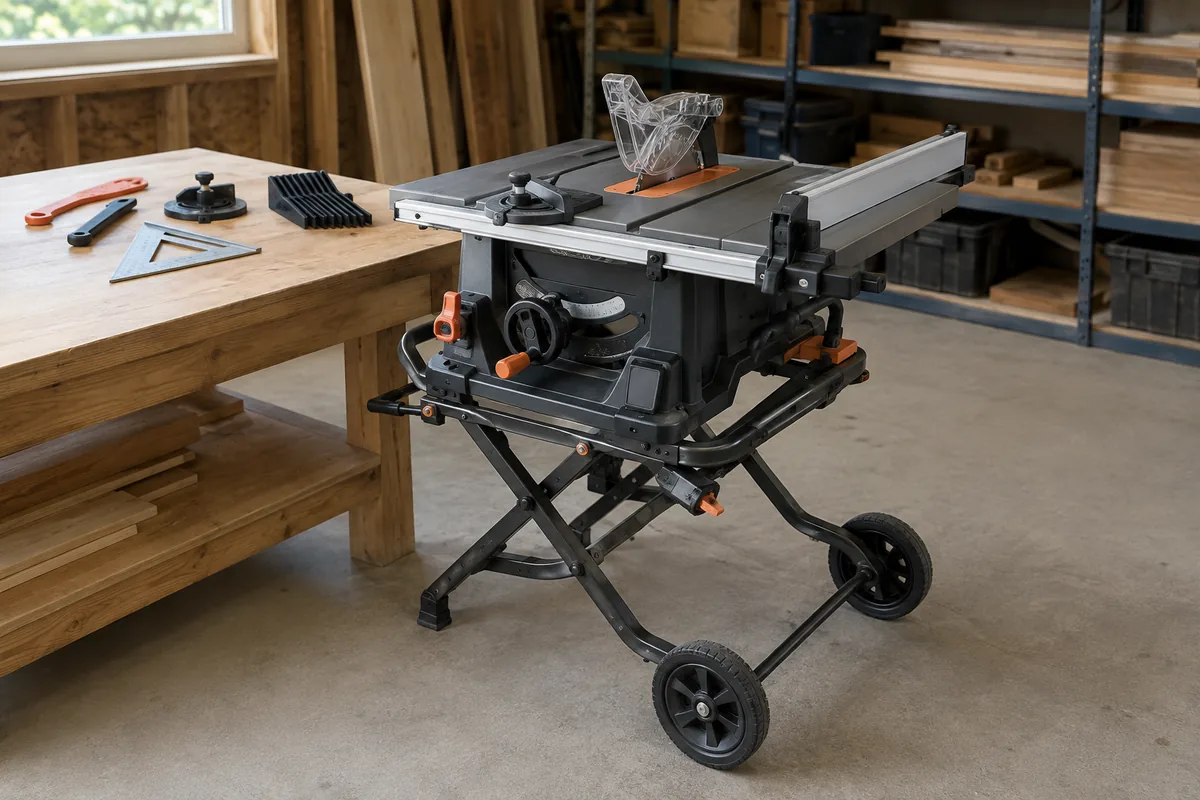
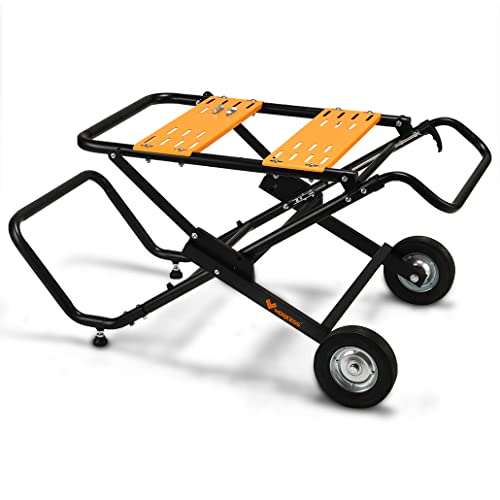
The DWE7491RS comes with a rolling stand. Its larger wheels make it practical to tilt and move over a jobsite or garage floor, and the stand stays attached for storage. That convenience comes with a larger setup footprint. Check that you have space to deploy the stand and room behind the saw for outfeed support before choosing it for a crowded shop.
The SawStop Compact is aimed at buyers who want a smaller saw package, and its folding stand makes it easier to put away than a fixed workshop saw. It is still a substantial machine to lift and load; “compact” doesn’t mean effortless to carry up stairs or into a vehicle. If you’ll move a saw alone often, compare the packed dimensions and weight for the exact package, not just the stand design.
For frequent rolling between rooms or across a flat jobsite, the DeWalt stand is the more convenient setup. For storage in a tight garage, the SawStop’s compact layout may be easier to live with. If portability is the deciding factor, compare portable table saws with rolling stands and confirm how each folds and stores.
Cost, consumables, and maintenance
The SawStop generally costs more because its safety system adds hardware and ongoing consumables. A brake event can damage the blade as well as expend the brake cartridge, so budget for both and check that replacement parts are readily available where you live. That cost may be worth accepting if the injury-mitigation feature is a priority, but it should be part of the ownership calculation.
The DeWalt is the simpler buy if you want more rip capacity and a mobile stand without paying for a brake system. It still needs sensible maintenance: keep the tabletop clean, check fence alignment, inspect the blade and guard, and clear sawdust from moving parts. Don’t treat its lower purchase price as a reason to skip a good blade, push sticks, or outfeed support.
If you’re building a basic setup, compare table-saw push sticks and other work supports as part of the budget. Those accessories are useful with either saw and help make repeat cuts more controlled.
Which one should you buy?
Choose the SawStop Compact if its flesh-detection brake is the deciding feature, your typical cuts fit within its capacity, and you’re comfortable paying for cartridges and compatible blades. It suits a home shop where the saw is used by more than one person, provided everyone understands the system’s limits and setup.
Choose the DeWalt DWE7491RS if you need the extra right-side capacity, regularly move the saw on its rolling stand, or would rather put the price difference toward blades and shop support. It’s the more practical value for many jobsite and general-purpose users, as long as you accept that its safety depends on conventional guards and careful technique.
If you often work with wide sheet goods, need to store the saw in a very small space, or expect to carry it by hand, neither spec sheet alone settles the question. Measure your storage area, consider how you’ll support the work, and check the exact package weight and stand dimensions before ordering.