What's inside
As an Amazon Associate I earn from qualifying purchases. This post may contain affiliate links at no extra cost to you.
A ripping blade and a combination blade can both cut boards on a table saw, but they are optimized for different work. A ripping blade is built to cut with the grain quickly and cleanly. A combination blade is meant to handle both ripping and crosscutting without frequent blade changes. For a small woodshop doing varied projects, the combination blade is usually the more useful starting point. A dedicated ripping blade earns its place when you rip stock often, especially thick hardwood.
As an Amazon Associate we earn from qualifying purchases at no extra cost to you.



Our Top Picks
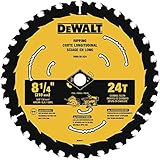
 DEWALT 10 in. 24 Tooth General Purpose Saw10" / 24 Teeth13.4 x 11.5 x 0.5 inches0.8 poundsCheck on Amazon


What the teeth do
A typical 10-inch ripping blade has about 24 teeth, often with flat-top grinds. The low tooth count leaves room for gullets that clear long curls of sawdust as the blade cuts with the grain. That helps the saw feed steadily and reduces the chance of a hot, slow cut in thick stock. The trade-off is a rougher finish across the grain, where those teeth can leave tear-out.
A common 10-inch combination blade has around 40 to 50 teeth, often arranged in groups intended to handle both ripping and crosscutting. It generally leaves a better crosscut surface than a 24-tooth rip blade, while still clearing enough waste for ordinary ripping. It is a compromise, not a specialist: it may cut more slowly than a rip blade in thick hardwood and less cleanly than a high-tooth-count crosscut blade on delicate veneer or finished trim.
Side by side
| Factor | Ripping blade | Combination blade |
|---|---|---|
| Typical 10-inch tooth count | About 24 | About 40–50 |
| Best use | Long cuts with the grain | Mixed ripping and crosscutting |
| Feed and cut | Fast in thick stock; large gullets clear waste | More versatile; may feed more slowly in heavy rips |
| Crosscut finish | Usually rougher, with greater tear-out risk | Generally cleaner for everyday work |
| Main drawback | Requires another blade for good crosscuts | Does neither job as well as a dedicated blade |
Which fits a small shop?
Start with a combination blade if your table saw does several jobs: ripping project parts, trimming panels, cutting shelving, and making occasional crosscuts. One blade reduces interruptions and the need to store, change, and track multiple blades. Look for a quality carbide-tipped blade compatible with your saw’s arbor and guard setup, rather than choosing by tooth count alone. A 10-inch combination saw blade is a practical all-around option for a standard 10-inch table saw.
Choose a rip blade if most of your saw time is spent turning rough lumber into narrower boards, or ripping hardwood that is 1½ inches thick or more. Its open gullets can reduce strain during long cuts, particularly on a modestly powered saw. If your saw bogs down or the wood starts to scorch during a rip, a sharper, suitable rip blade may help—but it will not fix a dull blade, a misaligned fence, poor technique, or a saw that is underpowered for the stock. A 10-inch 24-tooth ripping blade is worth considering for regular heavy ripping.
Finish depends on more than tooth count
Blade condition, alignment, feed rate, and support all affect the result. A combination blade that is sharp and properly aligned can leave a useful finish on many crosscuts. A cheap, dull blade may burn or tear out regardless of its label. If the visible face matters, put the better face in the position that reduces tear-out for your saw and use a zero-clearance insert or sacrificial backing where appropriate.
For a clean crosscut on delicate material, neither of these blades is always ideal. A dedicated crosscut blade with more teeth can leave a smoother edge, though it may be slower for ripping. Similarly, a combination blade can handle routine cuts, but pushing it through thick hardwood at an aggressive feed can cause burning, wandering, or motor slowdown. Let the cut proceed at a steady pace; don’t force the stock to compensate for a blade that is struggling.
Safety and common failures
Blade choice does not make a cut safe by itself. Use a riving knife or splitter, keep the fence parallel to the blade, and use a push stick or push block when your hands would otherwise approach the blade. Never crosscut freehand against the rip fence: the offcut can bind between the fence and blade and kick back. Use a miter gauge or suitable crosscut sled, and remove or reposition the fence for cuts where it could trap the offcut.
Burn marks often point to a dull or dirty blade, slow feeding, misalignment, or wood pinching the kerf—not simply the wrong tooth count. Tear-out on a crosscut is a different problem; a rip blade’s tooth geometry may be the culprit, but backing, scoring, or a crosscut-focused blade can help. If the saw slows sharply, stop and investigate instead of pushing harder. Check for a dull blade, trapped stock, or a cut beyond the saw’s capacity.
A sensible buying decision
For a small shop with one saw and a mixed workload, buy a combination blade first and learn what its limits are. It is the better value when cuts are varied and hardwood ripping is occasional. Add a ripping blade when frequent long rips make feed speed, heat, or motor load a recurring issue. If you already own a combination blade that cuts cleanly and does not bog down on your usual stock, there is no need to replace it just because a specialist blade exists. A second blade should solve a real problem, not create another accessory to manage.