What's inside
As an Amazon Associate I earn from qualifying purchases. This post may contain affiliate links at no extra cost to you.
Our Top Picks

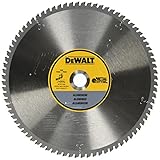

What hook angle means
Hook angle is the angle of a saw tooth’s face relative to a line drawn from the blade’s center. A positive-hook tooth leans forward into the cut; a negative-hook tooth leans back. That geometry changes how aggressively each tooth bites, but it does not by itself determine whether a blade is safe for aluminum. The saw, blade diameter, tooth design, work support and cutting technique all matter.
For aluminum, a negative-hook blade is often the more forgiving choice on a miter saw or table saw because it is less inclined to grab and pull the stock. A positive-hook blade can cut aluminum cleanly, but its more aggressive feed may make thin, light or poorly secured work harder to control. Neither angle makes a blade suitable for metal if its manufacturer does not approve it for the job.
As an Amazon Associate we earn from qualifying purchases at no extra cost to you.

Quick comparison
| Feature | Negative hook | Positive hook |
|---|---|---|
| Tooth action | Less aggressive; tends to resist self-feeding | More aggressive; pulls into the cut more readily |
| Typical advantage on aluminum | Better control on chop-style and sliding saws | Can cut efficiently when stock is firmly clamped and the saw is approved |
| Main risk | Can cut more slowly; still dangerous if misused | Greater chance of grabbing, shifting stock or a forceful kickback |
| Best buying check | Confirm the blade is rated for nonferrous metal and your saw | Confirm the blade is rated for nonferrous metal and your saw |
Which is safer for aluminum?
For a typical chop or sliding miter saw, a negative-hook blade rated for nonferrous metal is usually the safer starting point. Its teeth are less likely to pull thin aluminum into the blade with a sudden bite. That matters with angle, channel and small extrusions, which can twist or lift if they are not clamped securely.
Positive hook is not automatically unsafe. It may be appropriate on a saw designed for that blade geometry, especially when the material is substantial, the workpiece is firmly supported and the blade maker lists aluminum as an approved material. But if you are choosing between two otherwise suitable blades for a miter saw and are unsure, negative hook generally gives more control. Do not use a wood blade simply because its hook angle seems right.
Also check the saw’s manual before buying. It may prohibit metal cutting or specify blade type, diameter, arbor size and maximum speed. A blade must match the saw, and its rated RPM must meet or exceed the saw’s no-load speed. Never fit a larger blade or remove a guard to make a blade work.
Choose the blade, not just the angle
Look for explicit approval for aluminum or nonferrous metals, plus a tooth count and tooth shape suited to the stock. Many circular blades for aluminum have a high tooth count and a geometry intended to clear chips; the right count depends on blade diameter and material thickness. A high tooth count is not a substitute for the correct blade design. Aluminum chips can pack between teeth, heat the cut and cause binding.
For repeated cuts, a purpose-made negative-hook nonferrous-metal blade is a sensible choice for a compatible miter or circular saw. For occasional work, a less expensive blade can be fine if the manufacturer explicitly rates it for aluminum and it matches your saw. Do not pay extra for a premium blade if you only need a few cuts, but do not substitute an unrated wood blade to save money.
There is no universal safe hook angle or tooth count for every saw and aluminum profile. Follow the blade and saw makers’ specifications. If those instructions conflict, stop and ask the manufacturers rather than guessing.
Set up the cut to prevent movement
Clamp the aluminum so it cannot rotate, slide or lift. Support long stock close to the cut and keep offcuts from pinching the blade. A thin-walled extrusion can collapse under excessive clamping force, so use firm, even support rather than crushing the part. Keep hands outside the saw’s marked danger zone, wear eye and hearing protection, and use the guard as designed. Aluminum chips are sharp and hot; do not brush them away while the blade is moving.
Let the blade reach full speed before feeding, then cut steadily without forcing it. If the saw starts to slow, the stock moves, or the blade binds, release the trigger and wait for it to stop before investigating. Do not hold small pieces by hand near the blade. For short or narrow parts, use a suitable fixture or a different cutting method recommended by the saw maker.
Use cutting lubricant only if the blade and saw manufacturers permit it. Some setups are intended for dry cutting; adding oil can create a mess, affect grip or introduce a fire risk near other materials. Keep the cut area clear of sawdust and debris, and never use a blade with missing teeth, cracks or a damaged body.
Common mistakes and warning signs
The most serious mistake is assuming negative hook makes any setup safe. An unsecured extrusion can still be launched, and a dull or clogged blade can bind regardless of tooth angle. A blade that chatters, burns or leaves heavy burrs may be unsuitable, dull, dirty or being fed incorrectly. Stop and check the setup rather than pushing harder.
Another mistake is choosing by tooth count alone. A blade intended for wood may have a tooth shape or chip clearance that performs poorly in aluminum. Check the packaging for nonferrous-metal use, the allowed saw type and the required operating speed. If you cannot verify those details, choose a clearly rated blade instead.
A practical buying decision
For occasional cuts on a compatible miter saw, buy a properly rated negative-hook aluminum blade if control is your priority. If your saw manufacturer approves a positive-hook metal blade and your stock is rigidly clamped, that option can also be reasonable. For a table saw, follow the table-saw maker’s guidance; hook recommendations can differ by machine and setup, so do not transfer miter-saw advice blindly.
If you do not yet own a suitable blade, compare blades rated for aluminum cutting against your saw’s manual before ordering. For just a handful of cuts, a local metal shop or tool-rental counter may be cheaper and safer than buying a blade for a saw not approved for metal. The right choice is the blade and setup your saw maker permits—not the hook angle in isolation.