What's inside
As an Amazon Associate I earn from qualifying purchases. This post may contain affiliate links at no extra cost to you.
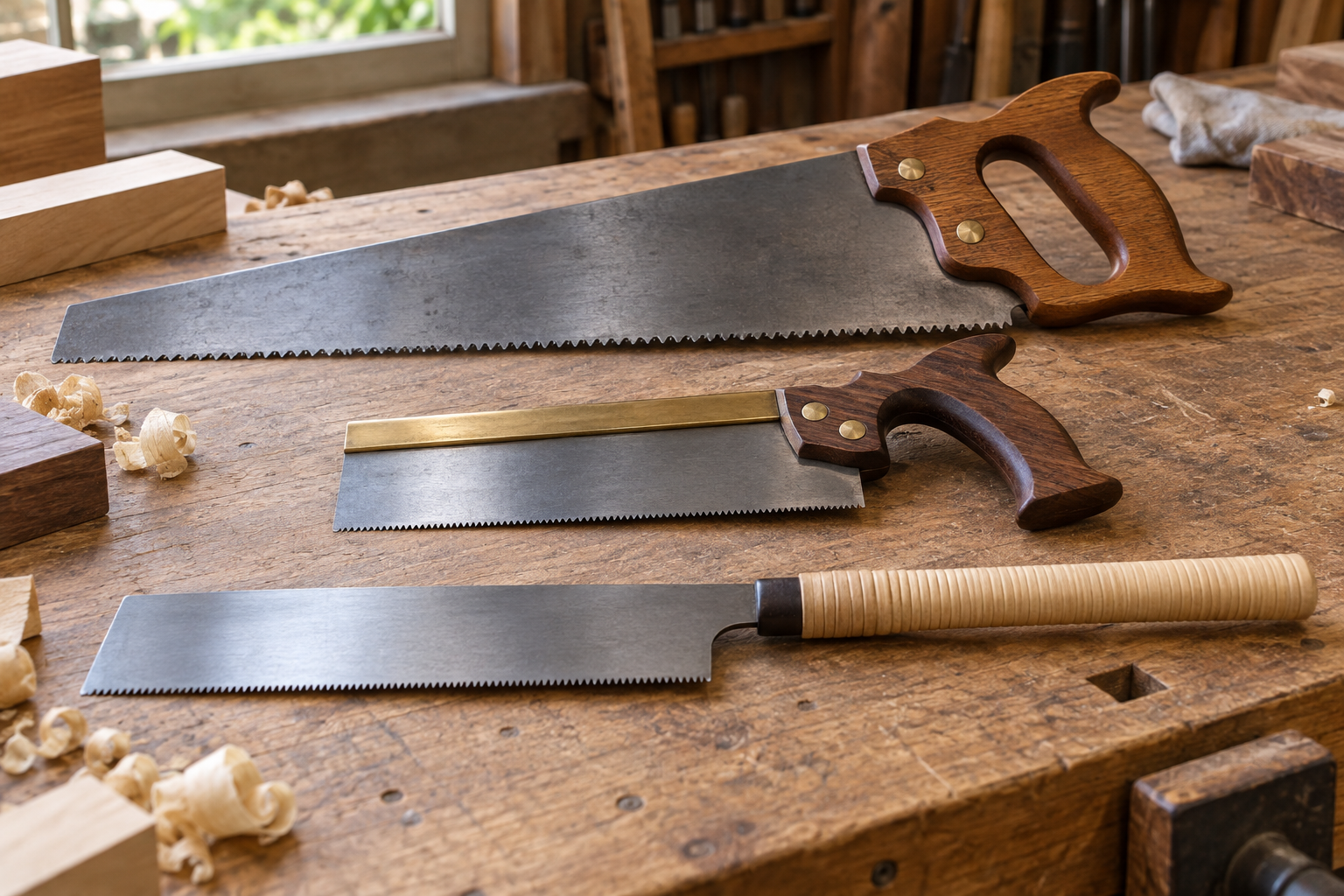
For crosscutting hardwood by hand, a pull saw and a Western hand saw can both produce clean, accurate cuts. They feel different, however, and the better choice depends on stock thickness, cut quality, how much control you need, and whether you are willing to maintain or replace a blade.
A pull saw cuts on the pull stroke with a thin, flexible blade. A Western hand saw cuts on the push stroke with a thicker, stiffer blade. That basic difference affects almost everything: starting the cut, keeping the blade straight, clearing sawdust, and recovering from a mistake.
As an Amazon Associate we earn from qualifying purchases at no extra cost to you.


Our Top Picks
 SUIZAN Dozuki Dovetail Saw 6" Cross Cut6 Inch (150mm)15.16 x 0.83 x 2.52 inches0.4 PoundsCheck on Amazon


Quick comparison
| Feature | Pull saw | Western hand saw |
|---|---|---|
| Cut direction | Pull stroke | Push stroke |
| Typical blade thickness | About 0.2–0.6 mm | About 0.7–1.0 mm |
| Kerf | Narrow, often 0.3–0.7 mm | Wider, often 0.9–1.4 mm |
| Best strength | Fine, low-effort cuts and flush cutting | Stability, durability, and deeper stock |
| Main weakness | Blade can kink or wander if twisted | Requires more effort and a controlled push stroke |
| Maintenance | Usually replaceable blade | Can be sharpened, depending on the saw |
How a pull saw handles hardwood
Pull saws are particularly good for small hardwood parts, trim, cabinet components, dowels, and joinery. The pull stroke puts the blade in tension, so a thin blade can cut with little downward pressure. That makes it easier to start a cut without crushing the edge or skating across a polished board.
A fine-tooth Japanese-style crosscut pull saw can leave a very clean surface in maple, cherry, oak, and walnut. The narrow kerf also wastes less material. On a 1-inch board, that difference is not important for one cut, but it matters when breaking down expensive hardwood or cutting many parts.
The trade-off is blade fragility. If the blade binds in a closing kerf, is twisted while cutting, or is used to lever out a stuck saw, it can bend permanently. Many pull-saw blades are impulse-hardened and are not practical to sharpen with ordinary files. When dull or damaged, you generally replace the blade rather than restore it.
For a first purchase, compare Japanese pull saws with replaceable crosscut blades. A replaceable blade is useful if you work with abrasive woods, plywood glue, or reclaimed lumber, all of which dull fine teeth faster.
How a Western hand saw handles hardwood
A Western panel saw is slower-feeling but more forgiving. Its stiff blade stays flatter against a reference line, and the thicker steel resists accidental bending. That is valuable when crosscutting 2-inch or thicker hardwood, especially if the workpiece is supported on sawhorses rather than held securely in a vise.
For general hardwood crosscutting, look for a saw marked crosscut rather than rip. A crosscut saw has teeth filed to sever fibers across the grain. Tooth counts around 8 to 12 teeth per inch are useful for faster cuts in thick boards; 12 to 15 teeth per inch gives a smoother cut in thinner stock but removes material more slowly.
Western saws also offer a longer blade, commonly 20 to 26 inches. The extra length can make a straight cut easier because each stroke travels farther, but it is not automatically faster. A short, controlled stroke is better near the end of a cut, where aggressive strokes can tear out the underside.
A basic Western crosscut hand saw around 12 TPI is often the cheaper long-term option if you value durability. Quality saws can be sharpened, although professional sharpening may cost more than an inexpensive replacement saw. Some budget saws have hardened teeth and are effectively disposable.
Cut quality and control
Neither design guarantees a square cut. Mark all four faces of thick stock, start on the waste side of the line, and check the blade against a square after the first few strokes. On a board thicker than about 1 inch, a cut that begins square but drifts can remove several millimeters by the time it reaches the far face.
Pull saws are easier to control for flush cuts and joinery because the thin blade gives good visual access to the line. Their low-set teeth also reduce the tendency to tear out the top surface. However, the flexible blade can follow a small change in hand angle, producing a tapered cut.
Western saws are more stable for rough dimensioning, but their aggressive teeth can leave chipped fibers on the exit face. Support the waste, score the cut line with a knife, and stop using full strokes during the final 10 to 15 percent of the cut. Cutting from both faces is safer than forcing the blade through a fragile corner.
Effort, technique, and common failures
With either saw, let the teeth cut instead of pressing hard. Use nearly the full blade length on a Western saw, holding the handle lightly and keeping the wrist straight. With a pull saw, use short strokes to establish the kerf, then lengthen the stroke while keeping the blade aligned with the mark.
Pinching is a common hardwood failure. Internal stresses can cause the kerf to close behind the blade, especially in oak or figured lumber. If the saw slows suddenly, stop and insert a thin wedge into the waste side. Do not twist the handle to free the blade; that is a quick way to kink a pull-saw blade or damage Western teeth.
For very clean work, a fine-tooth fine-tooth Japanese flush-cut pull saw is a useful specialist tool, but it is not the best choice for ripping through thick framing lumber. Its fine teeth clog more readily with resin and cut slowly in stock over roughly 2 inches thick.
Which saw should you buy?
Choose a pull saw if most of your work involves furniture parts, trim, dowels, small boxes, or precise cuts in hardwood up to about 1-1/2 inches thick. It is compact, starts easily, and usually leaves a better surface with less effort. Budget for replacement blades if you work frequently.
Choose a Western hand saw if you need one durable general-purpose saw for breaking down boards, cutting 2-by material, or working in situations where the blade may encounter knots and moderate abuse. It is also the better choice if you want a tool that can potentially be sharpened and tuned.
If the price difference matters, the cheaper option is fine when your cuts are short and your material is thin. For occasional shelving, picture frames, or one-off repairs, an inexpensive crosscut saw can do the job. Spend more for a pull saw with replaceable blades or a better Western saw only when you will make enough cuts to benefit from smoother tracking, better teeth, or lower replacement costs.