Key takeaways
- Two Milwaukee platforms, no shared batteries, and a genuinely different answer depending on your trade.
What's inside
As an Amazon Associate I earn from qualifying purchases. This post may contain affiliate links at no extra cost to you.
Milwaukee is the only major brand that expects you to own two platforms. M12 and M18 do not share batteries, and that is deliberate — they are designed for different shapes of work rather than different budgets.
That distinction is where most first purchases go wrong. People read the two numbers as a quality ladder — twelve volts for light jobs, eighteen for real ones — and end up on the wrong platform for the work they actually do every day. The useful way to decide is to forget voltage for a minute and answer two questions instead: how much room do you have around the fastener, and how much sustained current does your work demand? Tight space and short bursts point to M12. Open space and long, heavy cuts point to M18. Everything after that is detail.
As an Amazon Associate we earn from qualifying purchases at no extra cost to you. Product prices and availability are accurate as of the date shown and are subject to change.


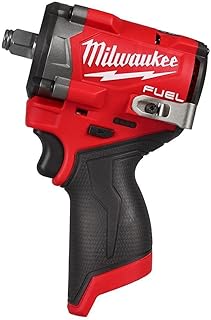


This is a comparison desk view rather than a spec sheet. We are not going to declare an overall winner, because the two ranges barely overlap where it counts. What follows is the criteria that decide it, what a good buy looks like at each price band, the mistakes that cost people money on their first kit, and a straight answer about which platform belongs in your hand first.
| Aspect | M12 | M18 |
|---|---|---|
| Voltage | 12V | 18V |
| Tool size | Compact, short | Full size |
| Tool count | 100+ | 250+ |
| Weight with battery | Light | Heavier |
| Best for | Tight spaces, overhead, service work | Construction, cutting, heavy drilling |
| Battery cost | Lower | Higher |
M12 is not the “budget” line
This is the most common misunderstanding. M12 FUEL tools use the same motor and electronics technology as M18 FUEL — they are simply smaller. An M12 FUEL impact driver is a serious tool that happens to fit inside an electrical panel.
The trades that live on M12: electricians, plumbers, HVAC technicians, installers, mechanics working in engine bays. Anyone whose work happens in confined spaces or above shoulder height.
The badge to watch is FUEL, not the voltage. Milwaukee sells brushed tools on both platforms, and the gap between a brushed M12 drill and an M12 FUEL drill is wider than the gap between M12 FUEL and M18 FUEL on any job small enough for both. Given a choice between a brushed tool on the bigger platform and a FUEL tool on the smaller one, the FUEL tool is usually the better buy.
The real M12 advantage is measured in inches. A short impact driver, a stubby ratchet or a right-angle drill lets you work inside a stud bay, behind a toilet, under a dashboard or above a drop ceiling without dismantling something first to make room for the battery. Tool length and pack height are the specs that matter there. Weight matters just as much overhead: a tool you can hold at arm’s length for an hour beats a stronger one you keep setting down.
M12 also carries the specialty catalogue — small ratchets, tubing cutters, inspection cameras, threaded rod cutters, compact band saws, heated gear controllers, lights and small vacuums. Those tools land on the 12V platform first because they do not need heavy current and the smaller pack keeps them usable one-handed.
Milwaukee M12 FUEL kits
The deepest 12V range on the market. If your work is service, installation or diagnostics rather than construction, start here.
M18 is the construction platform
Circular saws, recip saws, grinders, rotary hammers, large impact wrenches — anything that needs sustained current lives on M18. If you cut, demolish or drill big holes, this is the platform.
The reason is current delivery, not marketing. A saw ripping damp framing lumber, a grinder cutting steel or a rotary hammer working concrete pulls hard and keeps pulling. Larger packs hold voltage under that load and give the tool somewhere to dump heat. Ask the same of a small pack and you get sag, thermal cutouts and a battery that ages fast. That is not a defect in M12; it is what a smaller pack is.
M18 is also where the site infrastructure sits — work lights, radios, vacuums, fans, inflators and outdoor equipment all run off packs you are already charging for the saws. The first M18 kit is the expensive purchase. Everything after it is a bare tool.
Milwaukee M18 FUEL kits
Full-size tools with the current delivery to match. HIGH OUTPUT packs are worth it if you run saws and grinders.
Which to buy first
Pick the platform that covers the work you cannot avoid, not the work you occasionally wish you could do. Then buy it as a kit rather than as bare tools — batteries and a charger are the expensive part of any cordless system, and a two-tool kit with two packs almost always costs less than the same tools bought separately.
Buy M18 first if you build, remodel, frame or cut anything regularly. M12 cannot replace a circular saw.
Buy M12 first if you are an electrician, plumber, HVAC tech or mechanic. You will reach for it ten times more often than an M18 drill.
Buy both eventually — most Milwaukee users do, and it is a designed pairing rather than a failure of discipline.
If you genuinely sit between the two, start with an M18 drill and impact kit and add a single M12 tool for whichever access problem keeps beating you. Finishing one platform before opening the other keeps your battery count sane.
The criteria that actually decide it
Five things matter, and they do not carry equal weight. Work through them in this order and the answer usually falls out on its own.
- Access before power. Measure the tightest space you work in regularly — a panel, a joist bay, a cabinet carcass, an engine bay. If a full-size tool will not fit, no amount of torque helps. This is the one constraint you cannot work around.
- Sustained draw. Count the tools in your week that run for more than a couple of seconds at a time: saws, grinders, mixers, large hole saws. Two or more of those and M18 is your base platform.
- Batteries, not tools. Cordless cost is battery cost. Decide how many packs you can keep charged and rotating before you decide how many tools you want.
- Where the weight sits. Overhead and one-handed work punishes mass; bench and floor work does not. Be honest about which describes most of your hours.
- Charger and storage. One multi-voltage charger and a case that actually fits your vehicle matter more day to day than any number printed on the tool.
When two criteria conflict, access beats runtime and battery count beats tool count. The classic error is reversing both: buying the larger platform because it looks stronger, then buying the big kit that leaves you with two packs feeding six tools.
What good and bad looks like at each price band
Entry: brushed two-tool kit, compact packs
Fine when you know the two tools you need and the work is intermittent, or when you are adding a second platform purely for access. Poor as the foundation of a working kit, because compact packs and a single slow charger become the bottleneck within a week of real use. The problem at this band is rarely the brushed motor; it is owning too few batteries.
Mid: FUEL combo kit with mixed pack sizes
This is where most buyers should land on either platform. A FUEL drill and impact driver, one small pack for balance and one larger pack for runtime, plus a charger. Judge a mid-band kit on pack variety rather than tool count — two identical packs is a worse kit than two different sizes.
Top: large combo kits and HIGH OUTPUT packs
Worth it if you run saws, grinders or rotary hammers weekly, need a multi-bay charger to keep several people working, or the kit undercuts the tools you were going to buy anyway. A bad top-band buy is the six-tool bundle where two of the tools are cheap versions you will replace within a year. If fewer than three tools in the kit will see weekly use, buy the smaller kit and add bare tools.
Common mistakes
- Choosing on voltage instead of access. The stronger platform is useless where it does not fit.
- Buying bare tools too early. Bare tools are only cheap once you already have spare packs and a charger.
- One pack size for everything. Compact packs on a saw and big packs on an overhead driver are both wrong. Own both.
- Opening the second platform before finishing the first. Two half-built systems means twice the chargers and never the right tool.
- Waiting for M12 to cover the heavy work. That boundary has not moved, and planning around it wastes a year.
What you give up on M12
- ✘ No large circular saws or rotary hammers worth the name
- ✘ Less runtime under heavy load
- ✘ Smaller batteries mean more frequent swaps on demanding tools
- ✘ Not the platform for framing or demolition
What you give up on M18
- ✘ Weight and length in confined spaces
- ✘ Cost per tool and per battery
- ✘ Overkill for panel work and small fasteners
Who should skip each platform
Skip M12 if your work is framing, decking, demolition or site cutting and little else. You will likely buy one M12 tool eventually to solve a specific access problem, but as a first platform it will sit on the shelf while you keep reaching for the full-size tools.
Skip M18 if you are service-only and weight or storage is a genuine constraint — van space, ladders, all-day overhead work. An M12 FUEL drill and impact driver covers more household and service work than most people expect. M18 earns its keep the day you start cutting material rather than fastening it.
FAQ
Do M12 and M18 chargers work with both? Milwaukee makes multi-voltage chargers that handle both, which is the practical solution if you run two platforms.
Is M12 strong enough for deck screws? The FUEL impact driver will drive them, but M18 does it faster and with less strain.
Which has better resale? Both hold value well; M18 has the larger market.
Can I run an M18 battery on an M12 tool? The platforms are not cross-compatible, and adapters defeat the purpose by hanging a large pack off a tool you chose for being small. If you want one battery to cover everything, you are choosing a platform, not an accessory.
The short version: M12 buys access, M18 buys power, and neither is a watered-down version of the other. Match the platform to the shape of your work, buy enough batteries to keep it moving, and add the second system when a specific job forces the issue.
Compare M12 and M18 prices →