Key takeaways
- Milwaukee builds for the trades. Makita builds for your hands. Here is where each argument wins.
What's inside
As an Amazon Associate I earn from qualifying purchases. This post may contain affiliate links at no extra cost to you.
These two brands attract different loyalties for real reasons. Milwaukee has invested heavily in trade-specific tools; Makita has invested in how the tool feels after eight hours. Both approaches are legitimate.
The comparison is awkward because the two companies are not competing on the same axis. Milwaukee’s strategy is to own the trade: if there is a job an electrician or plumber does with a corded, hydraulic or manual tool, Milwaukee wants a cordless version of it running on the same battery. Makita’s strategy is to make the tools you hold all day pleasant to hold, and to keep them smooth and quiet while doing it. Each brand spends its engineering budget where the other does not.
As an Amazon Associate we earn from qualifying purchases at no extra cost to you. Product prices and availability are accurate as of the date shown and are subject to change.


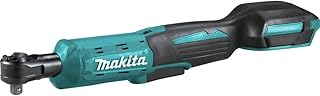

What follows is a comparison desk view rather than a bench test. Torque figures change with every product refresh and rarely predict how a tool behaves inside a wall cavity or across a full day of trim work. The useful questions are what each company optimizes for, which user is rewarded by that choice, and which user quietly pays for it.
| Aspect | Milwaukee | Makita |
|---|---|---|
| Main platform | M18 (+ M12) | LXT 18V (+ XGT 40V) |
| Ergonomics | Good | Excellent |
| Vibration and noise | Higher | Lower |
| Trade-specific tools | Extensive | Fewer |
| Warranty | 5 years on most | 3 years |
| Storage system | PACKOUT, class-leading | Interlocking cases |
| Discounting | Rare | Rare |
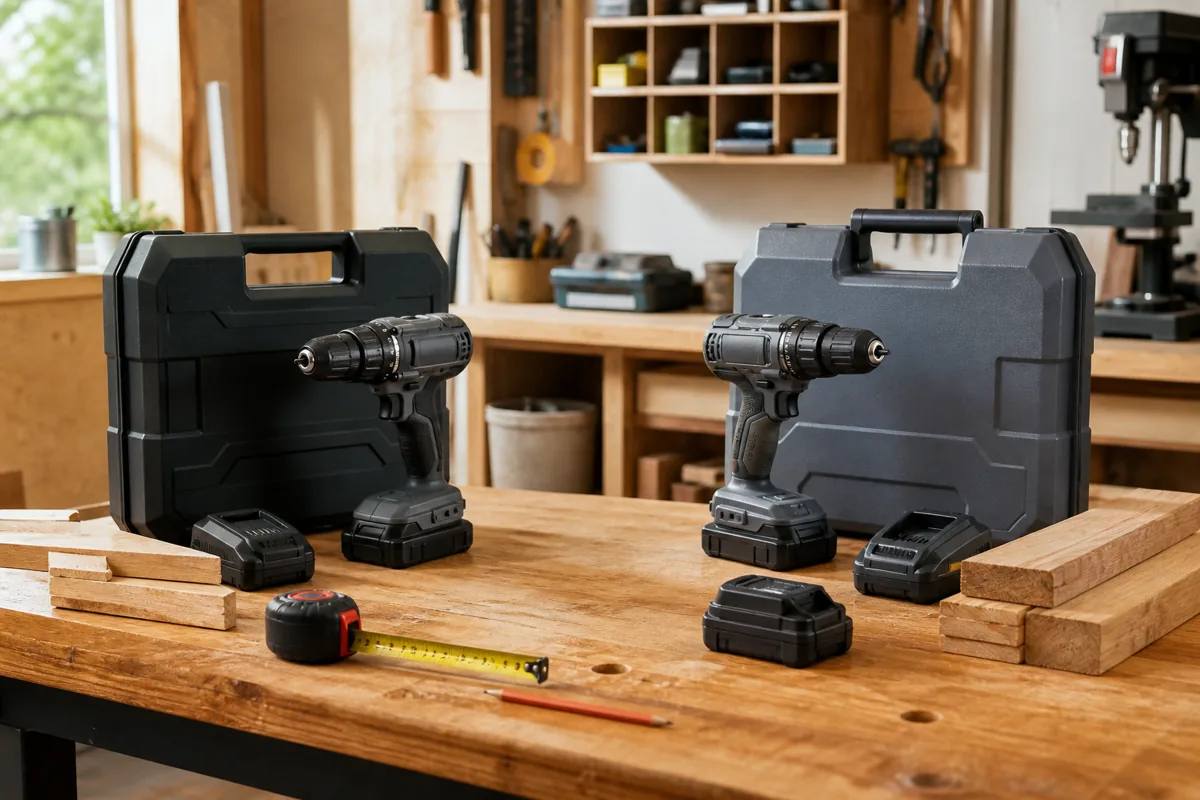
The trade-tool argument
Milwaukee makes press tools for plumbers, knockout tools and cable cutters for electricians, pipe threaders, drain machines and inspection cameras. If your trade needs one of those, the platform decision is effectively made for you.
It is worth being blunt about this, because it ends the argument faster than anything else can. Specialist tools are expensive, bought once, and they run on the same packs as your drill. The day you own a press tool or a knockout set, every later purchase is biased toward that platform, probably for the rest of your working life. Nobody carries a second charger to a service call by choice.
The other half of the trade argument is supply. A deep catalog only helps if the jaws, dies, blades and spare packs are on a shelf near you when you need them. Check what your local supply house actually stocks rather than what the brand’s website lists — a platform that wins on paper is the wrong platform if the accessory you need is three days out.
Milwaukee M18 FUEL kits
Five-year warranty, deepest specialist range, strongest resale. The default for many US trades.
The comfort argument
Makita’s tools consistently rate better on balance, grip and vibration. For finish carpenters, cabinet makers and anyone holding a tool overhead for long stretches, that is not a soft benefit — it shows up in fatigue at the end of the day.
Refinement is hard to shop for because no spec sheet describes it. What produces it is mundane: where the battery mass sits relative to the chuck, how much of the trigger travel is usable, whether the tool settles when you ease off or keeps twisting your wrist, how loud the motor is at part throttle. All of that can be tested in a store aisle in about ninety seconds. Hold both candidates at arm’s length, chuck down, and see which one your wrist stops noticing first.
Vibration and noise also compound in a way headline torque does not. A harsh tool gets used in shorter bursts, set down more often and fought rather than guided, and in finish work that shows up as accuracy, not just tiredness. The catch is that the benefit only lands if your day is mostly spent with a tool running in your hands. If it is spent moving between tasks and carrying material, you will not collect what you paid for.
Makita LXT kits
Smoother, quieter, better balanced. The choice when hours in the hand matter more than headline torque.
Batteries and platform strategy
Milwaukee splits M12 and M18 by size; Makita splits LXT and XGT by power class. Milwaukee’s split is more useful day to day, because compact tools get used constantly. Makita’s XGT split is harder to justify unless you genuinely need 40V-class tools.
The practical consequence is how many packs and chargers you end up owning. A split by size pushes you toward a small pack for tools that live in a pouch and a large pack for tools that pull current, and both families stay useful for years. A split by power class asks you to predict, at purchase time, where your work is heading. Guess wrong and you either buy into a second family later or keep asking a lighter platform to do heavy work.
Either way, count batteries before you count tools. Battery capacity is the largest hidden variable in kit pricing, and it usually explains two kits that otherwise look the same. Compact packs will not carry a circular saw through a day of cutting; high-capacity packs are dead weight in a drill used for cabinet hardware. Buy the pack sizes your work needs and treat bare tools as the cheap part of the system, because over several years that is what they are.
How to weigh the criteria
Most buyers rank these brands on whichever criterion is easiest to compare in a shop, which is rarely the one that matters. A defensible order:
- Specialist tools you cannot substitute. If one platform makes a tool your trade needs and the other does not, this outranks the entire rest of the list. It is the only genuinely disqualifying factor.
- Hours per day with a tool running in your hands. Past about half a working day, ergonomics stops being a preference and becomes an occupational cost.
- Battery family fit. How many packs, which sizes, and whether the split matches how your work divides between light and heavy tasks.
- Warranty and service access. Five years against three matters most on tools you run daily, and almost not at all on tools you use twice a year.
- Storage and transport. If tools move between sites every day, a modular storage system is a working method, not an accessory.
- Local stock. The tie-breaker, and the criterion most often ignored until something fails mid-job.
Note what is missing: headline torque and total catalog size. Both brands make a good version of every common tool, and nobody has regretted a platform because the drill was a few percent behind on paper.
What separates a good pick from a bad one at each band
Neither brand discounts much, so the bands here are defined by kit contents rather than by sale season.
The two-tool starter kit
Drill, impact driver, two compact packs, a charger. The tools at this level are usually the mid-tier brushless line rather than the flagship, which is fine. The mistake is spending the difference on a flagship drill instead of on a better battery. A good pick has pack sizes that suit your work and a case that fits your storage plan; a bad pick is padded with a low-value third tool and the smallest packs the brand sells.
The mid-range combo
Four to six tools with mixed pack sizes, usually where a circular saw, recip saw or grinder joins the system. This is the band where the two brands genuinely separate, because it is the first one containing tools that run continuously rather than in bursts. Judge it on the two or three tools you will use most and ignore the rest of the bundle. A bad pick is a high tool count on compact batteries, which is how people conclude a platform is underpowered when it is only under-batteried.
The professional end
Here you are buying a system rather than tools: dust extraction that holds a seal, storage that stacks and rolls, specialist tools with their own consumables. The questions become service questions. Look for exploded parts diagrams and orderable components for tools several years old, and find out how a warranty claim is handled near you — over a counter, or shipped away for weeks. A good pick at this level is boring and supportable.
Mistakes that cost the most
- Choosing a platform from one tool. You are committing to a battery family for years. Pick the family, then buy the tools.
- Counting batteries instead of reading capacity. Two packs in a box tells you nothing until you know their size.
- Expecting an adapter to merge platforms. Within one brand an adapter may bridge a charger or a few tools; it never turns two families into one.
- Reading warranty length as durability. A longer warranty is insurance against downtime, not evidence that the tool fails less often.
- Leaving storage until you own fifteen tools. Retrofitting a storage system is the most expensive tidy-up in the trade.
Who should buy which
The first list is the Milwaukee case, the second the Makita case. Read them as user profiles rather than feature lists — the question is which one sounds like your week.
- ✔ Milwaukee: electricians, plumbers, HVAC, mechanics, general contractors
- ✔ Milwaukee: anyone who wants a five-year warranty on daily tools
- ✔ Milwaukee: PACKOUT users building a storage system
- ✘ Makita: finish carpenters, cabinet makers, installers
- ✘ Makita: anyone sensitive to vibration and noise
- ✘ Makita: shops that value sanding and dust extraction quality
Skip Milwaukee if most of your day is spent with a tool running in your hands and you have no use for specialist trade tools, because you are paying in weight and vibration for a catalog you will never open. Skip Makita if your trade depends on a press tool, a knockout set or a threader, or if you want the longer warranty on tools you run daily. If you buy two tools a decade, either brand is more platform than you need.
FAQ
Which is more durable? Both survive professional use. Milwaukee’s warranty is longer, which matters when something does fail.
Which is better value? Neither discounts much. Compare kit contents carefully — battery capacity often explains price gaps.
Can I mix them? Only by owning two platforms deliberately. Batteries never cross.
Do I need XGT, or is LXT enough? For most handheld work LXT covers it. XGT is aimed at the higher-draw end of the range, and if you cannot name the specific tool that requires it, you do not need it yet.
If the decision still feels close, that is because it is close. Decide on the two or three tools you will hold most, buy the pack sizes those tools want, and commit.
Compare prices →