What's inside
As an Amazon Associate I earn from qualifying purchases. This post may contain affiliate links at no extra cost to you.
Our Top Picks
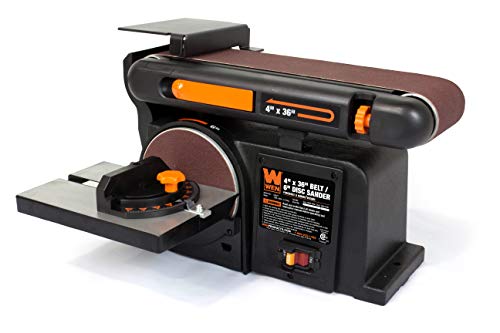 WEN Benchtop Belt and Disc Sander with 46-inch Disc w/ Cast Iron Base22 x 11 x 12.5 inchesCheck on Amazon

What the tracking adjustment does
A belt sander’s tracking adjustment shifts the sanding belt sideways so it runs near the center of the rollers instead of walking off an edge. On many handheld sanders, it is a small knob near the front roller. Turn it while the belt is moving, and the belt should move toward one side or the other.
Tracking is not a way to steer the sander across your workpiece. The adjustment sets where the belt runs on the machine; your hands and the workpiece setup determine whether the sanding path stays straight. A correctly tracked belt reduces the chance of frayed edges, damaged work, and a belt that comes off during use.
Choose by job and sander
For straight sanding on a board, benchtop, or wide panel, stability matters more than a fine adjustment knob. A larger sander can cover ground quickly, but its weight and belt width make it harder to control on small parts. A compact sander is easier to handle but takes more passes on broad surfaces.
| Option | Best fit | Trade-off |
|---|---|---|
| Handheld belt sander | Boards, edges, and work that cannot be brought to a bench | Needs steady hand pressure; easy to tilt or round an edge |
| Benchtop belt sander | Small parts and repeatable straight-line work | Workpiece size is limited; the operator must keep stock flat against the table |
| Hand sanding block | Light correction or final smoothing | Slow for removing substantial material, but offers more control |
If you are buying for occasional board flattening or paint removal, a basic corded belt sander is often enough. Choose belt width and weight to match the work, not simply the largest machine available. For repeated work on small pieces, a benchtop belt sander can make it easier to hold a consistent angle.
Prepare before adjusting
Unplug the sander or remove its battery before fitting or inspecting a belt. Check the belt’s direction arrow, if it has one, and install it accordingly. A backward belt may still run, but it can sand poorly or wear unevenly. Confirm that the belt size matches the tool; a belt that is too wide, too narrow, or stretched will not track reliably.
Inspect the belt for a torn edge, a damaged joint, or a bulge. Any of these can make the belt wander each time the joint passes over a roller. Replace a suspect belt rather than trying to correct the problem with the tracking knob. Also check that dust buildup is not packed around the rollers.
Adjust tracking safely
Set the sander on a stable surface with the belt clear of the workpiece. Wear eye protection, keep fingers away from the belt, and follow the tool manual: some manufacturers specify tracking checks with the machine running, while others give a different procedure. Do not reach near moving rollers to guide a belt by hand.
Start the sander briefly and watch the belt from a safe position. If it drifts toward an edge, make a small turn of the tracking knob, then let the belt run long enough to respond. Repeat in small increments until it runs near the center. Large, fast adjustments can send the belt off the roller before you can react. If the manual requires tracking with the tool switched off, follow that instruction instead.
Turn the tool off and unplug it before making other checks. After the belt is centered, run the machine again briefly and confirm that it stays put. Tracking that changes suddenly under load may point to a worn belt, loose roller, or damaged tracking mechanism rather than a need for further knob adjustment.
Keep the sanding path straight
Once the belt tracks correctly, place the sander flat on the work before switching it on, if your manual recommends that starting method. Keep the tool moving with the grain and use light, even pressure. Let the belt do the cutting: leaning heavily on a handheld sander can slow the motor, overheat the work, and leave a dip where you lingered.
For a board edge, clamp the work securely and make a few light passes. Check the edge with a straightedge or square rather than judging by feel alone. A belt sander removes material quickly; a pass that seems minor can take off more than expected, especially with coarse abrasive. Start with a moderate grit such as 80 or 100 for stock removal, then move to 120 or 150 to refine the surface. Use finer grits only if the job calls for them; they are not a substitute for correcting a crooked cut.
On a benchtop sander, keep the workpiece flat against the table and move it steadily across the belt. Do not press a small part in a way that can pull it from your grip. For repeatable angles, use the tool’s fence or miter gauge if supplied, and verify its alignment before sanding a batch.
Diagnose common tracking problems
If the belt repeatedly walks to one side, first check installation direction, belt condition, and size. Then inspect the rollers for visible debris or damage. A belt with a crooked seam can hunt from side to side; replacing it is usually cheaper and safer than trying to compensate with the adjustment.
If the belt stays centered without load but wanders when sanding, reduce pressure and check that the work is not forcing the sander sideways. Persistent wandering, grinding noise, or a roller that wobbles may indicate a mechanical fault. Stop using the tool until it is inspected. A tracking knob can correct a modest alignment error; it cannot repair a bent roller or worn bearing.
For occasional use, a low-cost sander with a simple manual tracking knob is usually adequate if it holds alignment and the belt is easy to replace. A more expensive tool may offer better dust collection, balance, or durability, but those features do not guarantee straighter sanding. If straight, repeatable results matter more than speed, careful setup, a sound belt, and a stable work support often make the bigger difference.