What's inside
As an Amazon Associate I earn from qualifying purchases. This post may contain affiliate links at no extra cost to you.
Our Top Picks


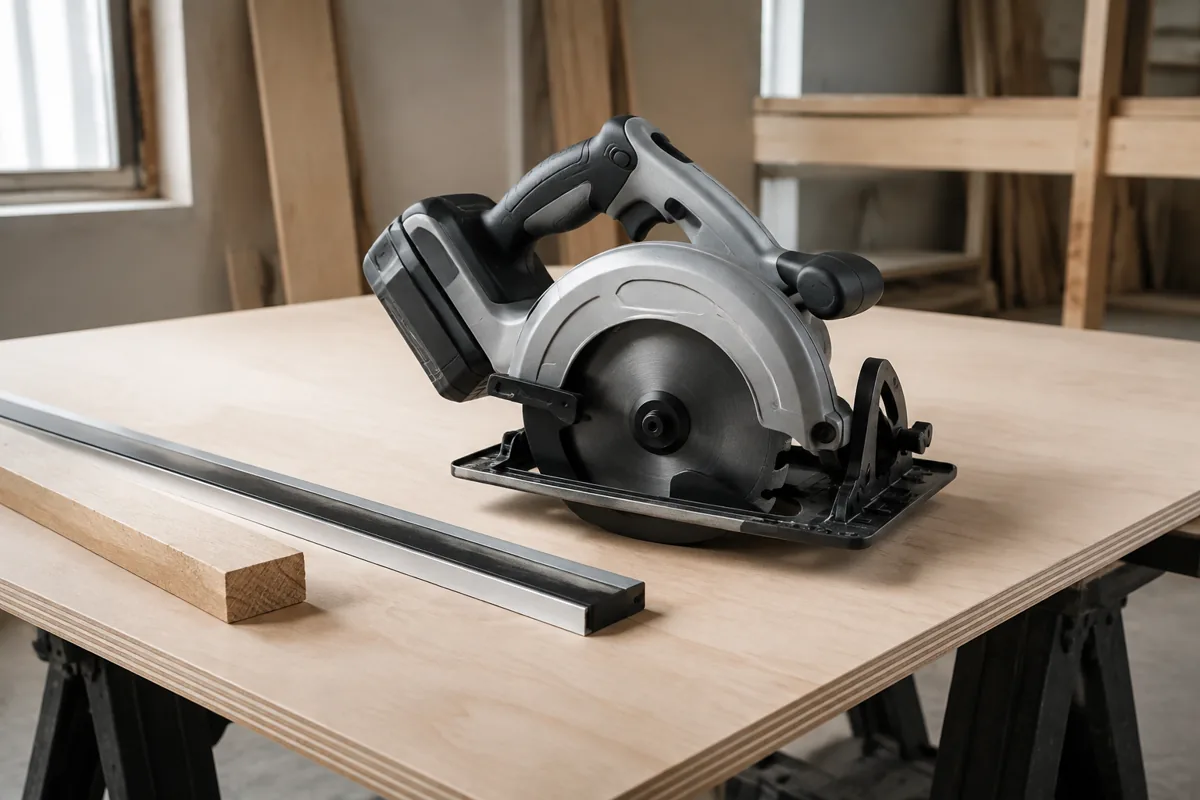
Bevel-cutting overview
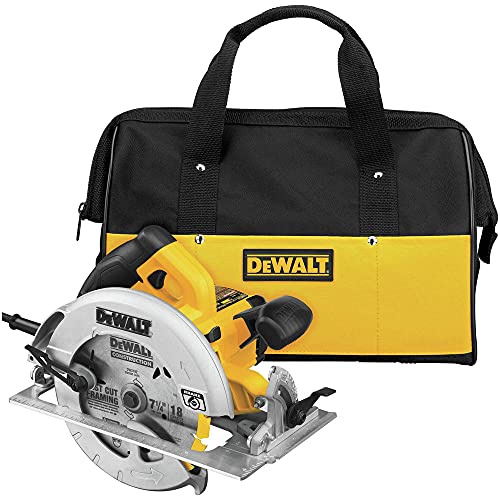
The Milwaukee 6470-21 and DeWalt DWE576K are both corded circular saws, but they serve different jobs. The Milwaukee is a large 10-1/4-inch saw built for deep cuts through heavy stock. The DeWalt uses a more familiar 7-1/4-inch blade and is easier to control for framing, sheet goods, trim work, and repeated angled cuts.
If bevel cutting means fitting rafters, trimming decking, or breaking down plywood, the DeWalt is usually the more practical tool. If it means cutting 3-inch or thicker lumber in one pass, the Milwaukee’s extra capacity matters more than its additional weight. Neither saw is automatically better at every bevel angle.
As an Amazon Associate we earn from qualifying purchases at no extra cost to you.


Milwaukee 6470-21 vs DeWalt DWE576K specifications
| Feature | Milwaukee 6470-21 | DeWalt DWE576K |
|---|---|---|
| Blade size | 10-1/4 inches | 7-1/4 inches |
| Motor | 15 amps | 15 amps |
| Maximum bevel | 50 degrees | 56 degrees |
| Maximum cut at 90 degrees | About 3-7/8 inches | About 2-9/16 inches |
| Cut at 45 degrees | About 2-9/16 inches | About 1-9/16 inches |
| Electric brake | Yes | Yes |
| Best fit | Heavy timber and deep cuts | General framing and accurate bevel work |
Published capacities can vary slightly by blade and exact product revision, so check the label and manual before relying on a maximum depth. In practical use, you should also leave a small margin rather than setting the blade at its absolute limit.
Bevel adjustment and accuracy
The DeWalt has the advantage in bevel range, reaching 56 degrees compared with the Milwaukee’s 50 degrees. That extra range is useful for unusual roof details, compound work, and cutting a steep angle where a standard 45-degree setting is not enough. For ordinary 22-1/2- and 45-degree cuts, however, both saws cover the requirement.
The DWE576K is easier to manage when setting a bevel. Its markings are visible and the saw is compact enough that you can hold the base firmly against a straightedge or guide. The large bevel lever also makes quick changes practical when moving between square and angled cuts.
The Milwaukee’s larger blade and heavier body make it feel planted in thick material, but that stability comes with more effort during the cut. A 10-1/4-inch blade has a longer cutting edge and removes more material, so it places greater demand on the motor and operator when the blade is tilted. If the base is not held flat, the saw can wander or leave a bevel that is slightly off at the bottom of the workpiece.
Cutting performance at common angles
At 45 degrees, the DeWalt can cut approximately 1-9/16 inches deep. That is enough for a 2-by board when cutting from one face, but it is not enough for a 4-by post. The Milwaukee retains roughly 2-9/16 inches of capacity at the same angle, giving it a realistic advantage for thick beams, landscaping timbers, and large dimensional lumber.
For plywood and 2-by material, the DeWalt’s smaller blade is generally easier to guide. It has less mass to start and stop, and the narrower kerf of an appropriate framing or finish blade reduces resistance. The saw also produces less of the awkward overhang that comes with a large blade when making bevel cuts near an edge.
The Milwaukee is the better choice when a bevel must go through thick stock in one pass. Multiple passes are possible with the DeWalt, but they introduce alignment problems. A second pass can leave a step, especially when the first cut is made freehand and the blade is not perfectly aligned with the original kerf.
Handling, kickback, and common failure modes
Bevel cuts are more demanding than square cuts because less of the shoe contacts the material and the blade is easier to bind. The most common mistake is setting the depth too deep. The blade should extend only slightly beyond the material—roughly 1/8 to 1/4 inch for plywood and board stock. Excess exposure increases snagging and makes kickback more severe if the kerf closes.
The Milwaukee’s weight helps prevent the saw from lifting, but it can punish an operator who starts a cut before the shoe is fully supported. Never begin with the blade touching the work. Set the front of the shoe down, start the motor, and advance smoothly. On a bevel, support the offcut so it cannot sag and pinch the blade near the end.
The DeWalt is less tiring during a long series of cuts, but its lighter feel can make rushed feeding more noticeable. If the saw slows sharply, stop pushing. A dull blade, wet lumber, or a cut that is closing around the blade can overload either saw. Use a sharp blade suited to the material rather than trying to compensate with force.
Straightedges, guide rails, and setup
The DWE576K is the easier platform for controlled bevel work with a straightedge or guide system. Its shoe is manageable, and the saw’s size makes it simpler to keep the reference edge aligned while tilted. For repeated cabinet panels or long crosscuts, a circular saw guide rail can improve consistency substantially.
The Milwaukee can also be guided, but its large shoe and blade require more clearance. Measure from the guide edge to the blade carefully at the actual bevel angle; the offset changes as the shoe tilts. Make a test cut in scrap before cutting finished material.
For clean plywood bevels, use a blade with a higher tooth count and place painter’s tape over the cut line if the material is prone to splintering. A framing blade is faster in construction lumber, while a fine-finish circular saw blade is a better choice for visible plywood or trim.
Which circular saw handles bevel cuts better?
Choose the DeWalt DWE576K if your bevel work is mainly 2-by lumber, plywood, flooring, trim, or framing. It offers the wider bevel range, better maneuverability, and easier control for everyday angled cuts. The cheaper option is fine—and often preferable—when you do not need more than about 1-1/2 inches of cutting depth at 45 degrees.
Choose the Milwaukee 6470-21 when depth is the deciding factor. Its 10-1/4-inch blade can make angled cuts through substantially thicker material in one pass, and its heavy build is useful when working with beams or large timbers. The trade-off is a heavier saw that demands better support, more deliberate setup, and greater care when starting and finishing a bevel cut.
For most users asking specifically about bevel control, the DeWalt wins. For deep bevel capacity, the Milwaukee wins clearly. Buy the Milwaukee only if that capacity solves a real cutting problem; otherwise, the DeWalt is easier to use accurately and less tiring over a full day.