What's inside
As an Amazon Associate I earn from qualifying purchases. This post may contain affiliate links at no extra cost to you.
Our Top Picks


At a Glance
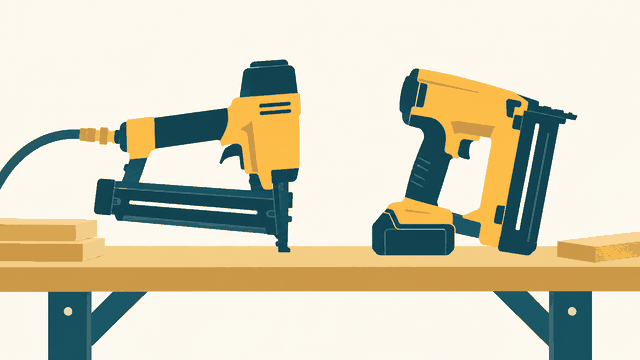
Makita AF506 and Bostitch BTFP71917 are both 18-gauge pneumatic brad nailers aimed at finish and trim work, but they come from different design philosophies. The Makita is a compact, lighter, oil-lubricated tool built for tight trim and overhead work. The Bostitch is a slightly larger, oil-free workhorse that prioritizes jam clearance and dial-in depth control for production trim. For most homeowners and light trim carpenters, either will handle baseboard, casing, crown, and shoe molding. The difference shows up in daily use, maintenance, and how they behave on hardwoods and preassembled trim.
Specs Head-to-Head
| Feature | Makita AF506 | Bostitch BTFP71917 |
|---|---|---|
| Gauge / Fastener | 18-gauge brads, 5/8″ to 2″ (16mm – 50mm) | 18-gauge brads, 5/8″ to 2-1/8″ (16mm – 53mm) |
| Operating Pressure | 70 – 120 PSI | 70 – 120 PSI |
| Magazine Capacity | 100 brads | 100 brads |
| Weight (tool only) | 2.0 lbs (0.91 kg) | 2.65 lbs (1.2 kg) |
| Oiling | Requires daily oil (2-3 drops before use) | Oil-free operation |
| Depth Adjustment | Tool-free depth dial + air pressure | Dial-A-Depth tool-free dial |
| Nose / Tip | Narrow nose, two removable no-mar tips | Smart Point tip, narrow nose for line of sight |
| Jam Clearing | Requires hex wrench to open nose | Tool-free jam release, swing-open nose |
| Trigger | Contact and sequential interchangeable | Selectable sequential / contact (trigger lock) |
| Included Case | No, tool only in box | Yes, hard case included |
On paper the Bostitch has a small edge with 2-1/8″ capacity vs. 2″ on the Makita. In trim practice that extra 1/8″ rarely matters. Most 18-gauge trim work lives between 1″ and 1-1/4″ for casing and 1-1/2″ to 2″ for built-up crown. If you regularly need 2-1/8″ brads for thicker stock, the Bostitch wins by default. Otherwise, weight and maintenance matter more.
As an Amazon Associate we earn from qualifying purchases at no extra cost to you.


Driving Power and Depth Control
Both guns will sink a 2″ brad flush in poplar, pine, and MDF at 90-100 PSI with the depth dial centered. Where they diverge is consistency across wood hardness.
The Makita AF506 drives very cleanly at lower pressures due to its smaller air chamber and efficient valve. At 80 PSI it will set 1-1/4″ brads in poplar without dimpling, which helps when you are nailing pre-painted trim and want to avoid putty work. The trade-off is that on hard maple or white oak, you need 100-110 PSI and the depth dial backed almost fully out to get consistent set. If you forget to bump pressure, you get proud nails that need a second tap with a nail set tool – a common failure mode that dents the trim.
The Bostitch BTFP71917 has a slightly stronger hit and a more positive depth dial. The Dial-A-Depth wheel clicks and actually changes drive depth without much need to touch the regulator. In testing, it holds depth better when you switch between 1″ brads for scribe and 2″ brads for crown without readjusting pressure. Its downside is that at 90 PSI and under, it can overdrive short brads into soft pine and MDF, leaving a crater if the dial is set too deep. You will spend more time dialing it back when moving from hardwood to MDF baseboard.
Neither gun is ideal for hardwoods over 3/4″ thick with 2″ brads. Expect occasional incomplete sets regardless of brand. That is a limit of 18-gauge, not the tool. For dense material, step up to a 16-gauge finish nailer.
Magazine, Nose, and Jam Clearing
For trim, line of sight matters more than it sounds. The Makita has one of the narrowest noses in the class. You can see exactly where the brad will exit, which helps when toe-nailing small returns or pinning a coped joint. It ships with two tip sizes; the smaller tip fits into 1/4″ gaps without marking the adjacent piece. The Bostitch Smart Point tip is designed to let you push and register the nose without firing, then compress to fire. It is useful for production work where you are nailing quickly along a run of baseboard, but it is slightly wider and can obscure the exact point on delicate work.
Reloading is equal – both have a bottom-load magazine with a simple latch. Side-by-side, the Makita latch is smoother with gloves.
Jam clearing is where Bostitch pulls ahead. The BTFP71917 has a tool-free, latched nose that swings open. You clear a bent brad in 15 seconds and keep working. The Makita requires a 3mm hex key to remove two bolts on the nose. It is not difficult, but it stops the job and most users do not carry the wrench on their belt. Jams are infrequent on either gun if you use decent brads and keep pressure in range, but they happen – especially with cheap, collated brads that have excess glue, or when you double-fire into a knot. If you are buying for a crew, tool-free clearing pays for itself.
Weight, Balance, and Air Consumption
The Makita at 2.0 lbs is noticeably lighter. After two hours of overhead crown work, that 0.6 lb difference is real fatigue in the wrist. It also balances better with a short pneumatic brad nailer air hose because the body is shorter front-to-back. The Bostitch feels more nose-heavy, but the rubber grip is thicker and more comfortable for large hands.
Air consumption on both is low. Either will run all day on a 2-gallon hotdog compressor at 90 PSI with a 25-foot hose. The Makita is slightly more efficient and recycles a touch faster, so you get fewer wait cycles on a small compressor when you are rapid-firing shoe molding. The Bostitch benefits from a compressor with a regulator you trust, since its performance is dial-dependent rather than pressure-dependent.
Durability, Maintenance, and Failure Modes
Makita’s AF506 is an oil-lube gun. You must put 2-3 drops of pneumatic tool oil in the inlet daily and run it before connecting. Skip this and the O-rings dry out, leading to air leaks at the trigger valve and weak drives within a year. Keep it oiled and it is one of the longest-lived brad nailers in this price class; the driver blade and bumper are cheap to replace.
Bostitch’s BTFP71917 is oil-free, which is convenient for finished trim where oil blow-by can stain raw wood or caulk joints. No oil also means fewer steps for occasional users who forget maintenance. Long-term, oil-free seals can still wear and the company recommends a dry lube on the driver channel. Failure modes to watch: driver not returning fully after sinking a long brad in hardwood (tap the nose, reduce pressure), and the contact tip wearing loose after a year of heavy use, causing misfires if not replaced.
Common failures for both: double-fires when the contact trigger is bumped on sequential mode, brads curling and blowing out the side of MDF when shot too close to the edge (keep at least 1/2″ from the edge), and no-fires from low pressure or an empty magazine follower that did not advance because a brad strip is lifting.
Which Should You Buy for Trim?
Choose the Makita AF506 if you do light to moderate trim, value low weight and precision, and do not mind oiling the tool. It is better for small trim, scribed work, and overhead nailing where you need to see the exact point. It is also the better pick if you already own an oiled setup and a small compressor. Look for a current Makita AF506 brad nailer deal when you want the lightest gun that still drives 2″ brads reliably.
Choose the Bostitch BTFP71917 if you want oil-free convenience, faster depth changes between materials, and tool-free jam clearing for faster workflow. It is the better production choice for baseboard, casing, and cabinet trim on a jobsite where multiple people share the gun and maintenance gets skipped. The included case also saves you $20-30 if you transport tools often. If you want that workflow, search for a Bostitch BTFP71917 brad nailer bundle – prices fluctuate and the kit version is often cheaper than tool-only.
For most DIY trim jobs – installing 300 linear feet of base and casing in a house, pinning crown, and occasional furniture trim – the cheaper option is fine. Both will hold up if you use name-brand 18-gauge brads, keep pressure at 80-100 PSI, and keep the nose clean. Buy on weight and maintenance preference, not on brand loyalty.