What's inside
As an Amazon Associate I earn from qualifying purchases. This post may contain affiliate links at no extra cost to you.
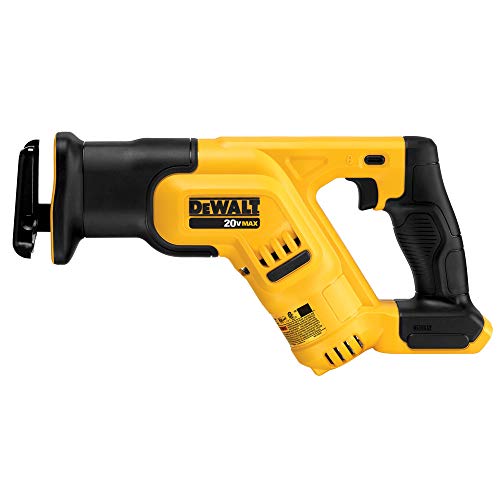
If you want a full-size demolition saw, neither of these is it. The DeWalt DCS382 and Makita XRJ06 are both compact, one-handed reciprocating saws built for tight spaces, overhead cuts, and quick plumbing, electrical, and remodel cuts where a full 18-inch recip is overkill. They run on their brands’ 18V/20V platforms, weigh under 5 pounds with a battery, and are meant to be used with one hand while the other steadies the workpiece. Choosing between them comes down to stroke length, handling, and which battery system you already own.
As an Amazon Associate we earn from qualifying purchases at no extra cost to you.


Our Top Picks
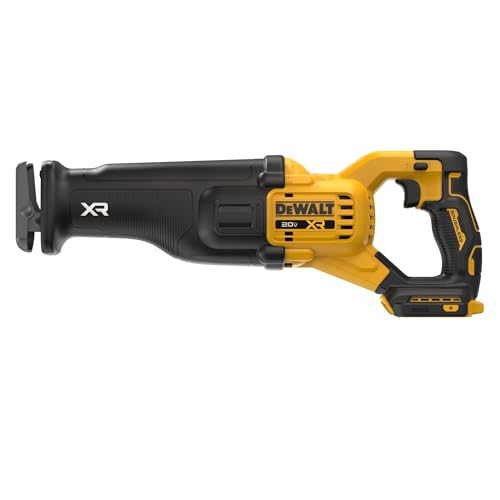 DEWALT 20V MAX* XR Brushless Cordless Reciprocating SawSTANDARD19.3 x 4.2 x 7.4 inches4.5 PoundsCheck on Amazon
 DEWALT 20V MAX Battery XR POWERPACK™ 4Ah Lithium20 volts (Pack of 2)6 x 6.5 x 3.8 inches2.67 PoundsCheck on Amazon

Specs at a Glance
| Feature | DeWalt DCS382 ATOMIC 20V MAX | Makita XRJ06 18V LXT |
|---|---|---|
| Motor | Brushless | Brushless |
| Stroke Length | 5/8 inch (15.8 mm) | 13/16 inch (20 mm) |
| No-Load Speed | 0-2,800 SPM, variable speed trigger | 0-3,000 SPM, variable speed trigger + speed limiter dial |
| Tool Length | 12.5 inches | 15.9 inches |
| Bare Tool Weight | 3.35 lbs (1.52 kg) | 3.8 lbs (1.72 kg) |
| Weight with 2.0Ah / 5.0Ah Battery | ~4.3 / 5.0 lbs | ~4.8 / 5.3 lbs |
| Blade Clamp | Twist-action lever, keyless | Lever-action, keyless with blade twist release |
| Pivoting Shoe | Yes, adjustable | Yes, adjustable |
| Orbital Action | No | No |
| LED Work Light | Yes, trigger-activated | Yes, trigger-activated |
On paper the Makita has a longer stroke and a slightly higher top speed. The DeWalt is shorter and lighter. In practice both cut at roughly the same speed in wood and drywall, and both stall if you push them hard into thick hardwood or cast iron.
Size and Ergonomics
The DCS382 is noticeably more compact. At 12.5 inches long, it’s about 3 inches shorter than the XRJ06 and tucks better between studs or inside cabinets. If you do a lot of under-sink PVC, cutting out old nails between joists, or trimming branches overhead, that short body matters. DeWalt also keeps the grip slim and the balance centered over the handle, so it feels lighter than the numbers suggest, even with a 5.0Ah battery.
The Makita is longer but slimmer through the nose. Its inline body with a rubber overmold feels more like a large rotary tool than a traditional recip saw. The variable speed dial near the trigger lets you cap top speed for metal, which helps when you are learning to control the saw one-handed. The trigger itself is longer and more progressive than DeWalt’s, giving you finer low-speed control for starting a cut on copper or conduit without skating.
Both are true one-handed tools, but neither is comfortable for long continuous cutting. Expect hand fatigue after 5 to 10 minutes of overhead work. If you wear large gloves, try them in store first. The DeWalt’s trigger guard is tighter and can pinch a gloved finger, while the Makita’s guard has more clearance but puts the LED where it can be blocked by dust.
Cutting Performance
For a compact reciprocating saw, stroke length is the key difference. The Makita’s 13/16-inch stroke clears chips better and cuts dimensional lumber and 3/4-inch plywood about 15 to 20 percent faster than the DeWalt’s 5/8-inch stroke when using the same 6-inch wood blade. In a test cut through doubled 2×4 pine, the XRJ06 averaged around 8 seconds versus 10 seconds for the DCS382.
In metal, speed matters less than control. Both saws will cut 3/4-inch EMT, 1-1/2-inch PVC, and 1/2-inch copper cleanly with a fine-tooth blade. On steel, such as threaded rod or unistrut, the Makita’s longer stroke can cause more vibration and blade chatter if you do not keep the pivoting shoe firmly against the work. The DeWalt’s shorter stroke feels smoother on thin metal and is less likely to grab on the backstroke.
Neither tool has orbital action, so they do not rip through nail-embedded wood like a full-size saw. If you regularly demolish pallets, plaster with wood lath, or cut nail-filled studs, you will want a full-size 7/8-inch to 1-1/8-inch stroke saw instead. These compacts shine for flush cuts, not demolition. Using quality reciprocating saw blades matched to the material makes a bigger difference than the tool itself. A dull 18 TPI bi-metal blade will make either saw look underpowered.
Blade Change and Shoe Design
Both use a keyless lever clamp that accepts standard 1/2-inch universal shank blades. The DeWalt uses a twist-lock collar you rotate 90 degrees, while the Makita uses a lift-and-twist lever on the side. The Makita lever is easier to operate with gloves or oily hands. The DeWalt collar requires more force and can get gritty if you cut a lot of drywall or cement board, needing a blast of compressed air to free up.
Both have an adjustable, pivoting shoe that you can extend to use fresh teeth when the front of the blade dulls. The shoe on the XRJ06 locks with more positive clicks and stays put under vibration. The DCS382 shoe can creep back if you do not fully seat the latch, especially during overhead cuts. Check it before you start cutting. Neither shoe is replaceable without disassembly, so avoid using the tool as a pry bar. That bends the shoe and misaligns the blade guide, which is the most common cause of excessive vibration and broken blades on compact saws.
Vibration, Noise, and Battery
Neither saw is well damped. These are direct-drive single-stroke mechanisms with no counterbalance, so vibration is high at full speed. The Makita transmits less vibration to the handle at low speed, likely due to the longer grip and softer overmold, but feels buzzier at 3,000 SPM. The DeWalt feels harsher at startup and smoother near wide open. Wear anti-vibration gloves if you will make more than a few cuts in a row, and let the blade do the work rather than forcing the saw forward.
Runtime is dictated by the battery, not the tool. With a 2.0Ah pack, expect 25 to 35 cuts in 3/4-inch pine with a clean 6-inch blade before the battery sags. A 5.0Ah pack roughly doubles that and also delivers more consistent speed under load because voltage holds higher. This is where platform matters more than performance. If you already own DeWalt 20V MAX batteries or Makita 18V LXT batteries, stay in that system. Buying into a new battery and charger for a compact recip rarely pays off unless you plan to switch platforms entirely. Both brands offer kits with a 2.0Ah or 5.0Ah battery, but the bare tools are the better value if you have packs.
Brushless motors on both help with runtime and heat. Neither saw has an auto-shutoff or electronic brake beyond the trigger. The blade coasts for a half-second after release, so keep the shoe against the material until it stops.
Durability and Failure Points
These saws fail in predictable ways. The blade clamp is the weak point on both. If you side-load the blade, pry with it, or run a bent blade, you will wallow out the clamp and the blade will start ejecting under load. Replace bent blades immediately and avoid bending the blade to make a curved cut.
The second failure point is dust intrusion in the gearbox nose. Drywall dust and metal shavings migrate past the shoe. Blow out the nose with compressed air after dusty work and add a single drop of dry lubricant to the shoe pivot occasionally. Do not oil the blade clamp.
The DeWalt’s compact gearbox runs hotter during repeated metal cuts. After 10 to 12 consecutive cuts in 1/8-inch steel, let it cool for a few minutes. The Makita’s longer housing dissipates heat slightly better but its speed dial can fill with dust and become stiff. Both tools have decent electronics protection and will cut out on overload rather than burn the motor, but repeated overload trips will shorten brushless controller life.
Which Should You Buy?
Buy the DeWalt DCS382 if you want the smallest, lightest one-handed saw for tight spaces and overhead work, or if you are already on DeWalt 20V MAX. It is easier to maneuver in cabinets and between studs, feels more nimble, and is usually priced 20 to 40 dollars less as a bare tool. The trade-off is a shorter stroke and slightly slower wood cutting.
Buy the Makita XRJ06 if you want faster cutting in wood, finer low-speed control, and a more comfortable grip for longer cuts, or if you are on Makita 18V LXT. The longer stroke and speed limiter dial make it more forgiving for metal and for newer users. The trade-off is a longer, slightly heavier body that does not tuck into the tightest spots as easily.
If you do not own either platform, price the kit with two batteries. The cheaper kit often decides it, because performance between the two is close enough that batteries, warranty support, and how the tool feels in your hand matter more than the spec sheet. For occasional homeowner use, either saw is fine. For daily trade use cutting mostly wood, the Makita’s stroke advantage adds up. For daily work in cramped mechanical rooms, the DeWalt’s compact size wins.