What's inside
As an Amazon Associate I earn from qualifying purchases. This post may contain affiliate links at no extra cost to you.
Our Top Picks
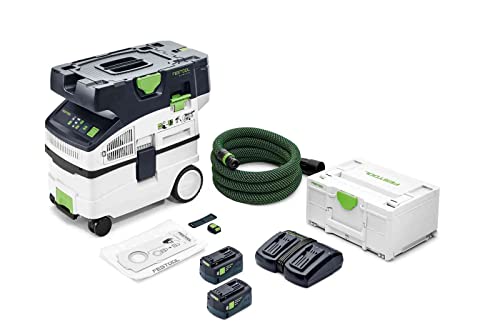 Festool Cordless Mobile Dust Extractor CLEANTEC CTC MIDI23.23 x 12.99 x 33.97 inches43.01 PoundsCheck on Amazon


Two Different Takes on Portable Extraction
The Festool CT MIDI I and the Bosch VAC090S both get called “portable” dust extractors, but they solve portability differently. The Festool is a compact, low-profile L-Class extractor designed to fit under a bench and ride on a Systainer stack. The Bosch is a larger 9-gallon unit built around a taller canister that borrows heavily from Bosch’s jobsite vacuum heritage. If you move between rooms, work in finished homes, or need to carry the unit up stairs, that difference matters more than the brochure airflow numbers.
Both are true dust extractors, not shop vacs: HEPA filtration as standard, tool-triggered auto-start, variable suction, and antistatic hoses. Both will keep a track saw, sander, or small router meaningfully dust-free when used correctly. The choice comes down to capacity, footprint, hose system, and how much you want to pay for filtration and quiet operation.
As an Amazon Associate we earn from qualifying purchases at no extra cost to you.



Specs Compared
| Feature | Festool CT MIDI I | Bosch VAC090S |
|---|---|---|
| Container Capacity | 15 liters (4 gallons) / 11L with bag | 33.6 liters (8.9 gallons) / ~9 gallons with bag |
| Motor Power | 1,200 watts | 1,200 watts (10.5 amps) |
| Max Airflow | ~137 CFM | ~150 CFM |
| Static Water Lift | 96 inches | ~97 inches |
| Filtration Standard | HEPA filter, 99.97% at 0.3 microns | HEPA filter, 99.97% at 0.3 microns |
| Filter Cleaning | Manual cleaning, manual shake | Automatic filter cleaning (pulses every 15 sec) |
| Weight (empty) | 21.6 lbs (9.8 kg) | 28 lbs (12.7 kg) |
| Hose | 27mm x 3.5m antistatic hose, with tool sleeve | 35mm x ~3m antistatic hose, adapters included |
| Tool-Triggered Start | Yes, with variable suction and delay shut-off | Yes, with Power Tool Activation and adjustable suction |
| Noise Level | ~62 dB(A) at max | ~68 dB(A) at max |
| Systainer / L-Boxx Integration | Yes, SYS-Dock with T-LOC | No, flat top can hold case but no lock |
Suction, Airflow and Filtration in Practice
On paper, the Bosch moves more air. In the shop, the difference is smaller than the numbers suggest because both are limited by hose diameter and tool port size. With a 27mm hose on a sander or Domino, the Festool feels slightly stronger due to higher velocity through the narrower hose. With a 35-36mm hose on a miter saw or table saw dust port, the Bosch catches up and clears chips a bit faster thanks to raw volume.
Static lift is nearly identical, so neither has a real advantage picking up screws or heavy debris. For fine sanding dust, both capture well if you use a bag plus HEPA. Without a bag, fine dust cakes the main filter much faster and kills suction within a few hours of MDF or drywall work.
The biggest functional difference is filter cleaning. The Bosch VAC090S dust extractor pulses its flat filter automatically every 15 seconds. You hear a thump, suction dips for a half second, then recovers. It keeps airflow consistent during long sanding runs without you stopping to tap the filter. The Festool CT MIDI I has no auto-clean. You need to manually close the hose, let it cycle to full suction, or open the unit and knock the filter. In heavy drywall or plaster work, that means more maintenance.
Both ship HEPA-certified, but consumable costs differ. Festool bags are smaller (about 11 liters usable) and more expensive per bag, and you will burn through them quickly if you skip pre-separation. Bosch bags hold more than twice the volume, so cost per gallon of debris is lower. If you run either without a bag to save money, expect to replace the main HEPA filter sooner, especially the Festool’s pleated cartridge which clogs permanently if it gets damp.
Portability, Noise and Jobsite Use
The CT MIDI lives up to its name. At 21.6 lbs and only 16.7 inches tall, it slides under a MFT table or into a van without removing Systainers stacked on top. The footprint is 17.3 x 12.6 inches. Wheels are small and hard, fine on hardwood and concrete, poor on gravel or uneven subfloor.
The Bosch is taller (23.5 inches) and heavier at 28 lbs, but it rolls better over cords and debris thanks to larger rear wheels and front casters. The handle is integrated and sturdy, but the taller canister is awkward in tight hallways and small closets. If you work mostly in a shop or garage and want fewer bag changes, the extra 5 gallons of capacity is welcome. If you carry the extractor daily into occupied homes, the Festool is noticeably easier to live with.
Noise is where Festool justifies its price. At ~62 dB, the CT MIDI is one of the quietest extractors you can buy. You can talk over it at mid-suction. The Bosch is louder by about 6 dB, which sounds twice as loud to the ear. Neither is quiet enough to run without hearing protection for long stretches, but clients will notice the difference. Variable suction on both helps; dialing back to 60-70% for sanding cuts noise significantly without losing much capture.
Hose System and Tool Compatibility
Festool’s 27mm antistatic hose with the rubber tool sleeve fits Festool tools perfectly and seals well on most 27-36mm ports with the included adapter. It stays flexible in cold garages and does not whip around. The downside is that 27mm restricts flow on tools with large dust ports like a jobsite table saw or a 12-inch miter saw. You can swap to an optional 36mm hose, but that is an extra purchase.
Bosch includes a 35mm hose that is a better all-rounder for larger ports, and the kit includes stepped adapters. It is antistatic but stiffer than Festool’s, and it tends to kink if you wrap it tightly for transport. Both hoses store on the unit, but Festool’s hose garage with integrated cord wrap is cleaner and faster to deploy. Bosch’s hose wraps around the top and is held with a strap, which works but takes longer.
For auto-start, both have a power outlet on the extractor that senses tool draw and starts the motor, with a 3-5 second run-on after you release the trigger to clear the hose. Festool’s outlet is rated for 1200W max tool draw; Bosch allows up to about 1800W. If you run a 15-amp circular saw or a large router, the Bosch is less likely to trip its breaker.
Durability and Common Failure Modes
Both units are well built, but they fail differently. On the Festool CT MIDI, the most common issues are cracked turbine housings from drops, torn antistatic hoses at the cuff, and clogged HEPA filters that were run wet. The bag detection and brake are reliable, but the manual filter cleaning means users neglect the filter until suction is gone, then overheat the motor. Keep a spare Festool CT MIDI HEPA filter and bags on hand and change bags at 75% full, not when bursting.
On the Bosch VAC090S, the auto-clean mechanism is the weak point. The solenoid valve and damper can stick if fine plaster dust gets moist, causing constant pulsing or no pulse at all. The power tool outlet relay also fails more often than Festool’s if you repeatedly overload it. The canister latches are plastic and will crack if the unit tips off a tailgate. Bosch’s service network is wider in the US and parts are cheaper, which matters after warranty.
Wet pickup is possible on both but not recommended if you care about the HEPA filter. A single wet drywall slurry incident can permanently blind the filter. Use a separate shop vac for water if you do that often.
Price, Cost of Ownership and Who Should Buy Which
Street price usually puts the Festool CT MIDI I about $150 to $250 higher than the Bosch VAC090S. That gap widens when you add bags and filters over two years of regular use. Festool bags cost more and hold less, so heavy users spend noticeably more on consumables. Bosch filters are less expensive and the larger bag means fewer changes.
Buy the Festool CT MIDI if you prioritize compact size, low noise, Systainer integration, and you mostly use it with sanders, Domino, track saws, and small routers in finished spaces. It is the better choice for a finish carpenter, cabinet installer, or remodeler who carries the extractor every day and works around clients.
Buy the Bosch VAC090S if you want maximum capacity for the footprint, automatic filter cleaning for long sanding sessions, and you regularly connect to tools with larger dust ports. It is the better value for a small shop, a general contractor running a miter saw and table saw, or anyone who hates stopping to clean a filter. It is also the safer pick if you need to power 15-amp tools through the extractor.
If you are on a tight budget and do not need certified HEPA or auto-start, a standard jobsite vacuum with a good filter will handle chips, but it will not keep fine dust down like either of these two. For dust-sensitive work, the extra cost of a true extractor pays back in cleanup time and air quality.
Either way, pair the extractor with the right hose diameter for the tool, always use a bag, and add a cyclone separator for planer or router table work if you generate a lot of bulk chips. Searching for portable dust extractor HEPA options in the same size class will also surface newer CT 15 and VAC090A variants worth cross-shopping before you buy.