What's inside
As an Amazon Associate I earn from qualifying purchases. This post may contain affiliate links at no extra cost to you.
Choosing the right nut setter length for metal roofing is mostly a clearance problem. The bit must reach the screw head without the drill, chuck, or bit holder striking the panel, ridge, flashing, or adjacent fasteners. Too short is frustrating; too long can flex, wobble, and make it easier to tilt the screw.
Start with the fastener, not the drill
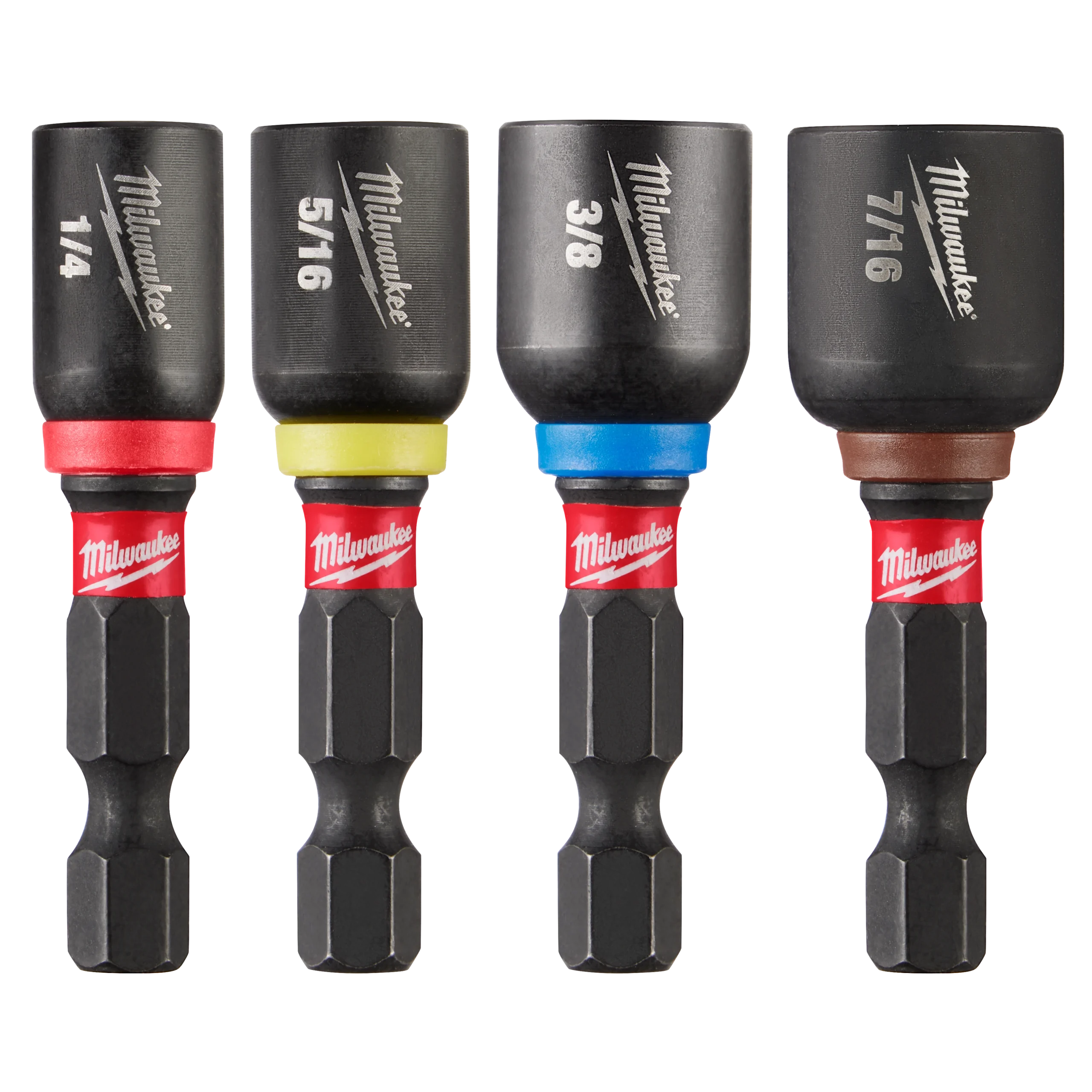
Most exposed-fastener metal roofing uses hex-head screws with a rubber sealing washer. Common sizes are 1/4 inch, 5/16 inch, and 3/8 inch, although 5/16 inch is especially common for roofing screws. The nut setter must match the hex head exactly. A loose-fitting setter rounds the corners, damages the coating, and may leave the screw spinning without driving.
Measure the screw head across its flats, or check the screw packaging. Do not choose by the diameter of the threaded shaft. A screw described as 1/4 inch may have a different head size depending on the manufacturer and application.
For most residential metal-roofing work, a 5/16-inch impact nut setter is the sensible starting point. Buy the correct size first; length is secondary.
Nut setter lengths compared
| Length | Best use | Advantages | Drawbacks |
|---|---|---|---|
| 1-1/2 to 2 inches | Open panel faces and short screws | Stiff, compact, and less likely to wobble | May not clear ribs, overlaps, or raised trim |
| 2-1/2 to 3 inches | General roofing work | Good reach without excessive flex | Can still be short around deep ribs or flashing |
| 4 to 6 inches | Ribs, corners, valleys, and obstructed fasteners | Reaches into awkward areas | More flex, wobble, and side-load risk |
A 2-1/2-inch setter is the best all-around length for many jobs. It gives enough clearance to keep a compact drill above a panel rib while remaining relatively rigid. A 1-1/2-inch setter is faster and more controlled when every screw is exposed on a flat panel face. A 6-inch setter is a problem-solving tool, not automatically an upgrade.
When a short setter is the better choice
Use a short setter when the screw head is easy to reach and the drill can sit squarely over it. The shorter the tool, the less it bends under load. That matters with a cordless impact driver, which can twist a long setter quickly if the bit is not aligned.
Short setters are also useful near panel edges. A long tool creates a larger arc as you move the driver, increasing the chance of contacting a rib or scratching the painted surface. For repetitive fastening across broad, unobstructed panels, a short, impact-rated setter usually gives the cleanest control.
The cheaper option is fine here. If you are installing a small shed roof or replacing a few dozen screws, a basic hardened setter can do the job. Replace it when the hex opening becomes visibly rounded or the driver starts slipping.
When a longer setter earns its place
Choose a 4- to 6-inch setter when the screw sits below a rib, behind a raised seam, or close to trim that prevents the drill body from approaching straight on. Long reach can also help with screws in valleys, under eaves, and at panel overlaps.
Do not use extra length to compensate for poor positioning. Hold the driver in line with the screw and support it with your other hand. A long setter that is angled even slightly can cam out, mark the washer, or enlarge the hole in the panel. If the tool flexes visibly, reduce the driver speed and finish the screw by hand pressure rather than forcing it.
For awkward locations, a 6-inch impact-rated nut setter is useful. It should supplement a shorter setter, not replace it.
Magnetic or nonmagnetic?
Magnetic setters hold a screw while you position it, which is helpful when working from a ladder or reaching across a panel. They are convenient for starting screws, but magnets can collect metal filings and lose holding power. A magnetic setter can also retain a screw after the fastener has bottomed out, making it easier to pull the driver away too aggressively.
Nonmagnetic setters are simpler and often last longer. They work well when the screw is already placed in a pilot hole or when you can hold the fastener with your fingers. If you choose magnetic, look for a strong magnet and a sleeve that does not interfere with the rubber washer.
A magnetic impact nut driver set can cover several head sizes, but inspect each setter before use. Sets are convenient only if the sizes actually match your roofing screws.
Impact rating matters more than branding
If you are using an impact driver, buy an impact-rated setter with a 1/4-inch hex shank. Ordinary chrome hand-tool sockets or thin decorative nut setters can crack or shatter under repeated impact blows. An impact-rated tool has a tougher construction designed for shock loading.
For a drill or screwdriver used at moderate speed, a standard setter may survive, but impact-rated versions are usually worth the small price difference. The driver should have a clutch or adjustable speed. A roofing screw is properly seated when the washer compresses evenly against the metal, not when the washer is crushed flat.
Avoid these common mistakes
Do not use a setter that is one size too large because it “still fits.” The head will slip under load. Do not drive through a rib with a long setter held at an angle. Do not use a spinning setter to remove a screw after the head has stripped; switch to locking pliers or a screw-extractor method before damaging the panel.
Test the chosen length on scrap metal or an inconspicuous area. Drive three or four screws and check that the washer is compressed evenly, the screw is straight, and the setter does not touch the panel. For most jobs, keep a short 5/16-inch setter for open areas and add a longer one only where the roof geometry demands it.