What's inside
As an Amazon Associate I earn from qualifying purchases. This post may contain affiliate links at no extra cost to you.
Our Top Picks


The short answer
An impact driver and an impact wrench both deliver rotational blows to loosen or tighten fasteners, but they’re built around different sizes and loads. For automotive work, an impact wrench is usually the right choice for lug nuts, suspension hardware and other large fasteners. An impact driver is useful for smaller screws and bolts, but its 1/4-inch hex chuck and lower torque make it a poor substitute for a wrench on stubborn wheel or chassis fasteners.
If you’re buying one tool mainly for car maintenance, start with a 1/2-inch-drive cordless impact wrench. If you already own an impact driver, keep it for light-duty jobs and use hand tools or a wrench for fasteners beyond its comfortable range.
As an Amazon Associate we earn from qualifying purchases at no extra cost to you.


What’s different between the tools?
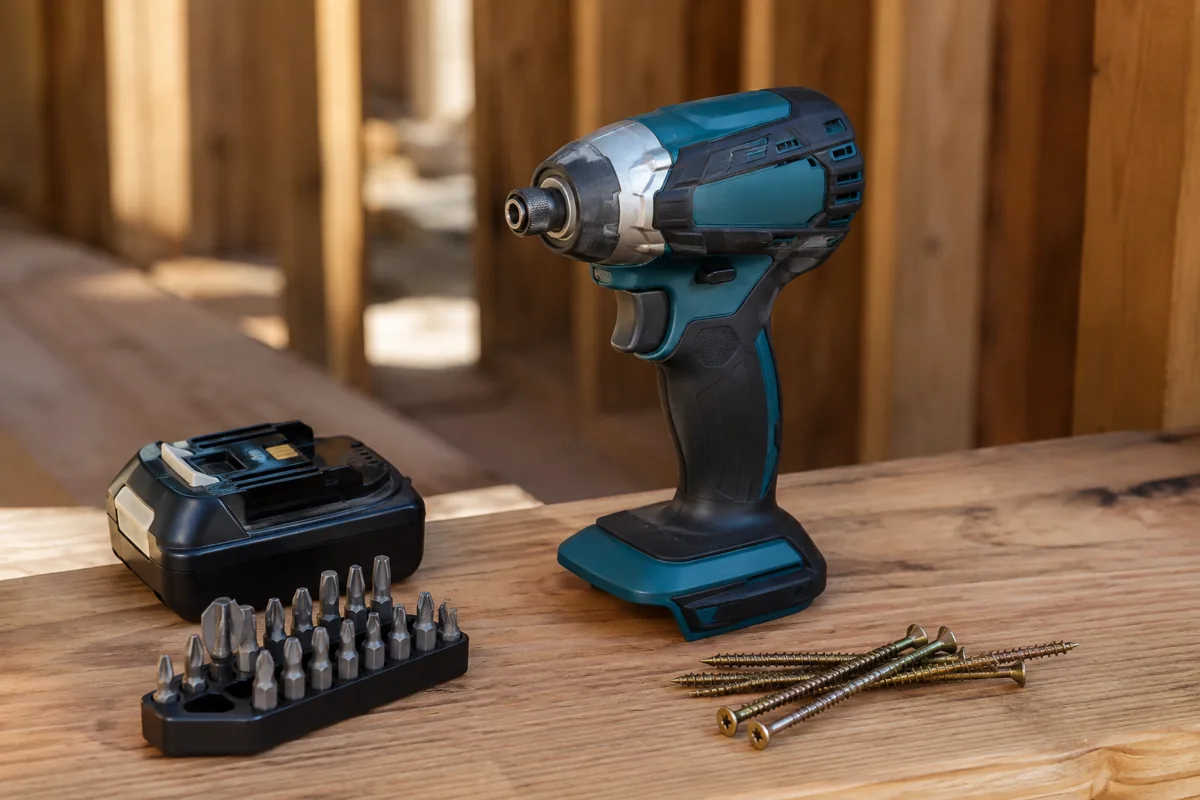
An impact driver has a 1/4-inch hex collet, designed for driver bits and hex-shank accessories. It’s compact, easy to control in tight spaces and commonly used for screws, small bolts and light assembly. Some can handle automotive fasteners, but they aren’t designed around the sockets and higher loads that wheel and suspension work demand.
An impact wrench uses a square drive—commonly 3/8 or 1/2 inch—to accept sockets. The 1/2-inch size is a practical choice for lug nuts and many under-car jobs. A 3/8-inch wrench is smaller and useful where access matters more than maximum torque, but may not have enough reserve for heavily rusted fasteners.
Torque figures on packaging need caution. Manufacturers may advertise separate “nut-busting” and fastening numbers, and test conditions vary. A tool that can loosen a fastener doesn’t necessarily tighten it safely to specification. Use a calibrated torque wrench for final tightening where the vehicle calls for a torque value.
Impact driver vs. impact wrench
| Feature | Impact driver | Impact wrench |
|---|---|---|
| Drive interface | 1/4-inch hex collet | Usually 3/8- or 1/2-inch square drive |
| Best fit | Screws, small bolts, light assembly | Lug nuts, larger bolts, automotive service |
| Socket use | Requires a suitable adapter; adds length and can be a weak point | Accepts impact-rated sockets directly |
| Size and access | Usually compact and light | Often bulkier, especially in 1/2-inch drive |
| Main risk | Overloading the tool, adapter or fastener | Overtightening or damaging threads with uncontrolled power |
Choose by the fastener, not the tool you already own
For wheel changes, a 1/2-inch impact wrench paired with impact-rated sockets is the straightforward setup. Passenger-car lug nuts are often specified around 80–100 lb-ft, but the correct value depends on the vehicle. An impact wrench is handy for removing them; it can also spin them on, but stop before final tightening and use the specified torque.
For small interior brackets, battery terminals, light-duty clamps and screws, an impact driver may be enough. It’s cheaper if you already own compatible batteries, and its smaller body can fit where a wrench won’t. The trade-off is that a hex adapter and socket create extra length and can fail under shock loads. Don’t use an ordinary chrome hand socket on an impact tool; use impact-rated sockets.
For suspension or exhaust work, fasteners may be rusted, heat-cycled or tightened to high specifications. A compact 3/8-inch wrench may manage many jobs, but a 1/2-inch wrench gives more headroom. Even then, corrosion can defeat a cordless tool. Penetrating oil, a breaker bar, proper support and patience are safer than leaning on a tool until a bolt or adapter breaks.
What to buy
If automotive work is the main use, compare a 1/2-inch cordless impact wrench with batteries and charger compatible with your existing tool platform. For occasional tire rotations, a corded or lower-cost cordless wrench may be adequate; you don’t need a top-tier high-torque model just to change wheels. If you work on larger vehicles or frequently tackle seized hardware, a stronger wrench is more useful, but it still won’t replace sound technique.
Choose a 3/8-inch cordless impact wrench when compactness matters and your work is mostly moderate-size fasteners. It can be a good complement to a 1/2-inch wrench, not necessarily a cheaper all-purpose replacement. Check tool length, weight, speed settings and battery size: a powerful tool with a large battery may not fit behind a wheel or suspension component.
If your automotive use is light and you already have a driver, buy impact-rated sockets and an adapter only for modest loads. A set of impact-rated socket adapters can cover occasional small jobs, but it doesn’t turn a driver into a full-size wrench. For lug nuts or rusted bolts, the cheaper option can cost time—or damage the adapter—rather than save money.
Use either tool without damaging the car
Start fasteners by hand when possible, especially on wheel studs and aluminum parts. Cross-threading can ruin a stud or hub before you notice. Use the tool’s lower speed or power setting for running fasteners in, and keep the socket straight. If the fastener doesn’t move after a few seconds of impact, stop and reassess instead of holding the trigger indefinitely.
For lug nuts, loosen with the wrench, then tighten only enough to seat them. Lower the vehicle as directed by the manufacturer and finish with a torque wrench in the specified pattern and sequence. Recheck guidance for your vehicle rather than assuming a universal value. For any fastener where the manual specifies a torque, angle or replacement bolt, follow that procedure; an impact tool is for speed, not measurement.
Wear eye protection, use sockets in good condition and secure the vehicle on a level surface with wheel chocks and properly rated stands when working underneath. The right choice is simple: use a driver for small, light fasteners; use an impact wrench for automotive sockets and higher loads; use a torque wrench for accurate final tightening.