What's inside
As an Amazon Associate I earn from qualifying purchases. This post may contain affiliate links at no extra cost to you.
Our Top Picks

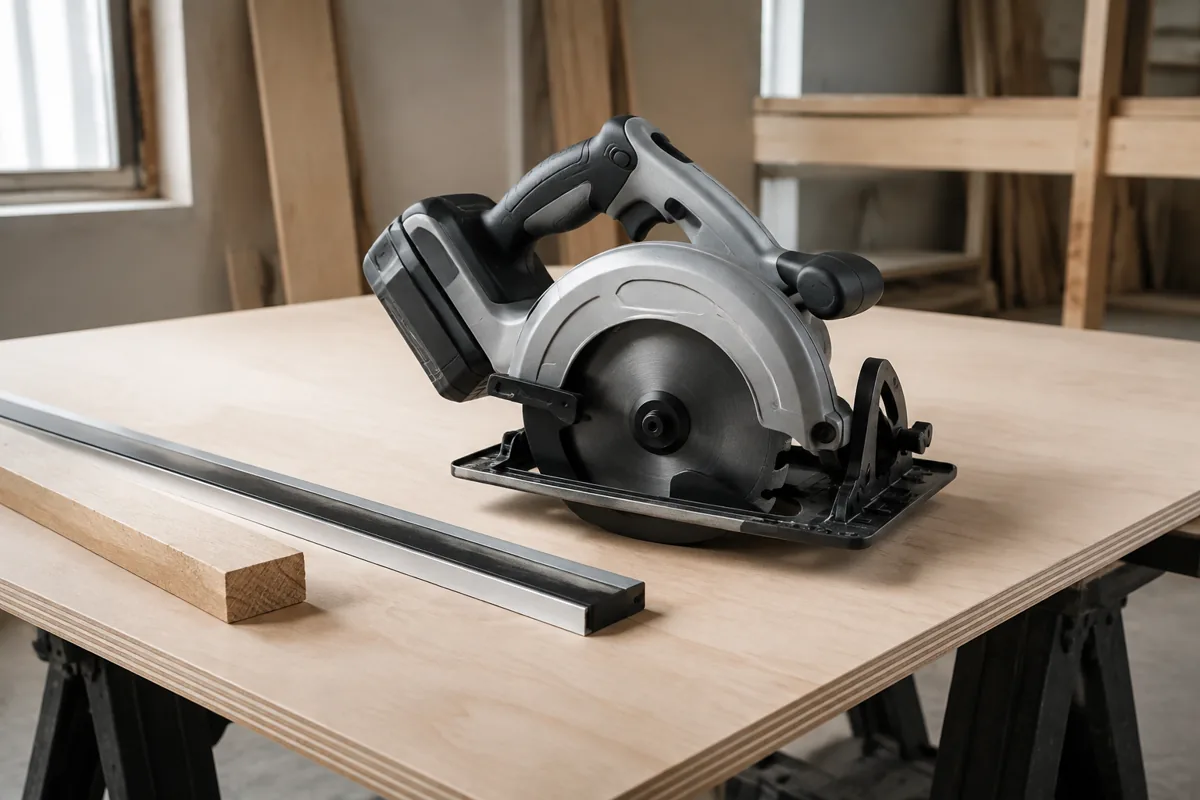
Why saw depth matters
A circular saw cuts plywood more cleanly when the blade extends only a little past the underside of the sheet. Set it too deep and more teeth emerge below the wood, increasing tear-out and making the blade harder to control if it catches. Set it too shallow and the teeth may not clear the bottom face, leaving a ragged, incomplete cut.
For most plywood, aim for the blade tips to extend about 1/8 to 1/4 inch below the material. That is enough to cut through while keeping the exposed blade length modest. The right setting depends on the actual thickness of the sheet and the saw’s blade geometry, so check the cut rather than trusting the thickness printed on the label.
How to set circular saw depth
Unplug a corded saw or remove the battery before adjusting it. Put the saw on a stable surface, then raise or lower the base plate using the depth-adjustment lever or knob. The blade should be clear of the work surface while you make the adjustment.
To measure, hold the saw as it will sit on the plywood and slide the base plate until the lowest tooth extends about 1/8 to 1/4 inch below the underside. Keep your fingers away from the teeth; rotating the blade by hand can help you check its full circle, but do that only with the saw disconnected from power. Lock the adjustment and verify it has not slipped.
If you cannot measure the extension directly, stack offcuts or use a scrap piece of the same thickness. Set the depth, make a short test cut, and inspect the underside. The teeth should pass through without leaving uncut fibers. Recheck the setting if you change plywood thickness, switch blades, or use a different saw.
Depth settings by plywood thickness
Use these figures as starting points, not fixed settings. Plywood thickness can vary, and some saws have enough bevel or base-plate movement that the blade extension changes when you tilt the cut. Measure with the saw at the angle you plan to use.
| Plywood thickness | Starting blade extension below sheet | What to check |
|---|---|---|
| 1/4 inch | About 1/8 inch | Thin panels can flex; support the sheet close to the cut. |
| 1/2 inch | About 1/8 to 1/4 inch | Confirm the blade clears the bottom face along the full cut. |
| 3/4 inch | About 1/8 to 1/4 inch | Account for actual thickness, which may be slightly under or over nominal. |
| Over 3/4 inch | Measure the sheet, then add about 1/8 to 1/4 inch | Make sure the saw has enough cutting capacity at the selected bevel angle. |
Reduce tear-out on both faces
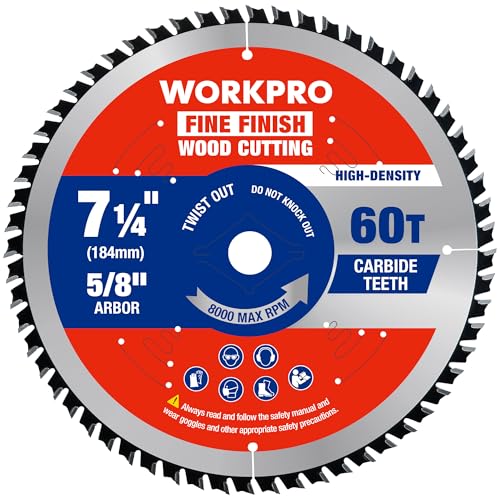
Depth helps, but it is not the only factor. A sharp, plywood-appropriate blade with more teeth generally leaves a cleaner edge than a coarse framing blade. The trade-off is slower cutting and, on some saws, more heat if you push too hard. For occasional straight cuts where the edge will be hidden, a standard blade may be adequate. For visible edges or cabinetry work, compare plywood and fine-finish circular saw blades by diameter, arbor size, and the saw’s recommended blade specifications.
Place the face you want cleanest down when using a conventional circular saw. The teeth usually enter through the top face and exit through the bottom, where they are more likely to splinter. A zero-clearance support, painter’s tape over the cut line, or a scoring pass with a utility knife can help, but none guarantees a perfect edge. Test the method on scrap first.
Support the sheet on a stable surface so the cut line is not pinched as the offcut falls. Foam insulation board is a useful sacrificial support for many sheet cuts, provided it is flat and the blade will not strike anything underneath. A straightedge or track also helps prevent wandering; a clamped guide is a cheaper option for occasional work, while a track system is more convenient for repeated long cuts.
Common problems and fixes
If the bottom veneer remains attached in places, the blade may be too shallow, dull, or deflecting. Add a small amount of depth, check that the base plate is locked, and slow down if the saw is being forced through the cut. If the underside splinters badly, first check blade sharpness and support, then try reducing the extension toward 1/8 inch.
A saw that binds or kicks back is a safety problem, not just a finish issue. Keep both hands on the saw, stand out of the blade’s line, and do not cut a sheet that can close around the blade. Make sure the offcut is supported without squeezing the kerf. Let the blade reach full speed before entering the cut, and wait for it to stop before setting the saw down.
For repeated cuts, a circular saw track guide can improve straightness and reduce setup time. It costs more than a basic clamped straightedge and is not necessary for rough construction cuts. Either way, measure the depth after setting the saw on the guide, because the added track or guide can change how the base plate sits relative to the plywood.
What to buy for the job
For a few cuts in construction plywood, a basic circular saw, a sharp general-purpose blade, and a straightedge are usually enough. Spend on a finer blade or guide only when the edge quality, accuracy, or number of cuts justifies it. Before buying a replacement blade, match its diameter and arbor to the saw and follow the manufacturer’s limits; a larger blade is not a safe way to gain depth.
Whatever setup you choose, make one test cut in scrap of the same thickness. Check the top and bottom faces, confirm the blade clears the sheet, and adjust from there. That small check is more reliable than any nominal depth setting.