What's inside
As an Amazon Associate I earn from qualifying purchases. This post may contain affiliate links at no extra cost to you.
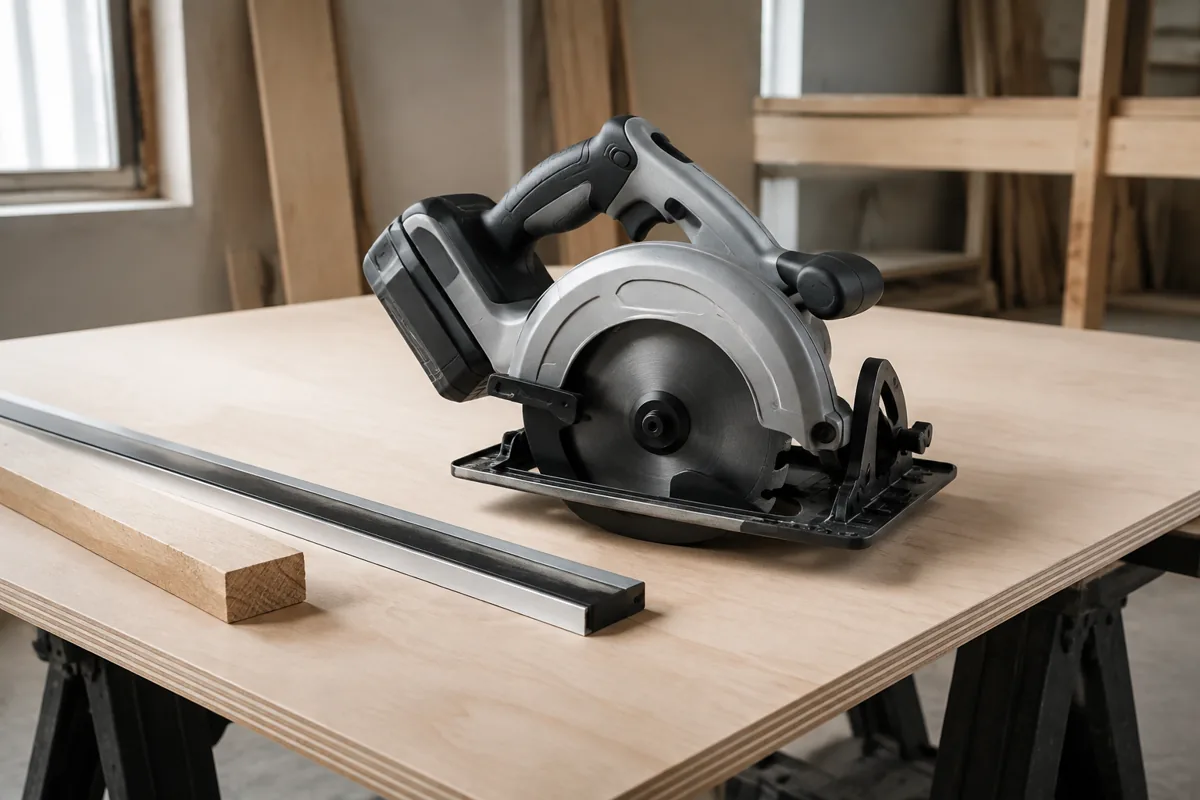
A standard circular saw can cut fiber-cement siding, but it makes a large amount of fine, respirable silica dust. For occasional cuts, the practical setup is a corded or cordless saw fitted with a purpose-made fiber-cement blade, used outdoors with dust controls. For repeated cutting, a siding shear or a saw with effective dust collection is usually a better choice.
Quick pick: match the saw to the job
For a few boards, buy a compatible fiber-cement blade for the circular saw you already own. A 7-1/4-inch blade with four or six carbide teeth is a common choice; check the saw’s manual for blade diameter, arbor size, and maximum speed. These low-tooth-count blades are designed to shed dust more effectively than a typical wood blade, though they do not eliminate it.
If you’re installing siding around a whole house, consider a fiber-cement saw with dust collection or a siding shear. A shear creates far less airborne dust, but it can be slower and less convenient for long rip cuts or intricate notches.
Circular saw, dust-collecting saw, or shear?
| Option | Best for | Main trade-off | Dust and cut quality |
|---|---|---|---|
| Standard circular saw and fiber-cement blade | Repairs and modest siding jobs | Requires careful dust control; fast blade wear is possible | Clean, straight cuts, but still produces hazardous dust |
| Saw with a compatible dust-collection shroud | Frequent cutting on a larger job | Costs more and needs a suitable vacuum and hose | Captures much of the dust at the blade when set up correctly |
| Fiber-cement siding shear | Many straight cuts near the installation area | Can be slower; tool access and cut shape are more limited | Little airborne dust, but edges may need cleanup |
A basic 7-1/4-inch fiber-cement blade is the sensible low-cost starting point if you already have a saw. A blade meant for wood or general construction is the wrong economy: its many teeth can make more dust, cut poorly, and wear quickly in abrasive cement board.
What to look for in the saw and blade
Match the blade to the saw rather than assuming every 7-1/4-inch blade fits. Confirm the arbor diameter, rotation direction, and rated speed. For cordless saws, check that the battery and saw can sustain the cut; a blade intended for fiber cement can load a small saw heavily. A corded saw is often more convenient for long cutting sessions because you won’t need spare batteries.
Low-tooth-count carbide blades are purpose-built for this material. They typically leave a usable edge on straight cuts while making less dust than a fine-tooth blade. They are not universal: many are intended for fiber-cement products specifically, not masonry, tile, or metal. Replace a blade that is chipped, visibly damaged, or cutting slowly despite a steady feed. Forcing a dull blade can cause rough edges, overheating, or a saw that binds.
Dust ports and shrouds only help if they fit securely and connect to a vacuum with adequate filtration. A shop vacuum without a suitable filter can simply exhaust fine dust back into the work area. If buying a collection setup, look for a compatible HEPA dust extractor and check the saw or shroud manufacturer’s connection requirements.
Cutting safely without ruining the board
Follow the siding manufacturer’s cutting instructions and applicable local safety rules. Fiber-cement dust contains crystalline silica; do not treat an outdoor location or a dust-reducing blade as complete protection. Use the dust controls specified for the task and properly fitted respiratory protection. Keep other people away from the cutting area, and position the work so dust moves away from you and occupied spaces.
Support the board close to the cut so the offcut cannot snap away or pinch the blade. Mark the line, set the blade depth just beyond the board thickness, and let the saw reach full speed before entering the material. Feed steadily without forcing it. If the saw slows, stop and check for a dull blade, poor support, or a binding kerf rather than pushing harder.
For a long cut, use a straightedge or guide and verify the blade will clear the supports beneath the board. A rough edge is often caused by a worn blade, unsupported material, or a hurried feed. Small chips at the edge may be manageable, but a crack running into the finished face can make the piece unusable. Measure twice, and cut a test piece if the fit is critical.
Which option should you buy?
For a small repair, the cheaper option is fine: use a compatible fiber-cement blade in a saw you own, outdoors, with appropriate dust controls. Don’t buy a dedicated saw just to make a handful of cuts. If you’ll be cutting throughout the day, the cost of a dust-collection setup or a shear can be justified by lower exposure and less cleanup. A shear is especially attractive when most cuts are straight and made near the work area; a circular saw remains more versatile for angled cuts, notches, and ripping.
Before purchasing, count the cuts, check whether you need rips or only crosscuts, and confirm that the blade or accessory fits your saw. The best setup is not the fastest one if it leaves you breathing dust or produces edges that need replacing.