What's inside
As an Amazon Associate I earn from qualifying purchases. This post may contain affiliate links at no extra cost to you.
Choosing a manual cable cutter is less about finding the sharpest tool and more about matching the cutter to the cable. Aluminum and copper conductors are relatively soft, but finished cable can be thick, stranded, tightly compacted, or covered by tough insulation. The wrong cutter can crush the conductor, leave a ragged end, or damage its jaws in a few cuts.
Start With the Cable, Not the Tool
Identify the conductor material, cable diameter, and construction before comparing handles. A cutter rated for copper is not automatically suitable for aluminum, and a tool rated for small stranded wire may be useless on a large service cable.
Check the cable’s outside diameter with calipers if possible. For electrical cable, also check its size in AWG or kcmil. A cable marked 2 AWG may be easy for one cutter and near its limit for another, depending on the number and shape of strands. Compact or compressed conductors usually require more cutting force than loosely stranded cable of the same nominal size.
Do not use a manual cable cutter on steel messenger wire, guy wire, armored cable, or wire rope unless the manufacturer specifically approves it. Those materials can nick cutting edges or chip the jaws. For aluminum and copper conductors, a purpose-built manual copper and aluminum cable cutter is the correct starting point.
Choose the Cutter Style
| Cutter type | Best use | Main advantage | Main limitation |
|---|---|---|---|
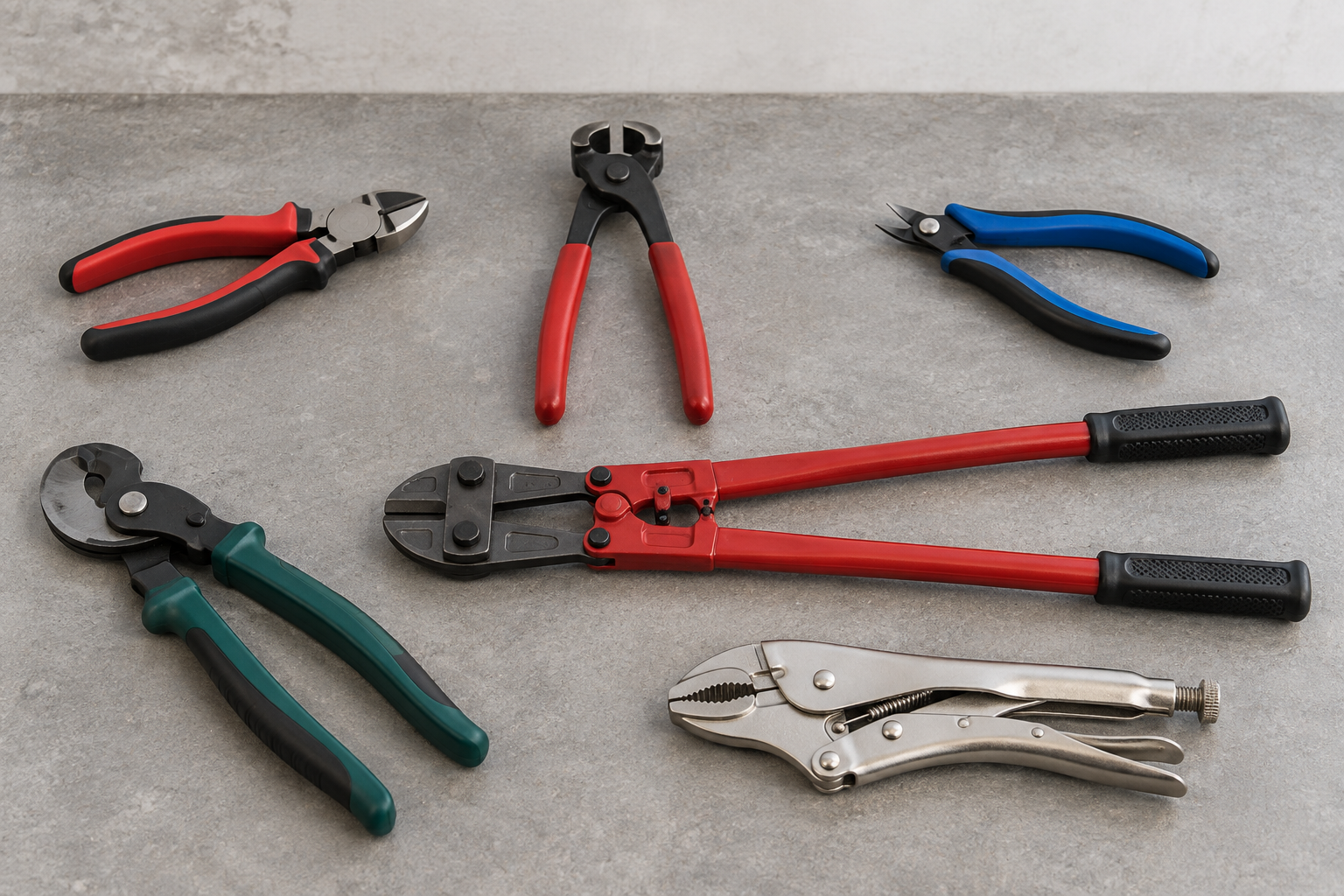
| Diagonal cutters | Small solid or stranded wire | Compact and inexpensive | Can crush larger cable and damage the jaws |
| Scissor-style cable cutters | Small to medium copper and aluminum cable | Clean cuts with low weight | Capacity depends heavily on handle length and jaw design |
| Ratchet cable cutters | Medium and large stranded cable | High mechanical advantage and controlled cuts | Slower, bulkier, and unsuitable for some very hard materials |
| High-leverage compound cutters | Occasional large-cable work | More force than standard hand cutters | Can require substantial hand strength near maximum capacity |
For household wiring, battery cables, and occasional electrical work, scissor-style cutters are often enough. Once cable diameter reaches roughly 1/2 inch or more, a ratcheting design is usually easier to control. The ratchet lets you close the jaws in several steps instead of trying to generate all the cutting force at once.
A ratchet cutter is not automatically better. It takes more time to open, position, ratchet through, and release the cable. If you are trimming many small wires at a bench, a compact scissor cutter is faster and less tiring. If you are cutting thick feeder cable in a panel or trench, the ratchet’s leverage matters more than speed.
Check Capacity and Jaw Design
Manufacturers often list separate capacities for copper, aluminum, and aluminum alloy. Use the lowest relevant rating, not the largest number printed on the package. A cutter advertised for 600 kcmil may only reach that rating on soft aluminum, while its copper rating may be lower.
Look for curved, rounded jaws that support the cable as they close. A smooth shear action cuts strands progressively. Flat or poorly matched jaws tend to compress the cable before severing it, producing a flattened end that may not fit cleanly into a lug or connector.
For multi-stranded cable, avoid tools with a large gap between the blades when closed. Strands can escape into that gap and bend rather than cut. This is especially common when cutting fine-stranded welding cable or flexible battery cable. A cutter designed for building cable may not make a good cut on highly flexible cable.
If the cable has a thick jacket, verify that the listed capacity refers to the complete cable diameter. Some tools list conductor capacity separately from overall insulated-cable capacity. Never force a cable into a cutter that will not open far enough; levering the handles can bend the pivot or chip the cutting edge.
Compare Handle Length and Cutting Effort
Longer handles provide more leverage but need more clearance. A 24-inch cutter may make a difficult 500 kcmil cut manageable, yet be awkward inside a crowded electrical cabinet. Short-handled ratchet tools fit tighter spaces but may require several times more hand force.
For occasional work, a tool with comfortable grips and a positive ratchet release is more useful than one with the highest theoretical capacity. The release should let you back the jaws off if the cable is misaligned or the cut is becoming unsafe. Test it before starting: some inexpensive ratchets release only after the handles are squeezed nearly closed.
Hydraulic hand cutters are a separate category. They are worthwhile for repeated large-cable work, such as service installations or solar arrays, but are excessive for a few 1/0 battery cables. A basic ratcheting cable cutter is usually the better value for occasional use.
Pay Attention to Materials and Maintenance
Hardened steel blades hold an edge longer than soft stamped jaws. Forged handles and a supported pivot generally tolerate more force than thin, cast components. These details matter most when you regularly cut near the tool’s maximum rating. For a few cuts of 8 AWG or 6 AWG cable, a cheaper forged or compound cutter can be perfectly adequate.
After cutting aluminum, wipe the blades clean. Aluminum residue can build up and make the pivot gritty. Keep the pivot lightly lubricated, but do not coat the cutting edges with oil before handling electrical conductors; oil attracts dirt and can contaminate connections. Store the cutter closed or with a blade guard if one is supplied.
Inspect the blades after every difficult cut. Small chips, shiny dents, or a growing burr indicate that the tool has been used on material outside its rating. Do not grind the cutting edge yourself unless the manufacturer provides a sharpening procedure. Changing the blade angle can make the cutter crush every subsequent cable.
Cut the Cable Safely
De-energize the circuit, lock out the disconnect where appropriate, and verify the cable is dead with a properly rated tester. Cable cutters are not insulated substitutes for electrical safety procedures. Even a tool marked insulated is generally intended to reduce shock risk, not to make cutting live cable acceptable.
Support the cable close to the cut so it cannot whip or twist. Open the jaws fully, seat the cable squarely in the center, and keep fingers away from the closing blades and ratchet mechanism. Make one steady cut rather than rocking the tool side to side. Rocking can spread the jaws and leave partially severed strands that pull out of the insulation.
For a cleaner termination, cut perpendicular to the cable and remove only the length needed. If the end is visibly flattened, split, or has loose strands, cut it again with a properly sized tool. When your work involves frequent large cables, compare a manual hydraulic cable cutter with a ratchet model; the higher price can pay off in reduced hand strain, but it is unnecessary for occasional small-cable repairs.