What's inside
As an Amazon Associate I earn from qualifying purchases. This post may contain affiliate links at no extra cost to you.
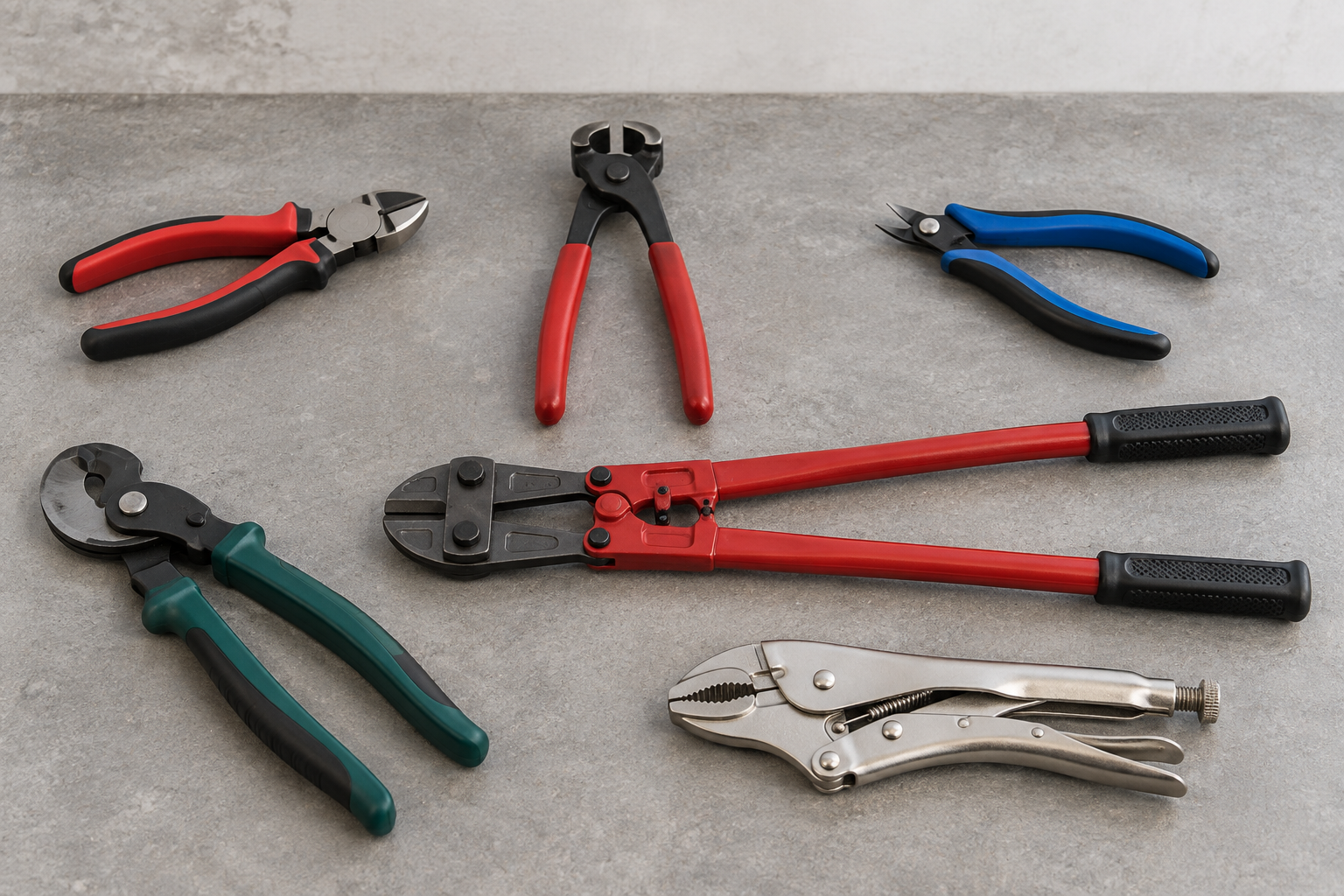
Thick copper cable is where ordinary diagonal cutters stop being useful. The handles flex, the jaws bite only partway through the conductor, and the temptation to twist harder can damage the tool or send the cable flying. A high-leverage diagonal cutter gives you more mechanical advantage through longer handles, a joint positioned closer to the cutting edges, and jaws shaped for larger wire.
For occasional work on 8 or 6 AWG copper, a strong 9- or 10-inch cutter may be enough. For repeated cuts on 4 AWG, 2 AWG, or larger cable, a ratcheting cable cutter is usually the better choice. The right tool depends as much on cable construction and cut frequency as it does on the printed wire gauge.
As an Amazon Associate we earn from qualifying purchases at no extra cost to you.


Our Top Picks
 Klein Tools D2286 High Leverage Diagonal Cutting Pliers6-Inch6 x 6 x 0.1 inches0.34 PoundsCheck on Amazon
 Klein Tools D228-7 High Leverage Diagonal Cutting Pliers7-Inch (1-Piece)7.12 x 4.6 x 0.43 Inches0 PoundsCheck on Amazon
 Klein Tools J2000-28 Heavy-Duty Diagonal Cutting Pliers8-Inch8.13 x 2.13 x 0.44 Inches0 poundsCheck on Amazon
 Southwire Cable Cutter Tool750 kcmil CU/1000 kcmil AL7 x 13.5 x 1.5 inches1.74 PoundsCheck on Amazon
What “high leverage” means
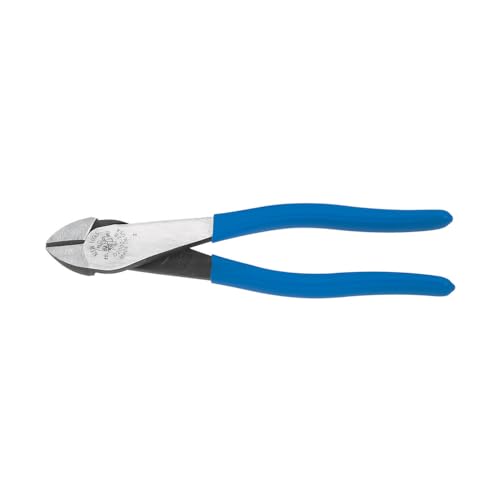
High-leverage diagonal cutters use longer handles and a pivot located closer to the jaws than on compact 6-inch cutters. That arrangement increases the force applied at the cutting edges, but it also increases handle movement and the chance of overloading the tool if you cut material outside its rating.
Look for cutters around 9 to 10 inches long with hardened cutting edges, a solid pivot, and handles that do not twist when squeezed. Induction-hardened edges are useful because they resist rolling when cutting copper. They do not make the tool suitable for steel cable, hardened wire, nails, or screws. Copper is relatively soft; steel can chip or permanently nick the edge.
For a high-leverage 10-inch diagonal cutter, check both the manufacturer’s copper capacity and the type of copper listed. Solid copper, stranded copper, welding cable, and battery cable do not behave identically. Fine-strand cable can spread across the jaws, while stiff solid conductor takes a more concentrated bite.
The best tool type for each cable
| Tool type | Practical cable range | Best use | Main drawback |
|---|---|---|---|
| High-leverage diagonal cutter | Usually 8 AWG to 2 AWG, depending on design | Fast, compact cuts and general electrical work | High hand force on large or fine-strand cable |
| Ratcheting cable cutter | Often 4 AWG through 4/0, depending on model | Repeated cuts on large copper cable | Slower and bulkier; not for armored cable or steel |
| Compound-action cable cutter | Medium to large copper conductors | More leverage without a ratchet mechanism | Long handles and a wider cutting head |
| Compact diagonal cutter | Small conductors, generally 10 AWG and smaller | Control and access in panels | Poor choice for thick cable; easy to overload |
A ratcheting cutter is the safer buying decision once the cable approaches 2 AWG or larger. It cuts progressively instead of forcing the entire conductor through in one squeeze. A good ratcheting copper cable cutter also reduces wrist strain during a batch of cuts.
Best high-leverage diagonal cutter choices
For occasional thick-cable work: Choose a forged, high-leverage diagonal cutter with a 9- or 10-inch handle and a clearly stated copper capacity. This is the most versatile option for electricians and DIY users who also cut Romex, medium-gauge stranded wire, zip ties, and soft hardware. The cheaper option is fine here if the pivot is tight, the jaws meet cleanly, and the tool’s rating covers your cable. You do not need a premium cutter for two or three cuts a month.
For frequent 6 to 4 AWG cuts: Spend more on a professional high-leverage cutter with a precisely ground edge and comfortable handles. Repeatedly cutting large cable with a budget tool can leave a notch in the edge after only a few dozen cuts, especially if the cable is flattened or placed too close to the jaw tip. A sharper, better-supported cutter also produces a cleaner end that is easier to insert into a lug.
For 2 AWG, 1/0, and 4/0 cable: Move to a ratcheting tool rather than trying to find an enormous pair of diagonal cutters. A heavy-duty ratchet cable cutter for 4/0 copper requires less peak force and keeps the cut controlled. Confirm the capacity before buying: some tools are intended only for copper and aluminum, while others have separate ratings for communications cable or small aluminum conductors.
Features that matter at the bench
Jaw geometry: A broad, slightly rounded cutting profile is better for thick stranded cable than an ultra-slim flush-cut profile. The cable should sit near the pivot, not at the very tip. Cutting at the tip gives you less leverage and concentrates load on the weakest part of the edge.
Handle length: Ten inches is a useful upper limit for work in most electrical boxes and panels. Longer handles increase leverage, but they need more clearance and can encourage unsafe two-handed force. If you cannot close the jaws with one hand, the cable is probably too large for that cutter.
Joint quality: Open and close the tool slowly. The jaws should meet evenly without a visible gap or sideways wobble. A loose pivot wastes leverage. A stiff pivot increases fatigue and can make the cut feel worse than it should.
Insulation: Thick grips improve comfort but do not make a tool insulated for live electrical work. Standard high-leverage cutters are not a substitute for a certified insulated tool. Treat every cable as energized until it is disconnected, locked out, and verified with an appropriate tester.
How to cut thick copper cable cleanly
Disconnect power first, remove the cable from cramped bends when possible, and inspect it for corrosion or flattened sections. Position the conductor squarely between the jaws, close to the pivot. Squeeze smoothly rather than rocking the handles side to side. Twisting can bend the jaws, loosen the pivot, and leave a ragged cut.
On large stranded cable, tape the section just behind the cut if you need to keep the strands together. Do not use a diagonal cutter to strip insulation; use a properly sized cable stripper. After cutting, inspect the tool edge. A shiny rolled spot, chip, or permanent notch means the cutter has been overloaded and should not be trusted for its original capacity.
What to buy
Buy a 9- or 10-inch high-leverage diagonal cutter if your work is mostly occasional cuts on cable no larger than its copper rating. Buy a ratcheting cable cutter if you routinely handle 2 AWG or larger conductors, make many cuts in one job, or want to reduce hand strain. The cheapest tool that genuinely covers your cable size is acceptable for light use; the savings disappear quickly if the jaws roll, the handles flex, or the tool leaves damaged strands.