What's inside
As an Amazon Associate I earn from qualifying purchases. This post may contain affiliate links at no extra cost to you.
For thin-wall steel tubing, a 24- or 32-TPI hacksaw blade is usually the right starting point. The thinner the wall, the finer the teeth should be. A coarse blade can cut the outside diameter quickly, but it is more likely to snag, strip teeth, deform the tube, or break through the far wall violently.
For most tubing used in brackets, handrails, furniture frames, exhaust repairs, and light fabrication, I would buy a 12-inch, bi-metal blade in 24 TPI for general work and 32 TPI when the wall is especially thin. The best choice depends on wall thickness, tube diameter, and whether you value speed or a clean, controlled cut.
As an Amazon Associate we earn from qualifying purchases at no extra cost to you.



Our Top Picks
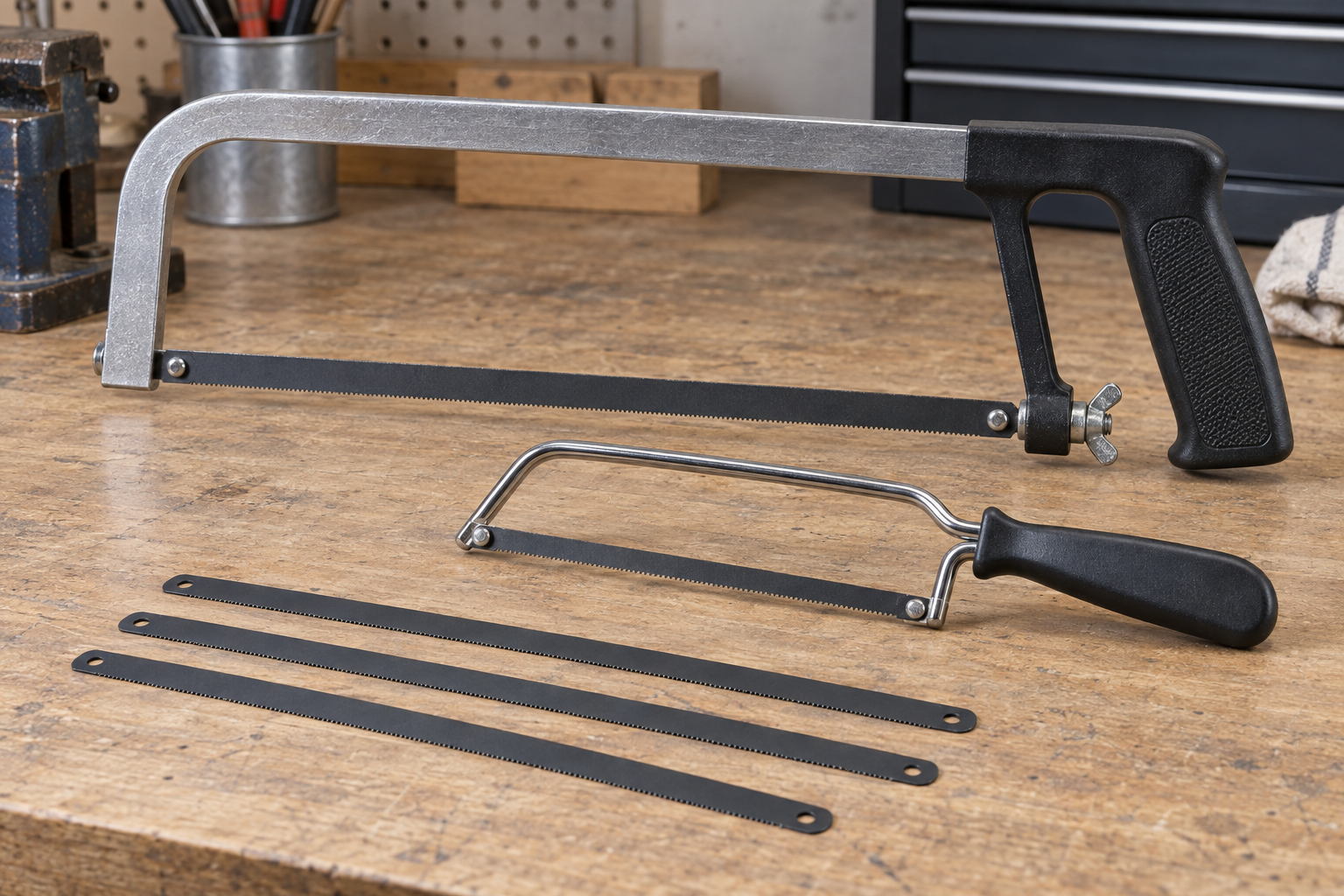
 KATA 10 Inch Mini Hacksaw for Metal Cutting10 Inch (3 Blades)11.4 x 2.75 x 1.18 Inches0.3 PoundsCheck on Amazon
 STANLEY 10 in High Carbon Steel Hacksaw BladeNo Size13.25 x 2 x 0.25 inches0.09 poundsCheck on Amazon


What TPI Means on a Hacksaw Blade
TPI means teeth per inch. A 14-TPI blade has large, widely spaced teeth and removes material quickly. A 32-TPI blade has smaller teeth that take lighter bites and are less likely to catch on thin metal.
The key rule is to keep at least two or three teeth engaged in the material at all times. With thin-wall tubing, that usually means choosing a blade fine enough that several teeth contact the wall. If only one large tooth is doing the work, it can grab the edge and bend the tubing instead of cutting it.
TPI refers to the blade, not the tube. A large-diameter tube with a thin wall still needs a fine blade. The diameter affects how long the cut takes, but wall thickness is the more important factor when choosing tooth size.
Best TPI by Tubing Wall Thickness
| Approximate wall thickness | Recommended TPI | What to expect |
|---|---|---|
| Under 1/16 inch | 32 TPI | Best control and lowest risk of snagging; slower cutting |
| 1/16 to 1/8 inch | 24 to 32 TPI | 24 TPI is faster; 32 TPI gives a cleaner, safer cut |
| 1/8 to 3/16 inch | 18 to 24 TPI | Good compromise for structural and general-purpose tubing |
| Over 3/16 inch | 14 to 18 TPI | Faster material removal, provided the tube is held securely |
These are practical ranges rather than rigid rules. If the tubing is thin but soft, such as mild steel sheet formed into a tube, 32 TPI is forgiving. If it is harder stainless steel, a quality 24- or 32-TPI bi-metal blade may cut better than a cheap high-TPI carbon-steel blade that dulls quickly.
Choose Bi-Metal for Most Thin-Wall Tubing
Blade construction matters nearly as much as TPI. A bi-metal blade combines a flexible spring-steel back with hardened teeth. That combination tolerates twisting and flexing better than a basic carbon-steel blade, while the hardened cutting edge lasts longer.
A 12-inch 24-TPI bi-metal hacksaw blade is the most useful general-purpose purchase for thin-wall steel tubing. Move to a 32-TPI bi-metal hacksaw blade for tubing under roughly 1/16 inch or for cuts where minimizing burrs matters.
Carbon-steel blades are fine for occasional work, especially if you are cutting inexpensive mild-steel tubing and already have one. They cost less and can be perfectly adequate for a handful of cuts. They become a false economy when the blade bends, loses teeth, or requires heavy pressure after only a few cuts.
How to Cut Without Collapsing the Tube
Mark the cut all the way around the tube when possible. A line on only one face can drift as the blade wraps over the curved surface. A pipe wrap, strip of paper, or masking tape can provide a square guide around round tubing.
Clamp the tube close to the cut. The workpiece should not vibrate, rotate, or spring away from the blade. For rectangular tubing, support the broad face with the vise jaws or use a sacrificial block. Do not crush thin tubing by tightening the vise harder than necessary; flat jaws with wood, rubber, or aluminum-pad protection can spread the load.
Start with short, light strokes to establish a shallow groove. Once the blade is tracking, use the full length of the blade with moderate pressure. Let the teeth cut rather than forcing them. Around 40 to 60 strokes per minute is a reasonable hand-sawing pace for thin steel, though the correct speed is the one that produces continuous chips without heat or chatter.
Keep the blade square to the tube. A blade tilted sideways puts bending load on the thin strip of steel between teeth, which is a common cause of broken teeth. If the cut begins wandering, stop and deepen the groove from the original line instead of trying to steer aggressively.
Common Problems and Their Causes
Teeth strip or catch: The blade is too coarse, the work is loose, or excessive downward pressure is being used. Switch from 18 or 24 TPI to 32 TPI for very thin walls and clamp the tube closer to the cut.
The blade cuts slowly and polishes the metal: The teeth may be dull, the blade may be too fine for a thicker wall, or you may be using too little pressure. Replace the blade before adding force. A dull blade generates heat and can harden some stainless steels at the surface.
The tubing collapses: The vise is crushing it, or the blade is pushing sideways rather than cutting straight. Use lighter clamping pressure, add internal support if the tube is accessible, and check that the blade is tensioned correctly.
The cut is rough or heavily burred: Finish with a mill file or metal deburring tool. A fine blade can reduce burrs, but it will not eliminate them. Deburr both the outside and inside edges, especially if the tubing will carry wires, hoses, or sliding hardware.
When a Power Tool Makes More Sense
For one or two cuts, a hand hacksaw is cheaper, quieter, and easier to control. A good blade and careful clamping are enough. The metal-cutting oscillating-tool blade is useful when access is awkward, but it is slower than a dedicated metal-cutting bandsaw and can overheat if forced.
An angle grinder is faster, but it produces sparks, more noise, a wider kerf, and a hotter edge. It is not automatically better for thin tubing because a thin abrasive wheel can snag or shatter if twisted. Use eye and face protection, keep combustible materials away, and let the wheel do the cutting.
For the typical DIY job, buy a quality bi-metal blade in 24 TPI, add a 32-TPI blade if the wall is exceptionally thin, and spend more effort securing the tube than pushing harder. That combination prevents most failures while keeping the inexpensive hand-tool approach practical.