What's inside
As an Amazon Associate I earn from qualifying purchases. This post may contain affiliate links at no extra cost to you.
Our Top Picks
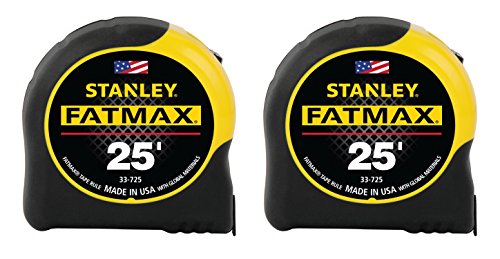 Stanley FMHT74038A FatMax 25 Foot Tape Measure 2PK7.6 m5.13 x 3.38 x 3.63 Inches1.2 PoundsCheck on Amazon
 Milwaukee 48-22-0325 Compact Wide Blade Magnetic Tape Measures7.6 m300 x 1 x 0 inches1 poundsCheck on Amazon


Short answer: reach depends on the exact tape
A tape measure’s long-reach performance comes down to its blade width, curve, material and condition—not the name printed on the case. FatMax is a Stanley product line; Milwaukee sells several wide-blade tapes. Both brands make tapes intended to stand out farther than a narrow, basic tape, but the result varies by model. Check the stated standout and blade width for the specific tape you’re comparing rather than assuming every FatMax beats every Milwaukee Wide Blade, or vice versa.
For one-person measuring across a room, framing walls or laying out a deck, a wider blade with a strong curve is useful because it can project farther before folding. If most of your measurements are under 8 feet, either style may be more tape than you need. A cheaper, narrower tape is easier to carry and often perfectly adequate.
As an Amazon Associate we earn from qualifying purchases at no extra cost to you.


What “stays rigid” actually means
Standout is the maximum unsupported length a blade can extend horizontally before it buckles. It’s a practical measure, not a guarantee that the tape will stay straight at that distance in every situation. A stated standout around 10 to 13 feet is common among wide-blade tapes, but manufacturers may test under different conditions, so treat published figures as a comparison within a product line—not a promise for every job.
Blade width matters: a 1-1/4-inch blade generally resists twisting and buckling better than a 1-inch blade. The blade’s crosswise curve adds stiffness, much like a shallow channel. That curve can flatten under pressure, and a blade can still fold if the hook catches at an angle or a breeze pushes it sideways. For a fair comparison, extend each tape slowly on a level surface, keep the hook square, and note the length at which the blade first sags or drops. Don’t push a blade past its natural limit to match a marketing number.
FatMax vs Milwaukee Wide Blade
| Factor | FatMax wide-blade tapes | Milwaukee Wide Blade tapes |
|---|---|---|
| Long reach | Designed for extended standout; varies by blade width and model | Also designed for extended standout; compare the specific model’s rating |
| Blade feel | Width and blade curve determine resistance to folding | Width and blade curve determine resistance to folding |
| Best reason to choose | You find a particular model comfortable, legible and easy to control | You prefer the case, markings, hook or belt clip on a particular model |
| Main trade-off | Wide, stiff blades can be bulkier and harder to retract neatly | Wide, stiff blades can be bulkier and harder to retract neatly |
| Value use | Worth it when you regularly measure beyond an arm’s reach | Worth it when you regularly measure beyond an arm’s reach |
There isn’t a reliable brand-wide winner on rigidity. Two tapes with the same stated width can behave differently because of blade shape, coating, hook design and manufacturing tolerances. Even two examples of the same tape can feel different after wear. If you can, compare the exact models in person and test the first several feet of standout. A blade that holds straight but is awkward to read or retract may be the worse tool for your work.
Features that matter beyond standout
Look closely at the end hook. A loose hook should move slightly to account for its own thickness when measuring inside versus outside dimensions. Too much movement, a bent hook or a damaged rivet can make readings inconsistent. The magnet on some versions can help hold the hook to steel, but it adds little on wood and can collect metal grit. Check that markings are readable from the side you use most, especially if you often measure overhead or against a wall.
Blade coating protects against abrasion, but no coating makes a tape immune to damage. Wiping a muddy or gritty blade back into the case can wear markings and let debris grind through the finish. A wide blade also needs a steady hand: snapping it back at full speed can damage the hook or create a sharp kink. Guide the blade in for the final foot or two. A kink is more than cosmetic; it creates a weak point where the blade is likely to fold early.
Which one should you buy?
If you regularly measure long spans alone, choose the wider blade with the stronger verified standout, provided its case is comfortable in your hand and on your belt. A broad blade is useful for cabinet runs, framing layouts and checking distances across a room without asking someone to hold the other end. Compare the FatMax wide-blade tape options and Milwaukee Wide Blade tape options by their listed width, standout, length and case dimensions—not just by brand.
For general household repairs, short cuts and occasional furniture measurements, buy on legibility, comfortable operation and price. A standard tape with a narrower blade is usually lighter, takes up less pocket space and is less frustrating when you’re working in a tight cabinet. It may buckle sooner at long reach, but that is not a meaningful drawback if you rarely extend it far.
How to get the most reach safely
Start with a clean, undamaged blade. Pull it out gradually, keep it close to horizontal, and avoid letting the hook twist away from the workpiece. If the blade begins to bow, shorten the span or support it rather than trying to steer it back straight. On a windy day or over an uneven floor, use a second person, a straightedge or a laser measure for the long distance; even a stiff blade can buckle or shift enough to spoil a layout.
Replace a tape with a badly kinked blade, loose hook or unreadable scale. For precision work, verify it against a trusted rule before relying on it for repeated cuts. The best choice is not automatically the tape with the biggest standout claim. It is the one that gives you enough unsupported reach for your jobs, stays readable and manageable, and still works accurately after daily use.