What's inside
As an Amazon Associate I earn from qualifying purchases. This post may contain affiliate links at no extra cost to you.
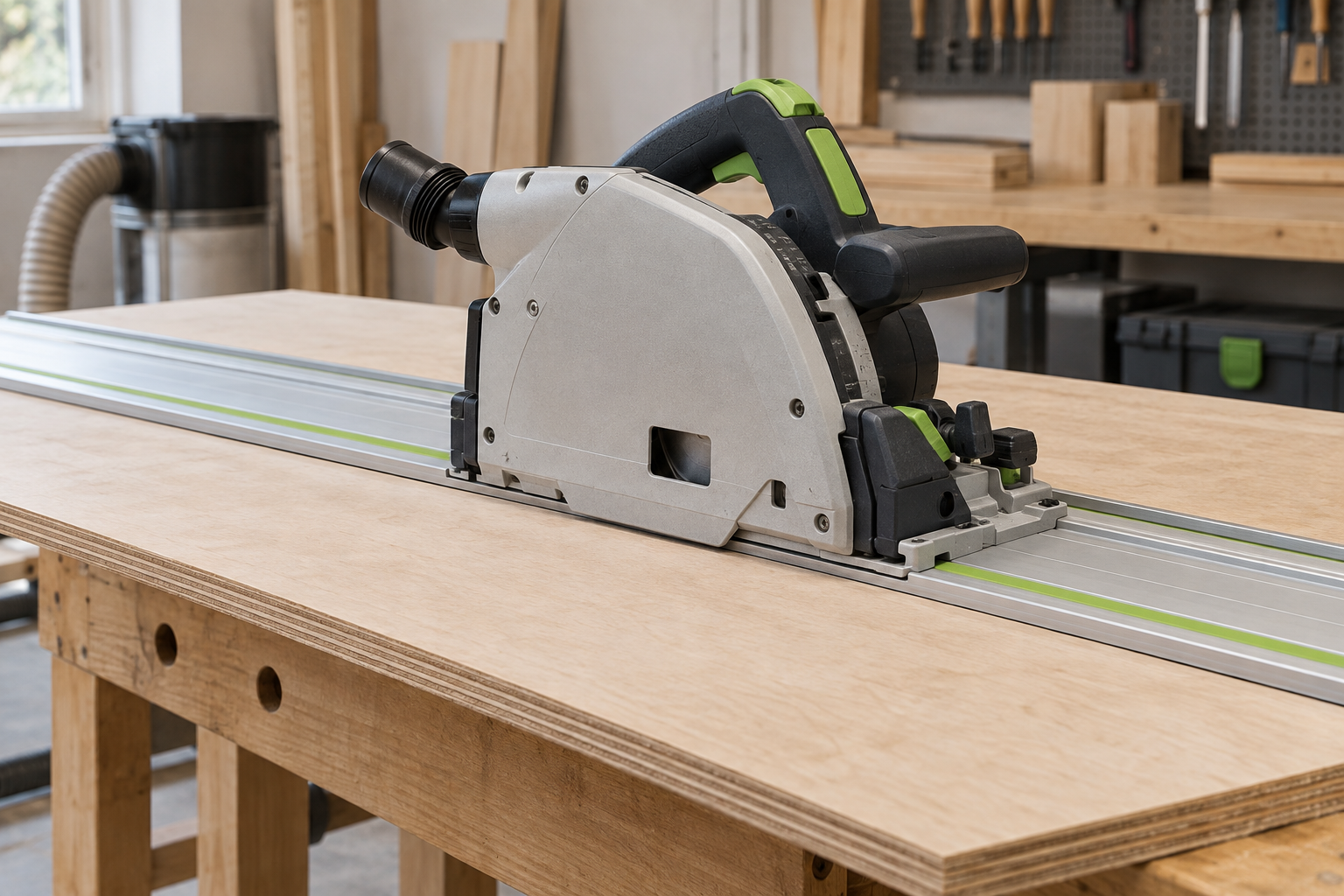
Festool and Makita guide rails look similar, but their splinter guards do not deliver identical results. Both systems use a replaceable rubber strip that is trimmed by the saw blade on first use. That cut edge then marks the blade’s path and supports the fibers at the cut line. Accuracy depends less on the brand name than on how well the strip fits the saw, how cleanly it was trimmed, and whether the rail is sitting firmly on the workpiece.
As an Amazon Associate we earn from qualifying purchases at no extra cost to you.



Our Top Picks

What the splinter guard actually does
A splinter guard is not a zero-clearance insert and cannot prevent every chip. It presses down the waste-side fibers immediately beside the blade. The result is usually a cleaner cut on plywood, veneered panels, melamine and other sheet goods. It does not automatically improve the saw’s cutting accuracy, and it cannot compensate for a dull blade, a blade with the wrong tooth count, or a rail that moves during the cut.
The strip must be cut in by the specific saw and blade combination. If you change to a blade with a different kerf, the existing edge may no longer show the true cut line. A 2.2 mm blade and a 1.8 mm blade can leave different relationships between the blade teeth and the rubber edge. The difference may be only a millimeter or two, but that is enough to spoil a cabinet panel or make a marked cut appear misplaced.
Festool FS versus Makita guide rails
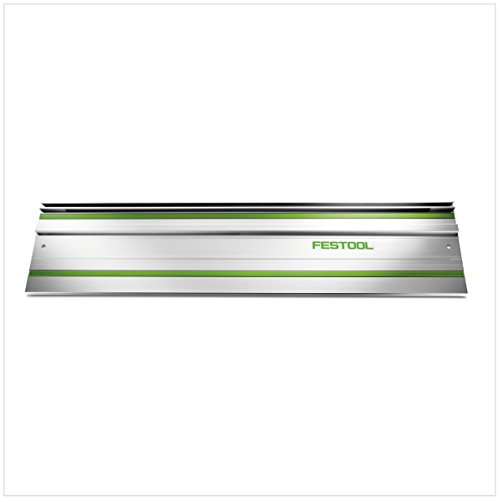
Festool FS rails are known for a consistent extruded profile, a well-supported splinter guard and an anti-slip strip underneath. The rubber edge is held close to the work surface and is generally easy to replace. Festool offers rails in several lengths, commonly from short woodworking sizes to rails around 118 inches long. Long rails are useful for breaking down full sheets, but they also need more support and are more awkward to store.
Makita guide rails use the same basic approach: an adhesive-backed anti-slip strip and a replaceable splinter guard. The system is widely used with Makita plunge saws and is often less expensive, particularly when buying a common 55-inch rail. Makita rails are usually a sensible choice when the saw, rail and replacement strips all come from the same system.
| Feature | Festool FS rail | Makita guide rail |
|---|---|---|
| Splinter-guard behavior | Clean, predictable edge when trimmed with the matching saw | Clean edge when correctly trimmed; equally dependent on blade and setup |
| Rail underside | Anti-slip strip plus clamps when needed | Anti-slip strip plus clamps when needed |
| Replacement parts | Widely available, but often more expensive | Usually lower-cost and easy to find in common sizes |
| Cross-brand use | Some saws can run on it, but fit and cut-line position must be checked | Some saws can run on it, but compatibility is not universal |
| Best fit | Users building around the Festool system or requiring repeatable accessories | Users wanting a capable track-saw setup at a lower entry price |
Which one is more accurate?
For the splinter guard itself, there is no universal winner. A properly installed and freshly trimmed Festool strip can be extremely accurate, with the rail edge often landing within roughly 1 mm of the actual blade path. A Makita strip can provide the same practical result. The meaningful difference is consistency across the rest of the system: rail-to-saw fit, guide ribs, saw adjustment and replacement-strip quality.
Festool’s system tends to feel more controlled because the accessories, saws and rails are designed as one ecosystem. The saw should slide without excessive side play, while the adjustment cams keep the saw from rocking away from the rail. That matters when making a long cut, because even slight lateral movement can turn a clean, straight cut into a cut that wanders toward the waste side.
Makita rails are accurate enough for furniture, flooring and general sheet-good work. However, check the saw’s rail adjustment before assuming the rail is at fault. With the saw unplugged, fit it to the rail and adjust it until there is no obvious side-to-side wobble while the saw still slides freely. Too tight and the saw can bind; too loose and the cut line can move.
Where splinter guards fail
The most common mistake is trimming the guard before the rail is supported correctly. Place the rail on a flat board, set the saw to its normal cutting depth, and run the saw through the strip in one smooth pass. For a typical 18 mm panel, setting the blade about 3 to 5 mm deeper than the material is enough. A much deeper setting increases the chance of damaging the work surface or stressing the saw.
Another failure is using the wrong side of the rail. The splinter guard marks the blade path on the side where the saw runs, but the rail must be positioned so that the marked edge corresponds with the intended cut. If you flip or reverse the rail, the edge may no longer represent the cut location.
Dust under the rail is also a serious problem. One chip under a 1,200 mm rail can lift part of the strip enough to create tear-out or shift the cut by a visible amount. Brush the panel clean, inspect the anti-slip strip and use clamps for narrow pieces, slippery laminates or cuts close to an edge.
Which guide rail should you buy?
If you already own a Festool plunge saw, stay with a Festool FS guide rail. The higher price buys system consistency, not a magical improvement in the rubber edge. If you own a Makita plunge saw, a Makita guide rail is normally the better value and should produce equally clean cuts after careful trimming.
For occasional breakdown work, the cheaper Makita option is fine. Spend the savings on a spare splinter guard, a suitable fine-tooth blade and clamps. A replacement guide-rail splinter guard strip is especially useful because a damaged edge cannot be made accurate with adjustment.
Choose Festool when you need a larger, established accessory system, already use Festool tools, or depend on repeatable setups across many jobs. Choose Makita when cost matters and your work is mainly cutting panels to size. In either case, a correctly trimmed guard, a sharp blade, clean support and a secured rail matter more than the logo printed on the extrusion.