What's inside
As an Amazon Associate I earn from qualifying purchases. This post may contain affiliate links at no extra cost to you.
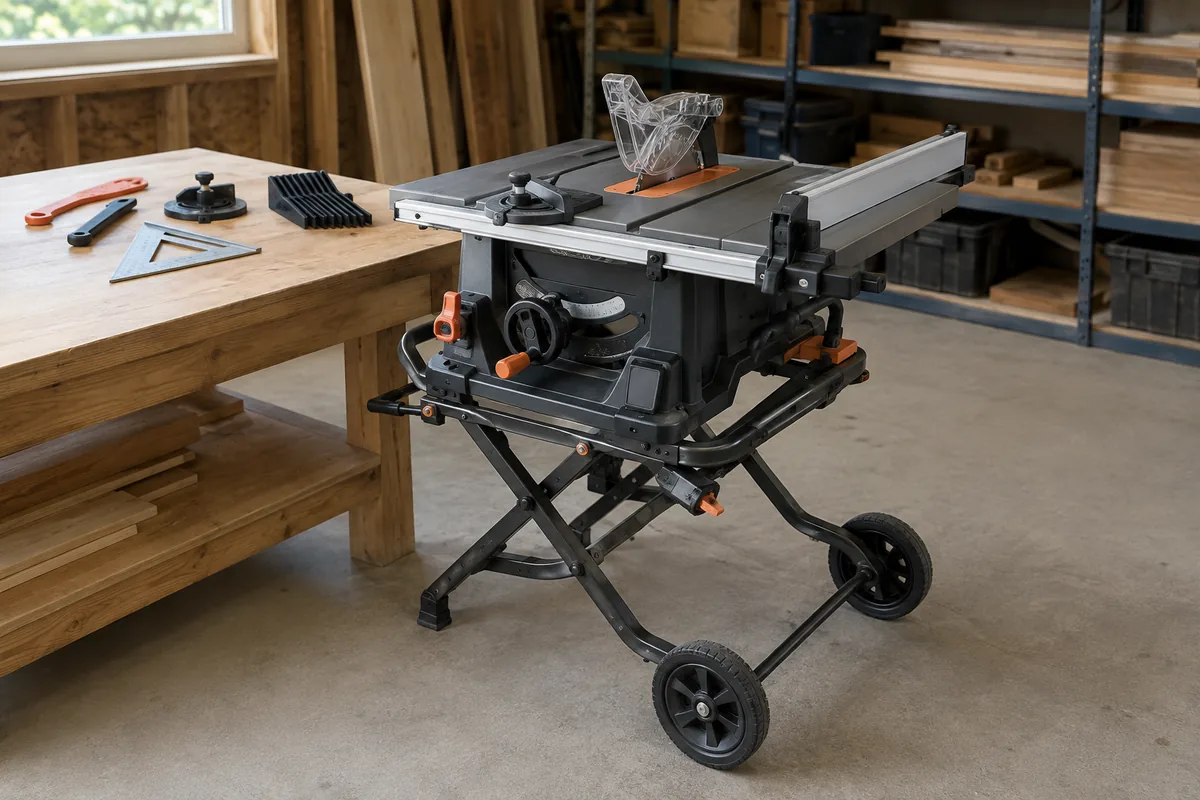
For mobile carpentry, a cordless table saw earns its place when it replaces setup time, extension cords, and generator noise. Makita’s XGT platform and Bosch’s Biturbo system both offer compact saws with enough power for framing lumber, sheet goods, and jobsite trim work. The choice is less about maximum cutting speed than about batteries, stands, dust control, and how often you need to move the saw.
As an Amazon Associate we earn from qualifying purchases at no extra cost to you.


The two platforms
Makita’s XGT table saw uses a 40V Max battery system. The saw is built around one high-voltage pack, which keeps the battery arrangement simple and gives the motor a large power reserve. Bosch’s Biturbo table saw uses two 18V batteries together. In practice, that means two packs must be charged and carried, but existing Bosch 18V users may already own the required batteries.
Both saws are compact 8-1/4-inch-class machines with rack-and-pinion-style fence adjustment, onboard storage, and electronic protection against overload. Neither is a replacement for a heavy 10-inch cabinet saw. They are designed to travel, set up quickly, and cut ordinary construction stock reliably.
Specifications compared
| Feature | Makita XGT table saw | Bosch Biturbo table saw |
|---|---|---|
| Battery system | One 40V Max XGT battery | Two 18V batteries |
| Blade size | 8-1/4 inches | 8-1/4 inches |
| Maximum cut at 90 degrees | About 2-5/8 inches | About 2-9/16 inches |
| Typical rip capacity | Roughly 25 inches, depending on setup | Roughly 25 inches |
| Best platform advantage | Higher-voltage system and simpler battery setup | Large existing 18V battery ecosystem |
| Common limitation | XGT batteries and chargers cost more to enter | Requires two charged batteries to deliver full performance |
Exact capacities can vary by market, kit, and fence position, so check the specification sheet before ordering. The practical difference is small: both can rip 2-by lumber and cut most 3/4-inch plywood in one pass. A dado setup is generally not the point of these portable saws, and compatibility should not be assumed simply because the arbor accepts a standard blade.
Cutting performance on the jobsite
The Makita has the advantage when the work involves repeated long rips in construction lumber or damp, heavy sheet goods. Its 40V system gives the motor more overhead before the protection electronics intervene. That does not make it immune to bogging. A dull blade, a pinched kerf, or forcing the stock faster than the fence can guide it will still cause a shutdown.
Bosch’s Biturbo saw is also capable on common carpentry material, particularly with sharp thin-kerf blades. On 3/4-inch plywood and dimensional lumber, the difference is usually measured in convenience rather than a dramatic change in finished work. The Bosch becomes more dependent on battery condition: mismatched charge levels, older packs, or using smaller-capacity batteries can reduce runtime and trigger earlier cutbacks.
For either saw, use a blade suited to the material. A 24-tooth framing blade cuts quickly but leaves a rough edge. A 40- to 60-tooth combination or finish blade is better for cabinet parts, but it cuts more slowly and consumes more power. If the saw stops mid-cut, do not immediately blame the motor. Check blade sharpness, fence parallelism, stock moisture, and whether the offcut is closing against the blade.
Portability and stands
Weight is only part of mobile-saw usability. The saw, batteries, stand, and material support determine whether one person can carry it through a house without banging door frames or stairs. A bare saw is manageable, but a stand adds bulk and often matters more than a few pounds of tool weight.
Makita’s XGT system makes sense for a crew already using XGT drills, grinders, and saws. One battery can power the table saw, and there is no need to keep a matched pair charged. Bosch is the easier fit for a contractor already invested in the company’s 18V tools. Buying two batteries specifically for the table saw, however, narrows the price advantage.
Whichever platform you choose, plan for outfeed support. A portable saw without support can tip or pull the cut out of line when ripping a full sheet. A folding roller, sawhorse system, or improvised level table is not optional for safe, accurate sheet work.
Fence, dust, and safety details
Both saws use compact fences that are much better than the loose stamped fences found on inexpensive jobsite saws, but they are not cabinet-saw fences. Lock the fence firmly, measure from the blade at both ends, and verify the pointer after transport. A fence that shifts by 1/16 inch can ruin a cabinet panel and create a dangerous pinch point.
Dust collection is adequate with a shop vacuum, especially when cutting plywood, but no portable table saw captures everything. Outdoor framing work is less demanding; indoor remodeling calls for a vacuum, a fine-dust filter, and hearing and eye protection. Keep the riving knife installed for through-cuts and use a push stick once your hand approaches the blade zone. Battery power reduces cord hazards, not kickback hazards.
Which one should you buy?
Choose the Makita XGT cordless table saw if you regularly make long, demanding cuts, already own XGT batteries, or want a single high-voltage pack rather than two 18V packs. It is the stronger choice for production-oriented mobile carpentry, provided you accept the higher platform cost.
Choose the Bosch Biturbo cordless table saw if your tools already run on Bosch 18V batteries or the saw will mostly cut plywood, trim stock, and ordinary 2-by material. For occasional remodeling, the cheaper option is entirely reasonable. Spending more on the Makita will not fix poor support, a misaligned fence, or a dull blade.
If you are buying into both platforms from scratch, price the complete system rather than the bare tool: saw, stand, charger, two batteries for Bosch, or one high-capacity XGT battery and charger for Makita. The better purchase is the system that leaves you with charged batteries for the rest of the day and a stable way to support the work.