What's inside
As an Amazon Associate I earn from qualifying purchases. This post may contain affiliate links at no extra cost to you.
Our Top Picks
 DEWALT Black Oxide Drill Bit Set with Pilot13 Pieces8.74 x 1.73 x 8.74 Inches7 PoundsCheck on Amazon
 DEWALT DW1169 14-Piece Pilot-Point Twist Drill Bit Assortment14 Pieces8.75 x 8.75 x 1.75 inches1.2 PoundsCheck on Amazon


Best Drill Bit for Drilling Pilot Holes in Pressure-Treated Lumber
The best all-around bit for pilot holes in pressure-treated lumber is a sharp, high-speed-steel (HSS) brad-point bit. It starts cleanly, cuts a controlled hole in softwood, and is less likely to wander than a standard twist bit. For ordinary deck screws, framing screws, and outdoor construction, a good brad-point wood drill bit set covers most jobs.
That recommendation has limits. Pressure-treated wood is often wetter, denser, and more abrasive than untreated lumber. Cheap bits can dull quickly, especially when drilling through older, dry treated boards or lumber containing visible mineral deposits. For large holes, deep holes, or repeated work, an auger bit is usually the better tool.
As an Amazon Associate we earn from qualifying purchases at no extra cost to you.


What Makes Pressure-Treated Lumber Different?
Treated lumber is commonly sold with a higher moisture content than kiln-dried framing lumber. Wet fibers grab the bit and can leave a ragged exit hole. Some boards also contain knots, hardened grain, and treatment residue. These conditions increase friction and heat.
The preservatives themselves are not a reason to use an exotic bit, but they do make sharpness and cleaning more important. Do not use a bit that is already dull from drilling metal. It will require more pressure, burnish the hole instead of cutting it, and may split the board when the screw enters.
Wear eye protection, particularly when drilling overhead or near the end of a board. Treated-lumber dust should not be inhaled, so use dust collection or work outdoors and wash your hands afterward.
Which Bit Type Should You Buy?
| Bit type | Best use | Advantages | Drawbacks |
|---|---|---|---|
| Brad-point HSS | Most screw pilot holes and small wood holes | Accurate starting point, clean entry, good size control | Can clog in wet chips; tips are vulnerable if forced sideways |
| Standard HSS twist bit | General repairs and occasional pilot holes | Cheap, widely available, useful in wood and metal | Wanders more and can leave a rougher hole |
| Wood auger bit | Deep holes and holes roughly 1/4 inch or larger | Pulls itself through wood, clears chips well, stays straight | More aggressive; can split thin stock or catch at breakthrough |
| Spade bit | Fast, rough clearance holes | Inexpensive and fast in a drill | Ragged exits, more wandering, poor choice for small pilot holes |
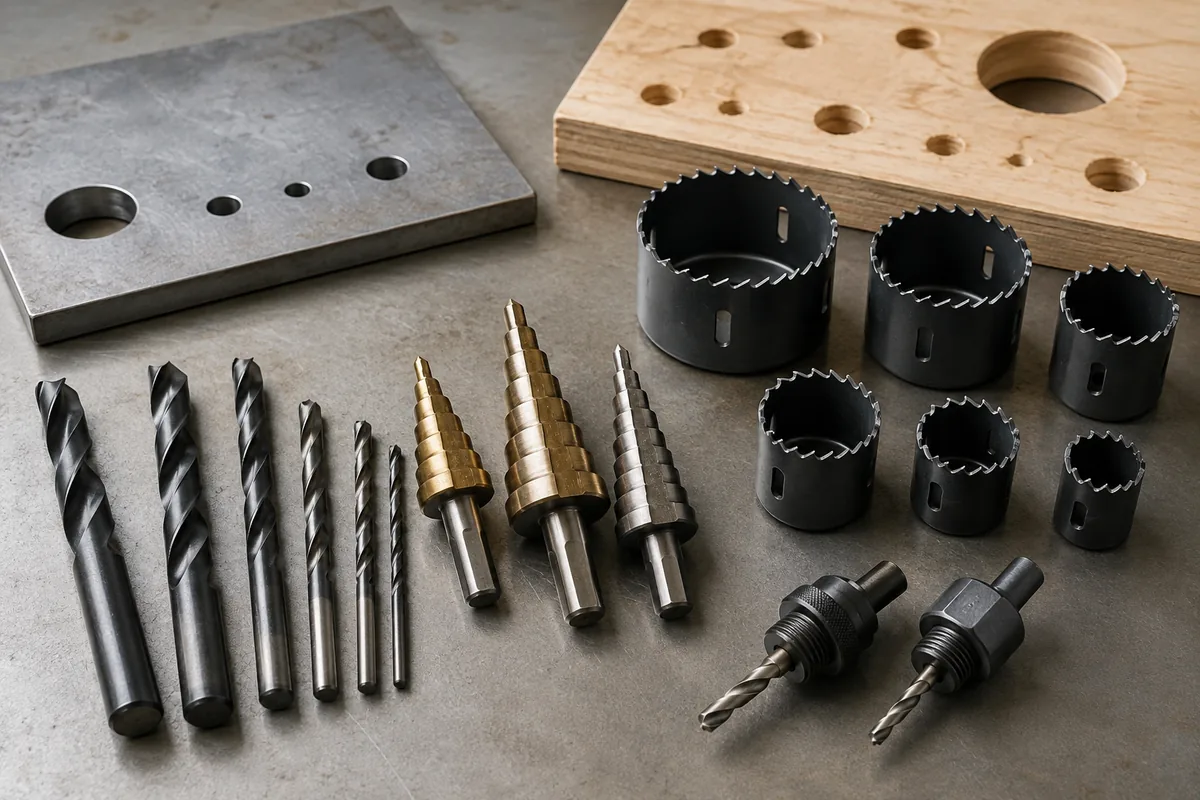
| Step bit | Occasional oversized holes in thin material | Convenient for sheet goods and shallow holes | Not designed for normal deep pilot holes in lumber |
A standard HSS twist bit is perfectly acceptable if you already own one and only need a few holes. It is also the more versatile purchase because it can drill thin metal. Choose a brad point when clean starts and repeatable hole placement matter. A wood auger bit set earns its place when you are drilling through 4×4 posts, doubled beams, or thick rails.
Choosing the Correct Pilot-Hole Size
Match the bit to the screw’s root diameter, not the diameter across the threads. The pilot hole should remove enough wood for the screw core while leaving the threads plenty of material to grip.
As a practical starting point, use a 1/8-inch bit for many #8 screws, a 9/64-inch bit for a tighter-fitting #8 screw in dense or wet lumber, and a 5/32-inch bit for many #10 screws. A 3/16-inch bit is common for larger structural screws, but always check the fastener manufacturer’s chart when one is provided.
For a screw passing through one board and gripping a second board, drill a clearance hole through the first board. The clearance hole should be slightly larger than the screw’s outside thread diameter. This prevents the threads from locking in the top board and pulling the joint apart instead of clamping it.
When working near an end or edge, stay at least 3/4 inch from the end when possible. For a 2×4, center the screw across the 3-1/2-inch face rather than placing it close to an edge. A pilot hole reduces splitting, but it cannot overcome poor screw placement or a severely dried-out board.
How to Drill a Clean Pilot Hole
Mark the hole and use a bit that is straight and sharp. Set the drill to a moderate speed—roughly 500 to 1,000 rpm for a small 1/8-inch bit. Larger bits should run slower. Start without hammer mode, keep the drill perpendicular to the surface, and apply steady pressure rather than forcing the bit.
Back the bit out every few seconds in deep holes to clear wet chips. This matters especially with a cordless drill, where a clogged flute can stall the motor and overheat the bit. For a screw hole near the board’s end, drill slightly deeper than the screw’s penetration, but do not break through the opposite face.
At breakthrough, reduce pressure and speed. The last fraction of an inch is where brad-point bits and augers can tear out fibers. If both sides need to look clean, drill from one side until the point just appears, then finish from the opposite side.
What to Look for When Buying
Look for HSS construction, clearly marked sizes, and a smooth shank that fits your drill chuck. A set containing 1/8, 9/64, 5/32, 3/16, and 1/4 inch sizes is more useful for outdoor construction than a large set filled with rarely used tiny bits. A drill-and-countersink set for wood screws is convenient if you want one operation to drill the pilot hole and recess the screw head.
Buy the cheaper standard twist-bit set if you are making occasional holes and need metal-drilling capability. Spend more on brad points or augers when you are building a deck, drilling many treated posts, or need consistent holes without splitting. In either case, replace a bit when it squeals, smokes, produces blackened wood, or needs noticeably more pressure. A sharp inexpensive bit outperforms a premium bit that has been overheated.