What's inside
As an Amazon Associate I earn from qualifying purchases. This post may contain affiliate links at no extra cost to you.
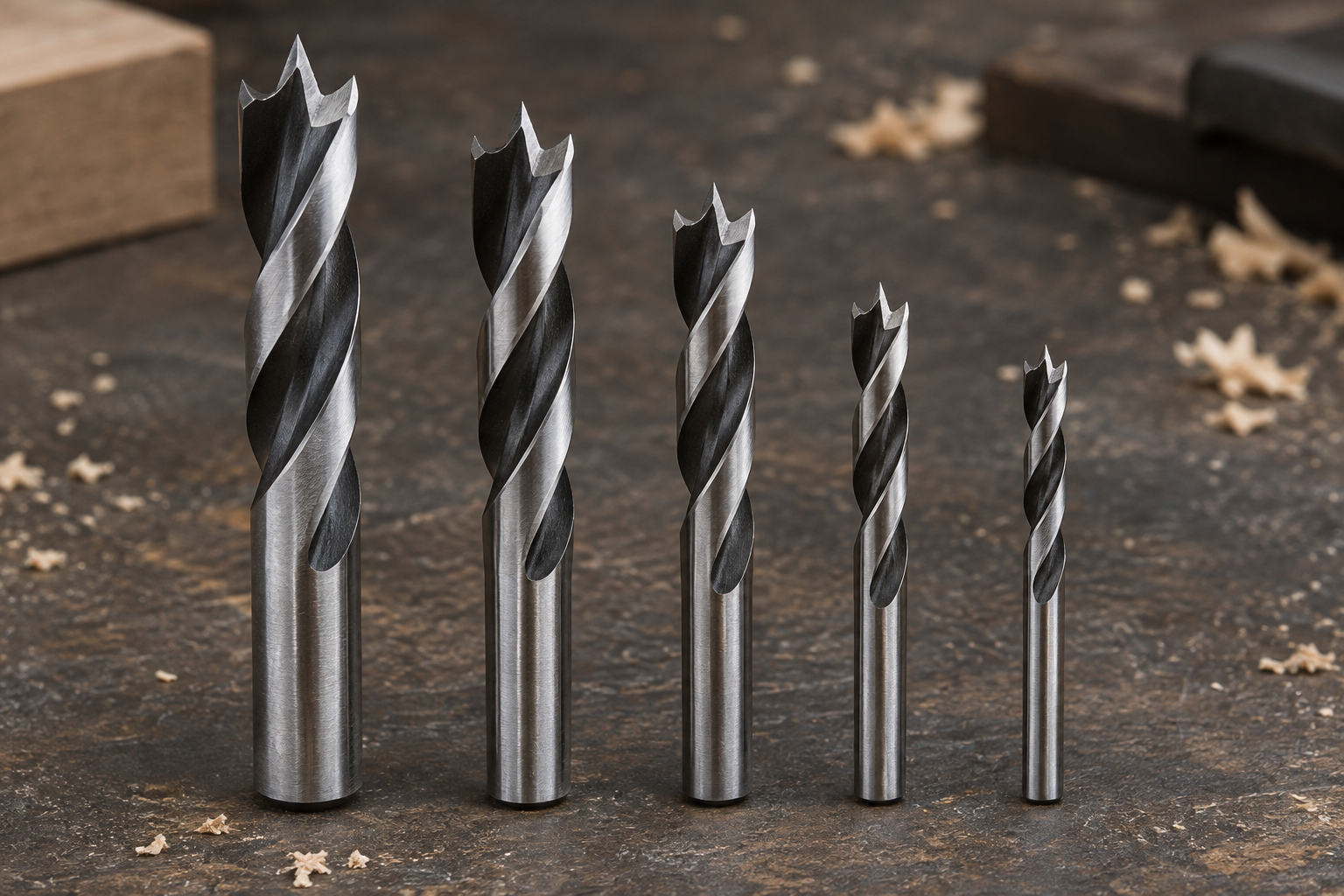
A brad-point bit is a good choice for drilling clean, accurately placed holes in softwood trim. Its center spur helps keep the bit on the mark, while the two outer spurs score the hole’s edge before the cutting lips remove wood. That usually leaves a neater entry than a standard twist bit—especially useful near a visible edge or when the hole needs to line up with hardware.
As an Amazon Associate we earn from qualifying purchases at no extra cost to you.


Our Top Picks


What to buy for trim work
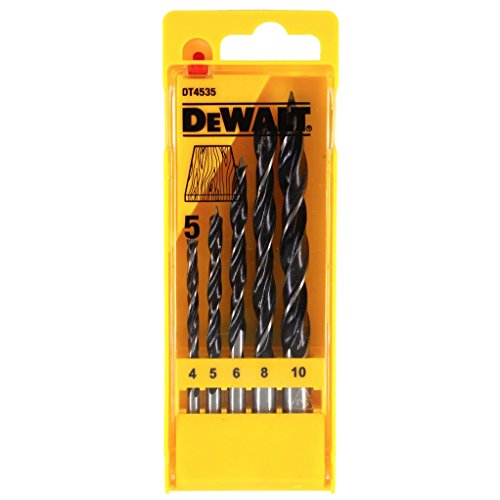
For occasional work in pine, fir, or cedar, a basic set of brad-point bits is often sufficient. Look for common sizes from about 1/8 to 1/2 inch, clearly marked shanks, and sharp outer spurs. A brad-point bit set for wood costs less per size than buying bits individually and covers most pilot and clearance holes used on trim.
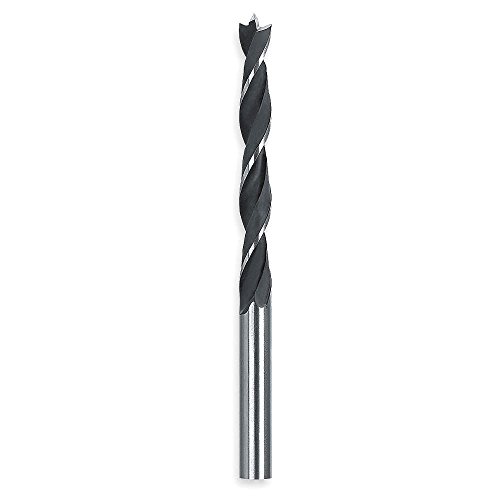
If you only need one size, buy a single bit rather than a large set. For repeated work or a hole that must be especially clean, a better-ground bit can be worth the extra cost. Price alone is not a reliable quality measure: inspect the cutting edges and make sure the center spur is straight, not bent or blunt. A single brad-point bit in the required size avoids paying for sizes that will sit unused.
Brad-point, twist, and auger bits compared
| Bit type | Best use in softwood trim | Hole quality | Main trade-off |
|---|---|---|---|
| Brad-point | Accurate blind or through-holes in solid wood | Clean entry; easy to place | Can clog or burn if fed too slowly |
| Standard twist | General drilling and occasional hidden holes | More likely to wander or splinter at entry | Often already in the toolbox |
| Auger | Deeper holes in framing or thicker stock | Fast cutting, but aggressive | Usually excessive for thin trim; can grab |
A twist bit is fine for a hidden hole where exact placement and a clean rim do not matter. It may skate across a smooth painted surface before biting, and its cutting geometry is less suited to crisp edges in wood. An auger bit is useful for deep, larger holes, but its screw tip pulls the bit forward. That can split thin trim or make a drill difficult to control. For ordinary trim, the brad-point is the better balance.
Choose the size and control the depth
Match the bit to the job, not just the screw’s stated diameter. For a pilot hole, the hole should generally be close to the screw’s core diameter, with less clearance in hardwood than in softwood. Check the screw against the bit or a sizing chart before drilling; a pilot hole that is too small can split pine trim, while one that is too large gives the threads little to grip. For a clearance hole, make the hole wide enough for the screw shank to pass without threading into the first piece.
Trim is often thin, so measure its thickness before drilling. A 1-inch-deep hole through 3/4-inch stock will break through the back. Set depth with a stop collar or wrap a strip of tape around the bit at the intended depth. Leave a little margin for the point: the center spur extends ahead of the cutting edges, so it can mark or pierce the back before the full-diameter hole reaches the surface. A scrap backing board is the more reliable protection for a through-hole.
A clean-hole technique
Clamp the trim securely and support it close to the hole. Place the center spur on a pencil mark or a small awl dimple, then start the drill at a right angle to the face. Let the spur establish the location before applying steady pressure. On thin stock, keep the drill speed moderate and ease off as the point approaches the back. Backing the work with scrap reduces breakout substantially.
Do not force the bit. If the motor slows, chips stop coming out, or the bit gets hot, withdraw it with the drill running slowly to clear the flutes, then continue. Pushing harder can burn the wood, dull the edges, or make the bit grab. A brad-point bit is not meant to cut metal or masonry; using it on either will quickly damage the cutting edges.
Painted or finished trim needs extra care. The outer spurs score wood cleanly, but they do not guarantee that a brittle paint film will stay intact. Put painter’s tape over the mark, drill through it, and test on an offcut if the finish is important. Tape helps limit surface chipping; it cannot prevent a crack caused by an unsupported edge or excessive pressure.
Set or single bit?
Choose a set if you expect to drill several different pilot and clearance sizes. It is convenient, but inexpensive sets can have uneven sharpening, loose storage cases, or sizes you never use. For one repair, a single decent bit is usually the sensible buy. For regular cabinet or trim installation, a mid-priced set with clearly etched sizes is easier to work with than a bargain assortment whose markings wear off.
Before buying, check the shank size against your drill chuck and confirm that the set includes the diameter you need. Most standard brad-point bits have round shanks for ordinary three-jaw chucks, but very small bits can slip if the chuck is not tightened firmly. If accurate holes are the priority, use a drill press when the stock can be removed and the setup allows it; for installed trim, a steady hand, a sharp bit, and a backing block matter more than buying the most expensive set.