What's inside
As an Amazon Associate I earn from qualifying purchases. This post may contain affiliate links at no extra cost to you.
Flattening a waterstone and sharpening a chisel are related jobs, but they do not demand exactly the same diamond plate. A plate that removes material quickly from a dished 1,000-grit stone may feel too aggressive when you are refining a chisel. The best all-around choice is usually a quality, coarse-to-medium diamond plate around 8 x 3 inches, with a flat working surface and enough length to support the tool or stone.
As an Amazon Associate we earn from qualifying purchases at no extra cost to you.


Our Top Picks
 SHARPAL 162N Double-sided Diamond Sharpening Stone8 in. x 3 in. / 325&1200 Grit3.1 PoundsCheck on Amazon


Quick picks
| Best use | Plate type | Useful grit range | Main trade-off |
|---|---|---|---|
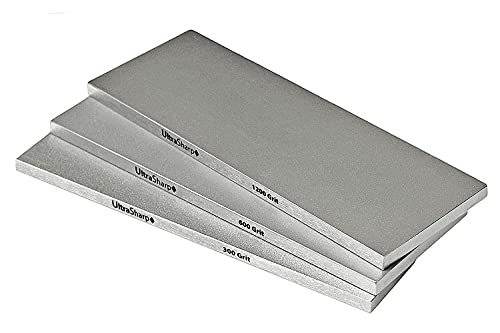
| Flattening waterstones | Coarse diamond plate | 140–220 grit | Fast cutting, but leaves a rougher stone surface |
| General chisel sharpening | Medium diamond plate | 300–600 grit | Slower on damaged edges, better control |
| One plate for both jobs | Combination plate | Coarse and medium sides | Convenient, but neither side is as specialized |
| Frequent professional use | Thick, continuous diamond surface | 140–600 grit set | Higher cost, longer service life |
Best overall: a quality 140–220 grit plate
For most woodworking benches, a coarse diamond plate in the 140-to-220-grit range is the most useful first purchase. It cuts a hollow waterstone quickly and can also repair a chipped chisel or establish a new bevel without the slow feel of a fine plate.
Look for a plate at least 8 inches long and roughly 3 inches wide. Smaller plates work, but they make it harder to keep a chisel moving straight and provide less support when flattening a stone. A larger plate is more comfortable, though it costs more and needs a larger stable base.
A coarse diamond flattening plate is the sensible starting point if your primary job is waterstones. It will remove the high spots without requiring excessive pressure. A cheaper plate can be perfectly adequate for occasional flattening, especially if you use soft soaking stones and only flatten them every few sharpening sessions.
Continuous versus slotted diamond surfaces
Continuous-surface plates have diamond abrasive across nearly the entire face. They give consistent contact and are easy to use on narrow chisels. They also tend to load with swarf more readily and can feel slower if you press too hard.
Slotted or perforated plates have grooves that provide space for metal and stone particles. They often cut aggressively and shed debris well, making them attractive for flattening. However, a narrow chisel can catch an edge at a slot if the plate is used carelessly. Keep the chisel moving and avoid dropping it onto the surface.
For flattening waterstones, either style works. For chisels, a continuous surface is more forgiving. If buying one plate for both tasks, choose a continuous or fine-pattern surface unless speed is your only concern.
What grit should you use?
Grit numbers vary between manufacturers, so treat them as useful ranges rather than exact equivalents. A 140-grit plate is aggressive enough to flatten a badly dished stone in a few dozen strokes. It can also remove a chip from a chisel quickly, but it leaves deep scratches that must be removed on a finer abrasive.
A 220-grit plate is a better compromise for routine flattening. It still cuts quickly, but it is less likely to gouge a soft waterstone. Around 300 to 600 grit is more comfortable for setting a chisel bevel or removing the coarse scratches left by a repair plate.
Do not expect a diamond plate to replace every sharpening stone. A 600-grit diamond surface can produce a useful working edge, but it will not give the same finish as a 1,000-, 4,000-, or 8,000-grit waterstone. The plate is particularly valuable for flattening and initial metal removal, not for final polishing.
A medium diamond sharpening plate makes sense if your stones are already flat and you mainly sharpen chisels. It removes burrs and establishes bevels faster than abrasive film, while remaining more controllable than a very coarse plate.
How to flatten a waterstone correctly
Soak the stone according to its instructions, then mark a crosshatch over its working face with a pencil. Put the diamond plate on a rigid, non-slip surface and flood both surfaces with clean water. Move the stone across the plate in overlapping strokes, using light pressure.
Keep checking the pencil marks. When they disappear evenly, the stone is flat. Concentrate on high areas only briefly; leaning harder on one corner can wear the diamond plate unevenly. Rinse the plate and stone frequently so abrasive slurry does not turn into a gritty paste.
Never use oil on a diamond plate intended for waterstone flattening. Oil can contaminate the stone and makes cleanup needlessly difficult. Do not flatten a dry soaking stone unless the manufacturer specifically allows it; water controls dust and helps carry away loose abrasive.
Using the plate on chisels
Secure the plate so it cannot slide. For a flat back, place the chisel flat and use the same portion of the plate across several strokes rather than scrubbing in one small spot. On the bevel, a honing guide improves consistency, particularly with a coarse plate that removes metal quickly.
Use moderate pressure at first, then reduce pressure as the burr forms. Excessive force can tear diamond particles from a low-quality plate, round the bevel, and create deep uneven scratches. A few drops of water are usually enough for lubrication; wipe away the dark swarf when it builds up.
When the cheaper plate is fine
A budget diamond plate is reasonable for a home user who flattens two or three stones a few times per year. The limitations usually appear as uneven wear, a shorter cutting life, or a less-flat backing plate. These issues matter more when sharpening wide plane blades or flattening stones daily.
Spend more for a thicker, accurately flat plate if you sharpen professionally, use hard ceramic stones, or need repeatable bevel work. A thin plate can flex unless fully supported, and a worn or dished plate defeats the purpose of flattening a stone. Buying an 8 x 3 inch diamond plate with a rigid substrate is generally a better upgrade than buying a tiny plate with an impressive grit range.
For the most versatile setup, use a coarse 140–220 grit plate for flattening and repairs, then keep a 300–600 grit plate for routine chisel work. If you want only one, choose the coarse-medium combination plate and accept that flattening will be slower than with a dedicated coarse model.