What's inside
As an Amazon Associate I earn from qualifying purchases. This post may contain affiliate links at no extra cost to you.
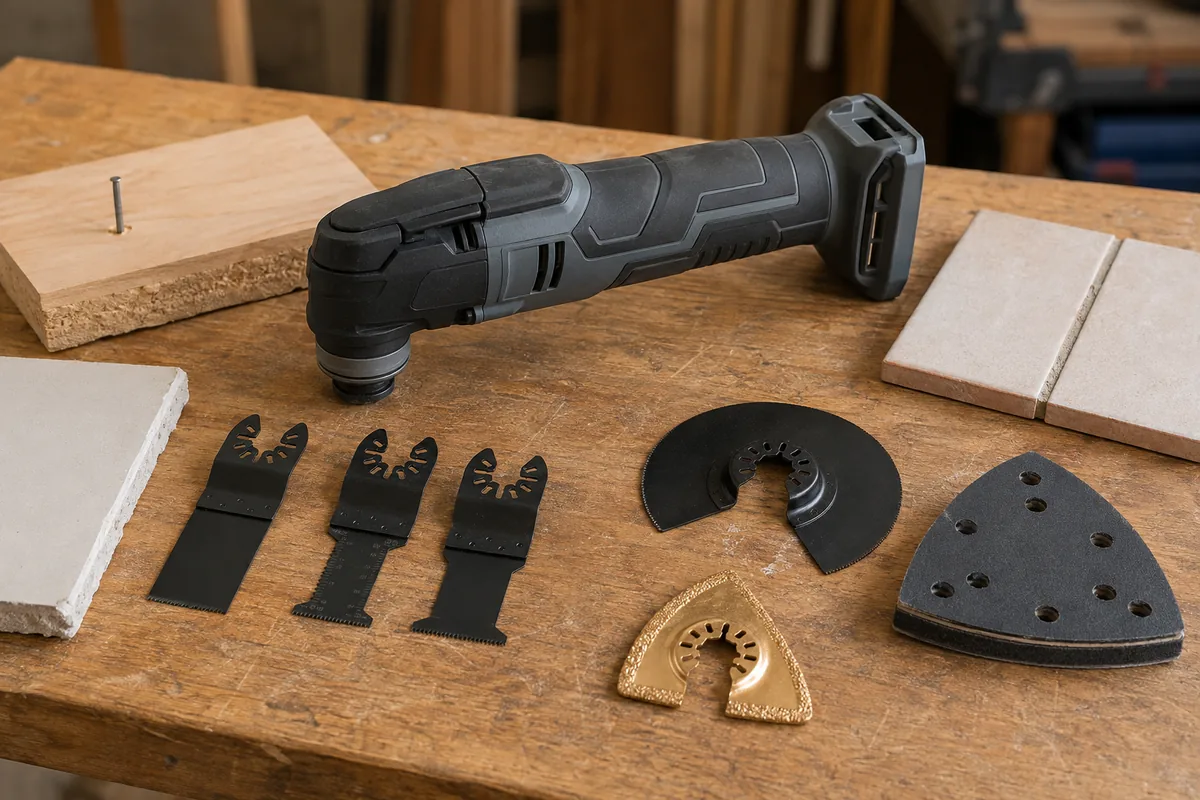
If you need to sand inside a tight inside corner, under a stair tread, or around window trim, both an oscillating multi-tool with a triangular sanding pad and a dedicated detail sander will claim to do the job. They look similar from a distance but they work differently, and that difference decides whether you get a clean, sharp corner or a rounded-over mess with torn sandpaper.
As an Amazon Associate we earn from qualifying purchases at no extra cost to you.


Our Top Picks
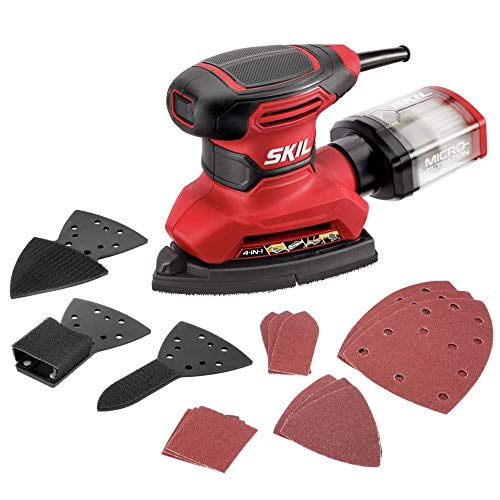 SKIL Corded Multi-Function Detail Sander with Micro-Filter DustOne Size9.84 x 5.7 x 6.69 inches2.6 poundsCheck on Amazon


How each tool actually sands
A detail sander is a small orbital sander with a fixed triangular pad, usually around 93mm x 93mm or 140mm long in the mouse-style shape. The pad orbits in tiny circles, typically 1.0 to 1.6mm orbit diameter, at 11,000 to 14,000 OPM. The whole pad moves, so you get consistent scratch pattern across the face and a relatively smooth finish on flat areas.
An oscillating tool with a sanding pad does not orbit. It oscillates side to side through a narrow arc, usually 2.8 to 4.0 degrees total, at 10,000 to 20,000 OPM. The triangular pad is about 80mm per side and attaches via the multi-tool interface. Only the oscillation does the cutting, which means the sanding action is fastest at the outer edges of the pad and almost zero at the center pivot point. That matters a lot in a corner.
In practice, the detail sander is designed to sand. The oscillating tool is designed to do a dozen jobs, and sanding is a compromise. You can feel it immediately: a detail sander glides, an oscillating tool buzzes aggressively and wants to walk off the workpiece if you press too hard.
Who actually reaches tighter corners
For a true 90-degree inside corner, neither tool will sand perfectly to the point. Both leave a tiny unsanded line because the sandpaper grain cannot fold into a sharp crease and the pad backing is slightly soft. The difference is how close they get and how much control you have.
The detail sander wins on precision. Its pad is thinner at the tip, often 10 to 12mm thick including the hook-and-loop, and the body is low and narrow. You can see the tip and work with one hand while holding trim with the other. Most models also have a pointed front that is iron-shaped, so the very tip does orbit and cuts, even if slowly. You can expect to leave about 1 to 2mm unsanded in a sharp corner, which you clean up with a hand-sanding block or folded paper.
The oscillating tool reaches deeper into awkward spots. Because the pad is on a long, straight tool body, you can get into corners inside cabinets, between balusters, or up against a toe-kick where a detail sander body hits the adjacent surface. The trade-off is tip accuracy. The oscillating pad is thicker, often 15 to 18mm with the adapter, and the outer 5mm of the tip vibrates the most while the center does little. If you push the tip straight into a corner, you tend to round over the point and burnish the two sides unevenly.
If your work is mostly inside corners on furniture, louvered doors, or detailed trim repair, the detail sander gives you a cleaner corner with less risk of gouging. If your work is inside installed cabinets, window sash corners, or sanding where two planes meet at odd angles in place, the oscillating tool’s reach is more valuable than its finish quality.
Finish quality, speed and control
On open flat surfaces near a corner, the detail sander is 2 to 3 times faster and leaves a finer finish. Its orbital action cuts consistently and the larger pad covers more area. At 120-grit, a detail sander will level a 4-inch square patch of old paint near trim in about 30 to 45 seconds. The same patch with an oscillating tool takes 90 seconds or more and leaves a more scratchy pattern because the stroke length varies across the pad.
Control is also different. A detail sander runs with low vibration and you can use light pressure. An oscillating tool vibrates harshly through your hand and creates more heat at the pad. If you lean in, the hook-and-loop on inexpensive oscillating tool sanding pads will soften and the paper will slip or fly off mid-cut. That is the most common failure mode. The second is tip delamination: the felt tip of the pad crumbles after 20 to 40 minutes of aggressive corner work, especially with 60 or 80-grit paper.
Detail sanders have their own failure modes. The sharp tip of the triangular sandpaper for detail sanders wears first and then tears, leaving the hook-and-loop exposed. Once the pad backing gets glazed with paint or resin, it stops gripping paper and you have to replace the whole pad, which costs $12 to $18. Cheaper detail sanders also have weak dust extraction at the tip, so fine dust packs into the corner and you end up re-sanding your own debris.
Dust, vibration and working all day
Neither tool is good for dust collection compared to a 5-inch random orbit sander, but the detail sander is usually better. Most have a dust port and a small fan that pulls dust through holes in the pad into a bag or vacuum adapter. It captures maybe 40 to 60 percent if you hook up a vacuum. An oscillating tool has no through-pad extraction. Dust just sprays out the sides. If you are sanding old paint indoors, you will need a respirator and vacuum nearby for either, but expect more airborne dust with the oscillating tool.
For fatigue, the detail sander is the clear winner. It weighs 1.8 to 2.6 lbs and vibrates at a lower amplitude. You can run it for an hour without numb hands. An oscillating tool weighs 3 to 3.5 lbs, is top-heavy, and transmits high-frequency vibration directly into your wrist. After 15 minutes of continuous sanding, most people lose feel for pressure, which leads to uneven corners and over-sanding.
Head-to-head comparison
| Feature | Oscillating Tool with Sanding Pad | Dedicated Detail Sander |
|---|---|---|
| Tip access in 90-degree corner | Reaches physically tighter and deeper spaces, leaves 2-3mm unsanded, tends to round tip | Leaves 1-2mm unsanded, cleaner point, but body can block access in enclosed areas |
| Sanding action | Side-to-side oscillation, fast at edges, slow in center, more aggressive scratches | Small orbital, even cut across pad, finer finish |
| Speed near corners (120-grit) | Slower, ~90 seconds per 4×4 inch area | Faster, ~30-45 seconds per 4×4 inch area |
| Pad size | ~80mm triangle, thick with adapter | ~93mm triangle or 140mm mouse, thinner and more precise |
| Dust collection | None, dust sprays out | Basic through-pad extraction, 40-60% with vacuum |
| Best failure mode to watch | Hook-and-loop melts, pad tip crumbles with coarse grit | Paper tip tears, backing glazes and loses grip |
| Cost to get started | $0 if you own multi-tool, pads $10-15 for 20-pack | $35-70 for tool, paper $12-18 for 30-60 pack |
Which should you buy for your work
Buy or keep a detail sander if your main goal is furniture, trim, doors, or any project where finish quality in the corner matters more than raw reach. It is cheaper than most oscillating tools, quieter, and far more pleasant for longer sanding sessions. For someone who only occasionally sands corners and already owns a quality multi-tool, trying a pack of pads is fine, but do not expect the same control.
Use the oscillating tool as a sander when access is the limiting factor, not finish. Sanding inside a built-in cabinet, cleaning up a corner after scraping with the same tool, or touching up one small spot where you do not want to pull out another tool are all good uses. If you go this route, run it at 50 to 70 percent speed, let the weight of the tool do the work, and change paper as soon as the tip dulls. Pushing hard does not make it cut faster, it just overheats the pad and flings the paper off.
For many DIYers, the practical answer is both, but for different reasons. If you can only justify one purchase and you do not yet own an oscillating tool, a corded detail sander in the $45 to $65 range will give you better corners for less money, with cheaper and longer-lasting paper. If you already own the multi-tool and only need to hit a few tight corners a year, save your money and buy the sanding pad accessory, then finish the last millimeter by hand with folded 120 or 180-grit.