What's inside
As an Amazon Associate I earn from qualifying purchases. This post may contain affiliate links at no extra cost to you.
Deep mortises punish the wrong chisel. A standard bevel-edge bench chisel can cut them, especially in softwood, but repeated levering and side loading can damage its thin edges. A mortise chisel is built for that abuse: it has thicker steel behind the edge, a squarer cross-section, and a handle intended for heavy mallet work.
The choice is not simply “general-purpose versus professional.” It depends on mortise depth, timber hardness, accuracy requirements, and whether you will chop two joints or dozens. For occasional furniture work, a good bevel-edge chisel may be the better buy. For deep, narrow mortises in hardwood, a dedicated mortise chisel is usually faster and less frustrating.
As an Amazon Associate we earn from qualifying purchases at no extra cost to you.


Our Top Picks


What the Two Chisels Are Designed to Do
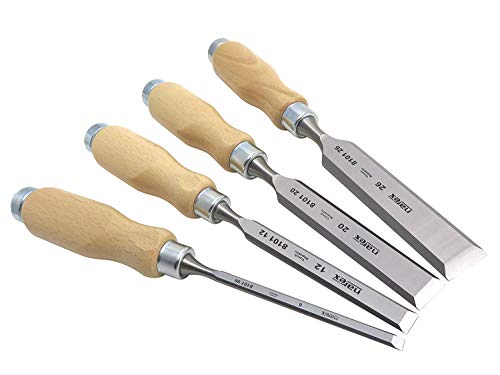
A bevel-edge chisel has bevels ground along both sides of the blade. Those bevels let it enter tight corners, which is useful for cleaning dovetails and paring shoulders. Typical bench chisels are relatively slim, with blade widths from about 6 mm to 38 mm (1/4 to 1-1/2 inches). They are designed for chopping, paring, and general joinery rather than constant heavy levering.
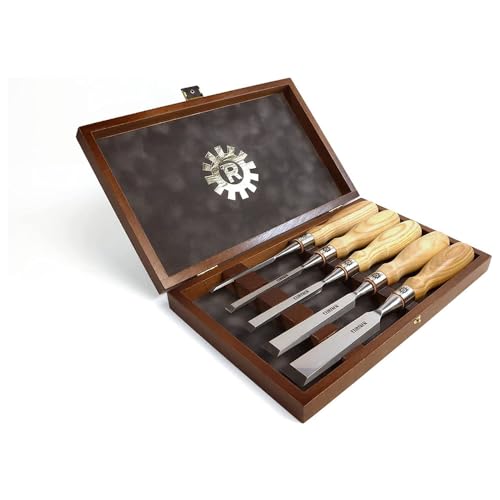
A mortise chisel has a much thicker blade, often roughly 6 to 10 mm thick even in moderate widths. Its sides are usually close to square, with only a small clearance bevel. The extra steel resists bending when the chisel is driven into end grain and then twisted to break out waste. The handle is commonly fitted with a metal hoop or other reinforcement because the tool is expected to receive repeated mallet blows.
That geometry creates a trade-off. The mortise chisel is strong and stable but leaves less room in a narrow mortise for angled work. A bevel-edge chisel reaches corners more easily but can flex, mushroom, or suffer a rolled edge when used as a pry bar.
Head-to-Head Comparison
| Factor | Bevel-edge chisel | Mortise chisel |
|---|---|---|
| Best use | General chopping, paring, shoulders, dovetails | Deep, narrow mortises and heavy waste removal |
| Typical blade | Thin, with side bevels | Thick, nearly square section |
| Levering strength | Limited; edge and blade can bend | High, within reason |
| Corner access | Excellent | Good, but less nimble |
| Speed in deep hardwood | Acceptable for a few joints | Usually faster and more controlled |
| Typical cost | Lower if you already own a set | Higher, especially in several widths |
Using a Bevel-Edge Chisel for Deep Mortises
A bevel-edge chisel is perfectly serviceable for a mortise around 6 to 12 mm (1/4 to 1/2 inch) deep in pine, poplar, or other forgiving wood. It is also useful for removing the waste left between drilled holes. Drill most of the waste first, leaving about 1 mm (1/32 to 1/16 inch) for the chisel to clean up. That keeps the chisel from doing work it was never designed to do.
For hardwood, work in stages. Chop from both ends toward the center, and do not force the chisel to the final depth in one pass. A 50 mm (2 inch) mortise is safer when cut in several lifts of roughly 6 to 10 mm (1/4 to 3/8 inch). Keep the bevel facing the waste when levering, and use short twists rather than a large sideways load.
The common failure is levering against the wall of the mortise. The blade may survive, but the cutting edge can chip where it contacts a knot or a hard latewood band. A thin chisel can also bow enough to make the mortise wider at the mouth than at the bottom. If the handle has no striking ring, repeated heavy blows may split it or loosen the tang.
If you need a general-purpose set for furniture and occasional joinery, compare bevel-edge wood chisel sets. Choose one with a comfortable striking handle and enough blade thickness for chopping; ultra-thin paring chisels are a poor substitute.
When a Mortise Chisel Pays Off
A mortise chisel earns its space when the joint is deeper than about 25 mm (1 inch), the stock is hard, or the mortise is narrow compared with its depth. A 10 mm (3/8-inch) mortise that is 50 mm (2 inches) deep is a good example. The thick blade tracks straight, takes heavier blows, and can break the waste into larger chips instead of wedging in the bottom.
Use a mortise chisel to establish the ends and sides, then chop toward the middle. Strike with a wooden or rawhide mallet rather than a steel hammer. After each series of blows, withdraw the chisel to clear chips. Packing chips around the blade increases friction and can split the mortise wall.
Even a mortise chisel is not a license to twist aggressively. Its strength protects the tool, but the surrounding wood can still fracture. Hard, brittle species may split along the grain if you lever toward a thin wall. Leave at least 3 mm (1/8 inch) of material at the edge of a narrow mortise until the final cleanup, particularly near the end of a leg or stile.
For repeated frame-and-panel work or timber construction, a dedicated mortise chisel set is the sensible category. You do not need every size: one chisel about 1 to 2 mm narrower than the intended mortise, plus a smaller cleanup chisel, covers many projects.
Size and Sharpening Decisions
Match the chisel to the mortise, not the tenon. A 12 mm mortise is often cut with a 10 or 11 mm chisel, leaving enough clearance for chips and a final paring pass. A blade that exactly fills the opening can bind, especially when the mortise narrows below the surface.
Sharpening matters more than the label on the handle. A practical primary bevel is commonly around 25 degrees, with a small secondary bevel near 30 degrees. For heavy mortising, a slightly wider secondary bevel can improve durability, but an overly blunt edge requires more force and bruises the fibers instead of cutting them. Hone the flat back enough to remove the wire edge; a hollow or unflattened back makes accurate corner cleanup difficult.
Which One Should You Buy?
Buy bevel-edge chisels first if you are building a basic kit, mostly work softwood, or cut only a few shallow mortises each year. They are cheaper, more versatile, and better for paring shoulders and fitting joints. With drilled waste removal and sensible cutting depth, a quality bench chisel will handle a surprising amount of joinery.
Buy a mortise chisel if deep hardwood mortises are central to your work, if you regularly cut more than four or five identical joints, or if your current chisels are bending and losing their edges. A single well-made mortise chisel in the width you use most is more useful than a large inexpensive set.
For many woodworkers, the best setup is not either-or: use a mortise chisel for fast, deep excavation and a bevel-edge chisel for the final corners, shoulders, and fit. That division keeps the delicate tool doing precision work and the heavy tool doing the demolition.