What's inside
As an Amazon Associate I earn from qualifying purchases. This post may contain affiliate links at no extra cost to you.
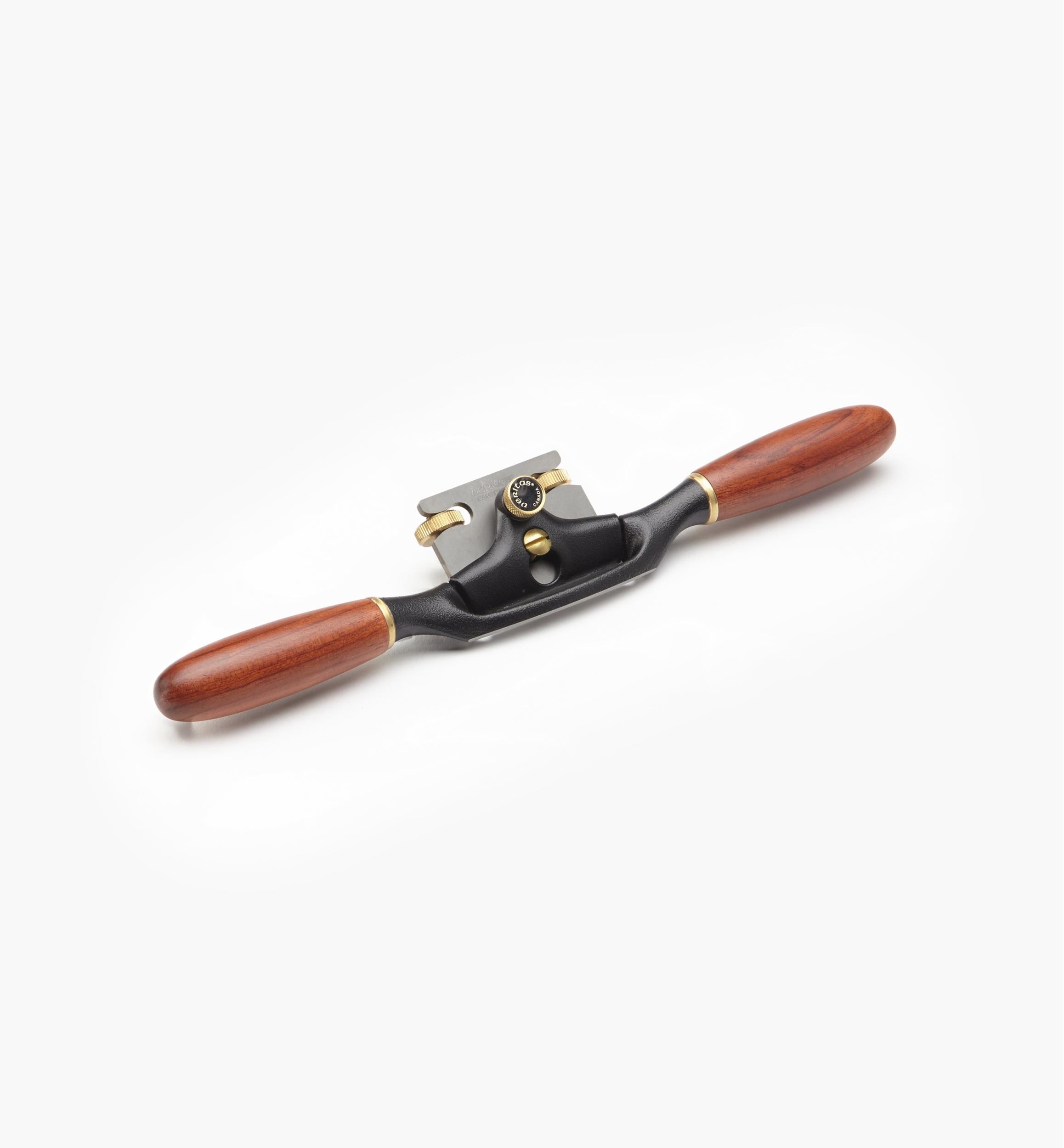
Smoothing a concave hardwood curve is where a spokeshave earns its place. A block plane cannot reach into the hollow, and a rasp often leaves a surface that takes much longer to clean up. The best choice is usually a metal spokeshave with a curved sole, a sharp blade, and enough adjustment to control the cut in dense wood.
For most buyers, the key decision is not brand first. It is sole shape. A flat-bottom spokeshave is intended mainly for convex curves and relatively flat work. A round-bottom, or convex-sole, spokeshave bridges a concave surface while its blade removes a controlled shaving. If the hollow is tight, sole radius matters as much as blade quality.
As an Amazon Associate we earn from qualifying purchases at no extra cost to you.


Our Top Picks


Best choice for concave hardwood curves
A good round-bottom adjustable spokeshave is the safest general recommendation. Its curved sole lets you work inside hollows, while an adjustable mouth makes it possible to switch from a fine finishing cut to a more aggressive shaping cut.
Look for a blade at least roughly 2 inches wide, solid side wings, and a sole that is smooth without casting bumps or sharp edges. A curved sole with an excessively large radius will not sit properly in a tight hollow. Conversely, a very tight sole radius can rock on a broad concavity and leave ridges. For furniture parts and chair components, a medium-radius sole is usually more versatile than an extreme curve.
| Spokeshave type | Best use | Main limitation |
|---|---|---|
| Round-bottom metal | Concave curves, bowls, chair seats, sculpted parts | Needs careful blade setup and matching sole radius |
| Flat-bottom metal | Convex curves, chamfers, straight edges | Bridges or tips on concave surfaces |
| Wooden spokeshave | Light cuts and traditional hand-tool work | Less convenient adjustment; sole can wear or swell |
| Drawknife | Fast stock removal on large curves | Too aggressive for controlled final smoothing |
Blade adjustment matters more than decoration
Hardwood exposes poor adjustment quickly. A blade that projects only 0.05 to 0.1 mm can take a fine shaving; projecting around 0.2 to 0.3 mm gives a useful shaping cut, but increases the chance of tear-out. Set the blade so both corners are exactly level with the sole. Even a small difference makes one side dig in, especially when the tool is rotated through a curve.
The mouth should be narrow for finishing—about 0.5 to 1 mm is a practical target—but not so tight that shavings clog immediately. Open it slightly for rough shaping. An adjustable throat is valuable because hardwood changes character across the grain, and the same setting rarely works from roughing through final smoothing.
Blade thickness also affects handling. A thicker blade resists chatter, which is useful in oak, maple, ash, and tropical hardwoods. A thin blade may still work well, but only with a very sharp edge and a light cut. If the tool chatters, do not automatically push harder. Reduce the projection, close the mouth, and check that the blade clamp is tight.
How to use a spokeshave on a hollow
Start by removing most of the waste with a bandsaw, rasp, carving gouge, or woodworking drawknife. Leave about 1 to 2 mm of material for the spokeshave. A spokeshave is a shaping and smoothing tool, not an efficient replacement for a saw or heavy rasp.
Mark the finished curve with a template or flexible ruler. Work diagonally across the grain at first, taking short cuts of roughly 25 to 75 mm. Keep both hands on the tool and vary the pressure: more pressure near the front handle at the start, then more near the rear handle as the blade exits. This keeps the sole seated instead of allowing the front or rear edge to dig in.
On a concave curve, the grain direction can change rapidly. If the shaving lifts fibers, reverse direction, reduce the cut, or work from both ends toward the middle. Stop each pass before the tool runs off an edge. Running off the end is a common cause of breakout, even when the blade is sharp.
Check the surface frequently with a profile template and a straightedge used across the curve. A spokeshave can create a pleasing surface while quietly flattening the hollow. Pencil lines drawn across the workpiece make high spots obvious: shave only until the lines disappear evenly.
Metal versus wooden spokeshaves
A metal spokeshave is generally the better first purchase. It offers predictable geometry, easier blade depth adjustment, and a sole that remains stable in changing humidity. The trade-off is weight and price. Cheaper cast-metal tools can work, but inspect the sole and blade seating carefully. A warped sole, loose adjustment screw, or rough casting around the mouth can consume more time than the tool saves.
A wooden spokeshave is often lighter and comfortable for long sessions. It can also leave a very clean surface when properly tuned. However, blade setting is less immediate, and the wooden body can swell or shrink. It is a good choice for someone already comfortable sharpening and tuning traditional planes, but less forgiving for a first spokeshave.
If the budget is limited, a basic adjustable metal round-bottom model is enough. Spend the remaining money on a reliable sharpening setup rather than a second spokeshave. A blade honed to about 25 to 30 degrees, with a small secondary bevel, will usually outperform an expensive tool with a dull edge.
Buying checklist
Before ordering, confirm that the tool is specifically round-bottom or curved-sole, not merely described as a general spokeshave. Check replacement blade availability, adjustment range, and whether the handles leave enough room for a firm grip. For very tight hollows, consider a small round-bottom spokeshave; for broad chair seats and large furniture curves, a standard-size tool is easier to control.
Buy a spokeshave sharpening stone or another setup that can reach the blade edge without rounding it. The tool is only as useful as its edge. For smoothing concave hardwood, the best overall combination is a medium-radius adjustable metal spokeshave, a narrow mouth, and repeated light cuts rather than forceful passes.