What's inside
As an Amazon Associate I earn from qualifying purchases. This post may contain affiliate links at no extra cost to you.
For drilling thick steel plate, the key difference is how the tool stays aligned and resists cutting torque. A magnetic drill attaches directly to the plate and feeds an annular cutter through it. A portable drill press holds a conventional drill bit in a guided column, but needs a stable base or clamping setup. Either can work; the better choice depends on plate thickness, hole size, access, and how many holes you need.
As an Amazon Associate we earn from qualifying purchases at no extra cost to you.


Our Top Picks
 VEVOR 1450W Mag Drill PressW/ 2 in 6 pieces - Tapping (NEW)11 x 7.1 x 14.2 inches26.46 poundsCheck on Amazon
 Milescraft DrillMate Portable Drill Guide Adjustable Precision DrillingEACH16.63 x 7.13 x 2 inches0 PoundsCheck on Amazon


How the two tools cut
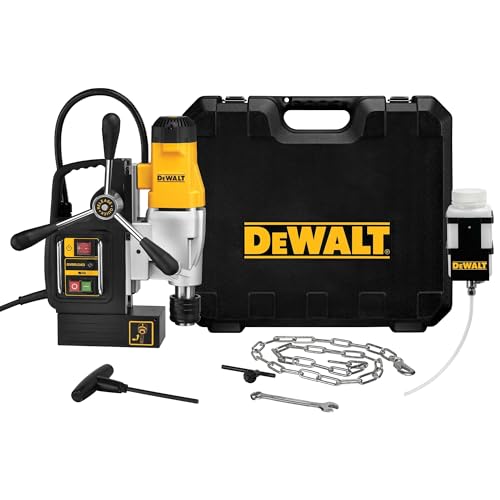
A magnetic drill, often called a mag drill, uses an electromagnetic base to grip a ferrous workpiece. Most are designed around annular cutters, which cut a ring around the hole rather than removing all the material inside it. That means less cutting effort than a twist drill of the same diameter. The center slug drops out when the cut is complete, so plan for it to fall or catch it safely.
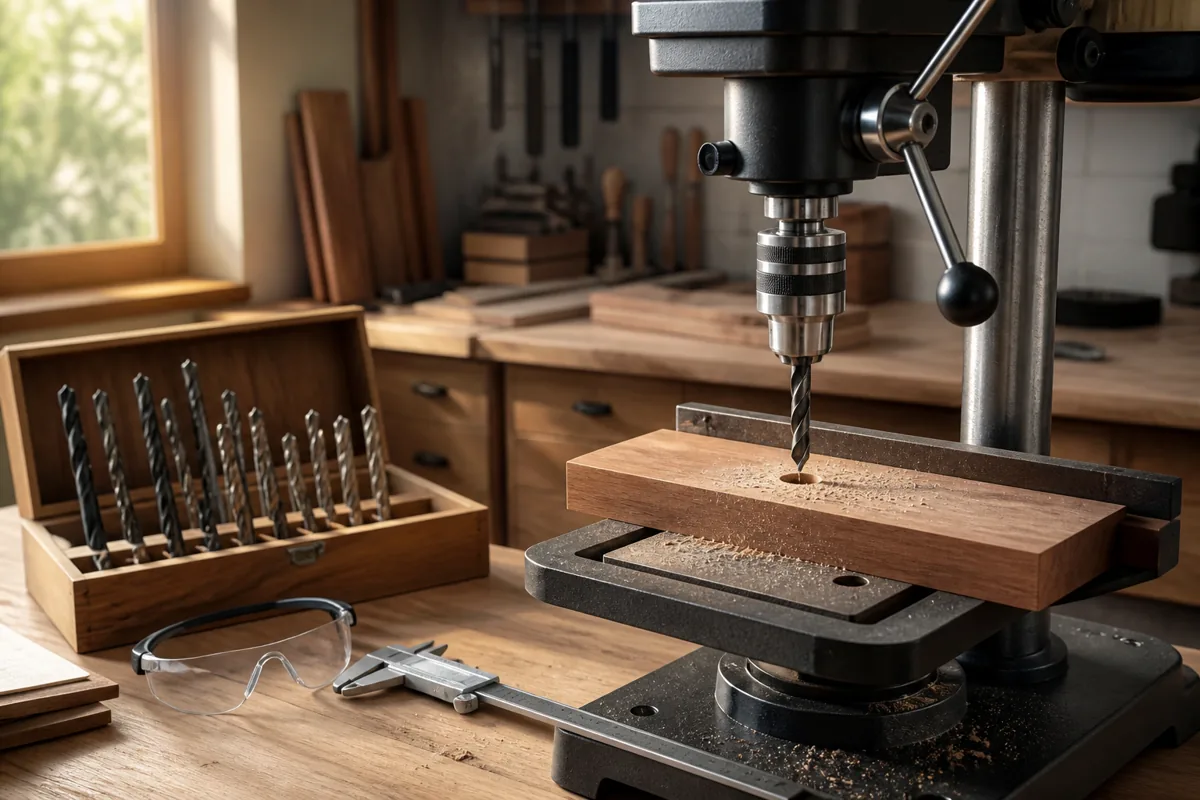
A portable drill press guides a rotating bit down a column. Depending on the machine, its base may clamp to a workbench, pipe, or other support; it does not automatically attach to the plate like a mag drill. A conventional twist bit removes the whole hole as a spiral of chips. For large holes in thick steel, that takes more time and demands more from the drill and operator.
At-a-glance comparison
| Factor | Magnetic drill | Portable drill press |
|---|---|---|
| Best use | Accurate holes in steel plate, especially large or repeated holes | Smaller holes when the work can be securely supported and clamped |
| Typical cutter | Annular cutter | Twist drill; some setups accept other cutters |
| Setup | Attach magnet to clean, flat ferrous steel; secure safety strap | Clamp the work and stabilize the press against movement |
| Portability | Can work on large, fixed plate, but needs power and a suitable magnetic surface | Portable, but often needs a bench or support structure |
| Main limitation | Magnet grip depends on surface, plate thickness, and orientation | Harder to hold square and steady on large plate without a proper fixture |
When a magnetic drill makes sense
Choose a mag drill for repeated holes, larger diameters, or work on plate that is too heavy to bring to a bench. It is particularly useful for structural steel, machinery repair, and fabrication where you need the cutter perpendicular to a broad, accessible surface. The base gives the tool a firm reference right at the hole, and annular cutters can make a clean hole without forcing a large twist bit through the full diameter.
Check the cutter’s rated capacity before buying. A tool advertised for a certain maximum diameter may not be suited to cutting that size through every thickness or steel grade. Follow the cutter maker’s speed and lubrication guidance. For many annular cutters, cutting oil or an appropriate fluid helps control heat and extend cutter life; running dry or at excessive speed can dull teeth quickly. A magnetic drill press with annular cutters is the natural category to compare for this work.
The magnet is also a safety-critical part of the setup. Paint, scale, chips, rust, or a curved or uneven surface can reduce holding force. Thin plate may flex, and a magnet’s rating is not a guarantee of grip in every position. Clean the contact area, confirm the base is fully engaged, and use the supplied safety chain or strap—especially overhead or on vertical work. Never treat the magnet as a substitute for securing the workpiece.
When a portable drill press is enough
A portable drill press is a reasonable, often cheaper choice for occasional small holes if you can clamp the plate securely and support the machine square to the surface. It can also make sense when the plate is nonmagnetic, too thin for reliable magnetic attachment, or has a surface that will not let a magnet sit flat. For holes around 6–10 mm (roughly 1/4–3/8 in), a suitable sharp bit, low speed, and a stable setup may be all you need.
Its weak point is control under load. If the base shifts, the bit can bind, walk, or break. A conventional drill press also has to remove the full core of a large hole, so a 20–25 mm (about 3/4–1 in) hole through thick plate can be slow and tiring. If that is a one-off job, a smaller pilot hole and a suitable final bit may be acceptable; for a batch, the time and bit wear can outweigh the savings. Compare a portable drill press for metal drilling only if you have a realistic plan to fixture it firmly.
Thickness, setup, and common failures
“Thick plate” covers very different jobs: a 6 mm plate is not the same as a 25 mm plate. As thickness and hole diameter increase, cutting time, heat, and torque rise. Check the tool’s capacity against both dimensions, not just its maximum hole diameter. A mag drill’s annular cutter depth must exceed the plate thickness, with enough clearance for the pilot pin and slug. A portable press must have adequate stroke and a way to keep the bit aligned through the full cut.
For either tool, mark the hole accurately, clamp the plate against movement, and use the recommended cutting speed and lubricant. Too much feed can stall the motor or snap a cutter; too little feed can rub and overheat the cutting edge. Clear chips safely with the tool stopped, not with fingers near a rotating cutter. Wear eye protection, keep loose clothing away, and account for sharp chips and the hot slug.
Which one should you buy?
For regular work on thick steel plate, especially holes larger than about 12 mm (1/2 in) or more than a handful of holes, a mag drill is usually the more capable and predictable choice—provided the surface is suitable for magnetic attachment. Match the cutter system and capacity to your actual jobs, and budget for cutters, pilot pins, and cutting fluid.
For occasional small holes, a portable drill press is fine if the work is rigidly clamped and the tool can be held square. If you do not already own one, buying a drill press just for a large hole in thick plate may be poor value; consider renting a mag drill or having a shop drill the plate. For frequent work on nonmagnetic material or awkward surfaces, neither option may be ideal, so check whether a different fixture or machining method is needed before choosing.